
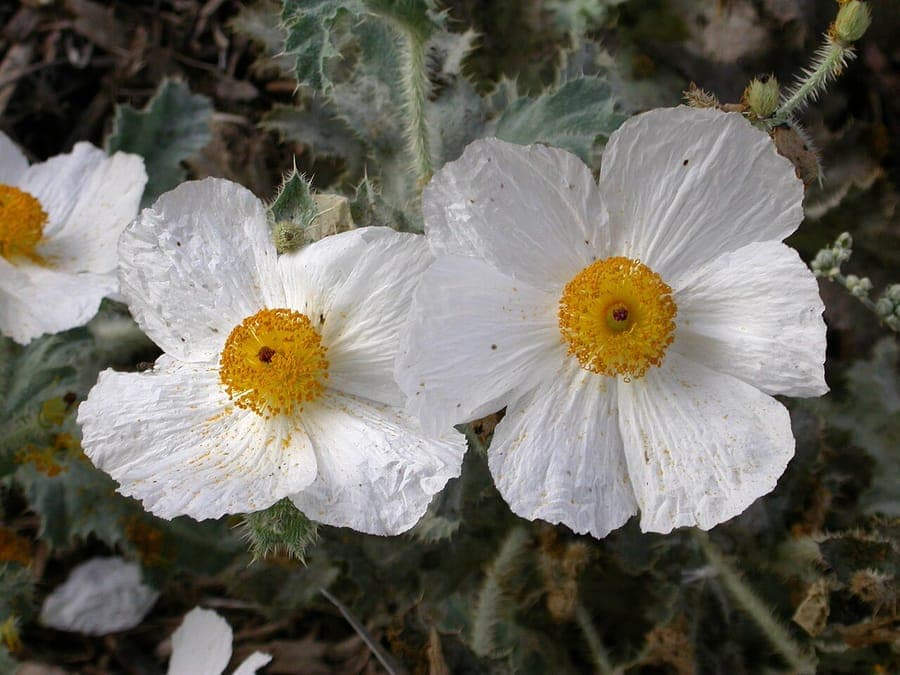
No machine-readable author provided. Curtis Clark assumed (based on copyright claims). / CC BY-SA 2.5, via Wikimedia Commons
Argemone corymbosa: complete guide
Argemone corymbosa
Want to see Argemone corymbosa: complete guide in your garden?
1 minute, no credit card
Overview
Argemone corymbosa, known as Mojave pricklypoppy, is a native plant from the desert regions of southeastern California to western Arizona. This striking annual to short-lived perennial plant belongs to the Papaveraceae family (poppy family). With its distinctive yellow stamens, strong spines, and white flowers, it perfectly represents the resilience of desert flora.
Appearance & Bloom
Argemone corymbosa typically reaches 30 to 60 centimeters in height and spreads in a rounded form. The leaves are striking due to their spiny protrusions and bluish-green color, giving the plant a sculptural appearance. The flowers are white, approximately 5 centimeters in diameter, with four to five petals and prominent yellow stamens. These flowers appear from April to July and attract bees and other pollinators. The fruits are spiny capsules containing numerous small seeds.
Ideal Location
This plant thrives in full sun and requires at least six hours of direct sunlight daily. In very hot desert climates, light afternoon shade may be beneficial. The plant is sun-worshipping and will grow poorly in shade. Good air circulation is essential for disease prevention.
Soil
Argemone corymbosa thrives in poor, well-draining soils. The plant prefers sandy or gravelly soils like those in its natural habitat. Rich organic material is not needed and can be harmful by promoting excessive growth. Ensure excellent drainage; waterlogging will certainly lead to root rot.
Watering
Once established, this plant is very drought-tolerant. In fact, overwatering is the leading cause of failure. Water moderately during the first growing season. Mature plants require practically no additional water unless under extreme drought. Summer rains in some regions provide sufficient moisture.
Free design
Want to see Argemone corymbosa: complete guide in your garden? Make a free design now.
Pruning
Minimal pruning is needed. Remove only dead or damaged branches. Deadheading spent flowers may stimulate more blooms, but the plant itself is not demanding for pruning. Wear gloves due to sharp spines.
Maintenance Calendar
Spring: Sow seeds directly in the ground after last frost. Minimal feeding needed. Summer: Water sparingly; enjoy blooms. Remove spent flowers for more bloomers. Fall: Collect seeds if reproduction is desired. Plant may slowly die back. Winter: Plant may overwinter in warm climates; elsewhere it dies off.
Winter Hardiness
Argemone corymbosa is frost-sensitive. In areas with harsher winters, it is treated as an annual. In USDA zones 9-11, the plant can overwinter. Protection is not needed; the plant dies when frost arrives.
Companion Plants
This plant combines well with other desert plants:
- Yucca species
- Agave species
- Echinocereus (claret cup cactus)
- Kochia (broomcorn)
- Atriplex (saltbush)
Closing
Argemone corymbosa is an excellent choice for desert gardens and xeriscape projects. Its low-maintenance requirements and captivating flowers make it valuable for environmentally conscious gardeners. Despite its spines (or perhaps because of them), this plant has an incredible appeal that perfectly captures desert beauty. Try this plant as part of a drought-tolerant garden design.
For purchase options in English-speaking regions:
- Native plant nurseries
- Desert plant specialists
- Online plant retailers
Gardenworld.app understands the unique demands of desert plants. Explore our complete guide for xeriscape garden design inspiration.
Want to see Argemone corymbosa: complete guide in your garden? Make a free design now.
Upload a photo, pick a style, and get a photorealistic design with plant list in under a minute.
No credit card required


Similar plants
Papaver gorodkovii: complete guide
Papaver gorodkovii
Papaver gorodkovii, the arctic poppy, thrives from Alaska to Russia's Far East. Discover how to grow this rare, extremely cold-hardy rock garden treasure.
Papaver setiferum: complete guide
Papaver setiferum
Papaver setiferum is a hardy giant Caucasian poppy with fiery red blooms. Discover siting, soil, deadheading and winter hardiness.
Pale Poppy: complete guide
Papaver alboroseum
Discover pale poppy (Papaver alboroseum) - rare alpine poppy with white-pink flowers. Precious beauty from Kamchatka. Cultivation in alpine and rock gardens.