
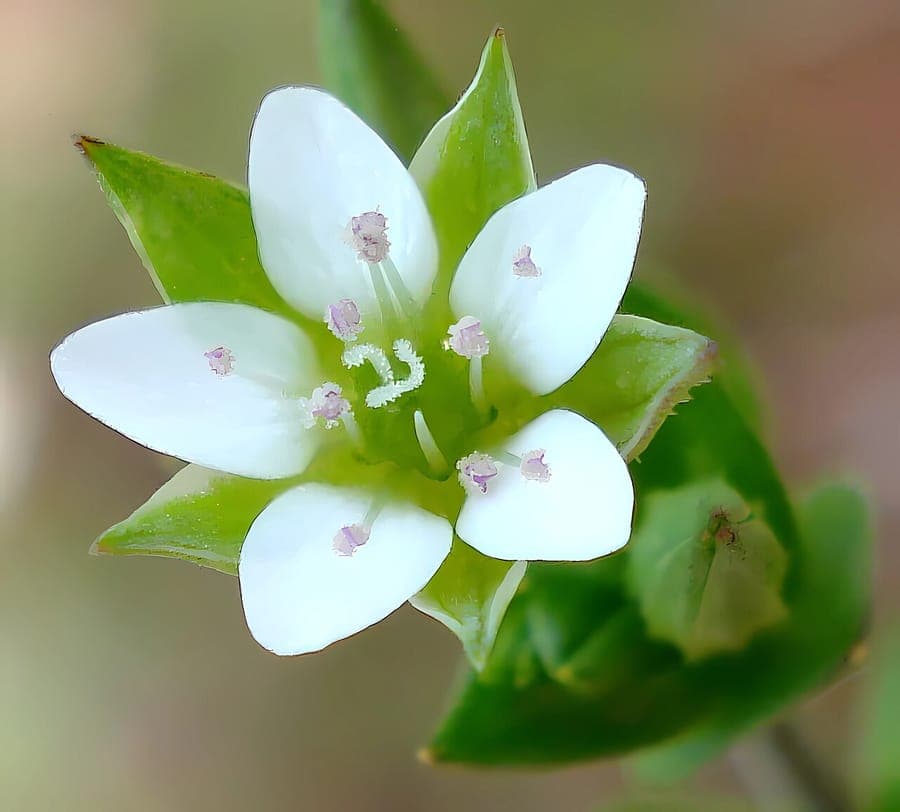
Fornax / CC BY-SA 3.0, via Wikimedia Commons
Thyme-leaf sandwort: complete guide
Arenaria serpyllifolia
Want to see Thyme-leaf sandwort: complete guide in your garden?
1 minute, no credit card
Overview
Thyme-leaf sandwort (Arenaria serpyllifolia) is a modest yet resilient annual or short-lived perennial from the Caryophyllaceae family. Native to much of Europe, North Africa, and parts of Asia, it thrives in dry, nutrient-poor soils and narrow crevices where few other plants dare to grow. Often overlooked, this little plant brings subtle beauty to rock gardens, walls, and gravel paths. It's not flashy, but it's tough, ecologically valuable, and perfect for gardeners who appreciate plants that work quietly behind the scenes.
Despite its unassuming presence, thyme-leaf sandwort plays a role in supporting pollinators, especially small bees and hoverflies drawn to its tiny white blooms. It's self-seeding, low-maintenance, and fits perfectly into naturalistic planting schemes. You'll often spot it in old stone walls or along footpaths - a true survivor of marginal conditions.
Appearance & bloom cycle
This plant grows no taller than 10 cm, with trailing stems that creep along the ground or nestle into cracks between stones. The leaves are small, lance-shaped to oval, about 5–15 mm long, densely packed, and have a soft, slightly hairy texture. Their resemblance to thyme leaves gives the species its name (serpyllifolia = thyme-leaved).
From May to August, clusters of small white flowers appear. Each flower is just 5–8 mm across, with five rounded petals and ten stamens - a classic Caryophyllaceae trait. While not showy, the collective bloom creates a delicate, silvery shimmer across dry surfaces. After flowering, seed capsules form and release fine seeds that scatter easily by wind, water, or foot traffic.
Because it's an annual or biennial, the plant completes its life cycle in one or two seasons. However, it reliably reappears each year through self-seeding if conditions are right.
Ideal location
Thyme-leaf sandwort prefers full sun to light shade. It excels in dry, well-drained spots where water doesn't linger. Ideal locations include:
- Cracks in stone walls or paving
- Gravel paths or scree beds
- Rock gardens or alpine troughs
- Dry slopes or raised beds with sharp drainage
It's excellent for softening hardscapes, adding life to sterile joints, or filling gaps in a Mediterranean-style garden. Because it tolerates foot traffic lightly, it can even be used between stepping stones - as long as the soil doesn't stay wet. On gardenworld.app, you can design a planting plan that integrates sandwort naturally into crevices and dry zones, balancing aesthetics with ecological function.
Soil requirements
This plant thrives in poor, sandy, or rocky soils. Rich, fertile soils encourage excessive leafy growth at the expense of flowering. Aim for a pH between 6.0 and 7.5 (slightly acidic to neutral). The key is excellent drainage - avoid heavy clay or water-retentive mixes.
A good planting medium is a blend of coarse sand, grit, and a small amount of loam. Do not add compost or manure. Overly fertile conditions will weaken the plant's natural resilience.
Free design
Want to see Thyme-leaf sandwort: complete guide in your garden? Make a free design now.
Watering
Once established, thyme-leaf sandwort is highly drought-tolerant. It rarely needs supplemental watering, even during prolonged dry spells. Water only during the first 4–6 weeks after sowing or transplanting, keeping the soil lightly moist but never soggy.
After that, let natural rainfall suffice. If you're experiencing an unusually dry spring or early summer, a light watering every 10–14 days may help seedlings establish. But in general, under-watering is safer than overwatering.
Pruning
Pruning isn't necessary. As a self-seeding annual, the plant dies back naturally after setting seed. If you want to limit spread, cut back flower stems before seeds mature. This prevents unwanted colonization in formal beds.
For a tidier look in paved areas, you can trim stray stems with small scissors. But in a naturalistic garden, it's best to let it grow freely and blend into its surroundings.
Maintenance calendar
- January: No action needed. Leave seed heads for wildlife.
- February: Clear debris if desired; otherwise, no care.
- March: Prepare planting areas; remove weeds.
- April: Sow seeds directly or transplant seedlings. Keep lightly moist.
- May: Bloom begins. Monitor young plants for moisture.
- June–July: Peak flowering. No extra care required.
- August: Seed development. Collect seeds or deadhead to control spread.
- September: Natural reseeding occurs. Allow or remove as needed.
- October–December: Plants die back. Leave residue for insects or clear for neatness.
On gardenworld.app, you can generate a custom maintenance calendar based on your USDA zone (5–8) and garden layout, with reminders for sandwort care.
Winter hardiness
Thyme-leaf sandwort is hardy in USDA zones 5 to 8. While the parent plant dies in autumn, seeds remain viable in the soil through winter. Germination occurs in spring when temperatures rise above 10°C. No winter protection is needed.
Companion plants
Pair thyme-leaf sandwort with other drought-tolerant, low-growing species:
- Sedum spurium (dragon's blood stonecrop)
- Thymus praecox (creeping thyme)
- Sempervivum tectorum (houseleek)
- Dianthus gratianopolitanus (Cheddar pink)
- Aubrieta deltoidea (rock cress)
Avoid aggressive spreaders like ivy or mint, which will outcompete sandwort. Stick to plants that respect its space.
Closing
Thyme-leaf sandwort may not grab attention, but it earns its place in any resilient garden. It asks for little, gives back with subtle beauty and ecological value, and thrives where other plants fail. Use it to soften stone joints, fill rocky gaps, or add life to neglected corners. It's a quiet achiever - perfect for low-effort, high-impact gardening. Available at garden centres across the UK and US, often as seed or in alpine plant trays.
Want to see Thyme-leaf sandwort: complete guide in your garden? Make a free design now.
Upload a photo, pick a style, and get a photorealistic design with plant list in under a minute.
No credit card required


Similar plants
Dianthus karami: complete guide
Dianthus karami
Dianthus karami is a rare Lebanese mountain pink with fringed pink blooms on limestone cliffs, ideal for rock gardens and troughs.
Sicilian pink: complete guide
Dianthus siculus
Discover Dianthus siculus, an elegant purple bloomer from Sicily. Cultivation, June-September flowering and garden combinations.
Alpine mouse-ear chickweed: complete guide
Cerastium pedunculatum
Full growing guide for Cerastium pedunculatum: ideal location, soil, watering, winter hardiness, and companion plants for rock gardens.