
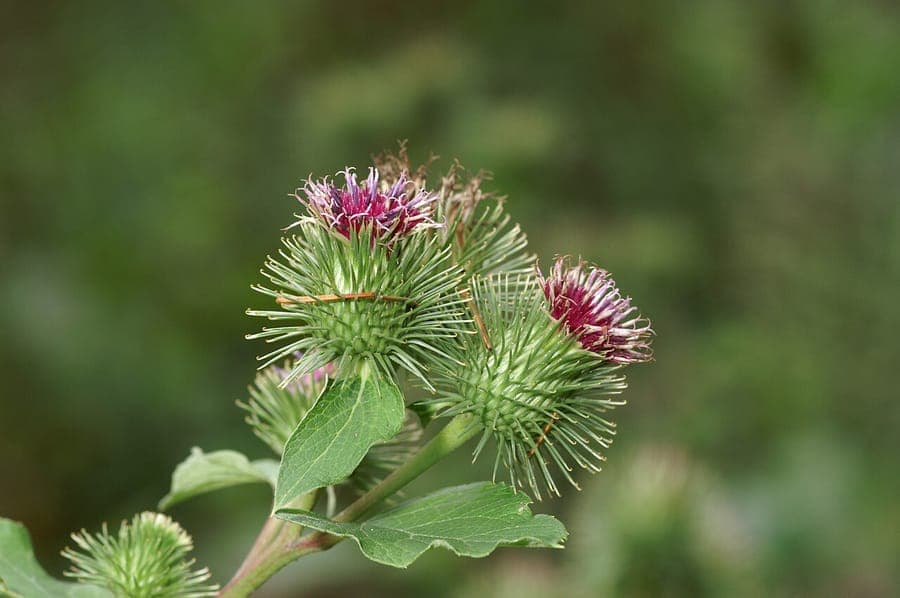
Rüdiger Kratz, St. Ingbert / CC BY-SA 3.0, via Wikimedia Commons
Wood burdock: complete guide
Arctium nemorosum
Want to see Wood burdock: complete guide in your garden?
1 minute, no credit card
Overview
Wood burdock, or Arctium nemorosum, is a hardy, herbaceous perennial that thrives in woodland margins, hedgerows, and damp grasslands across central and northern Europe. Standing between 100 and 180 cm tall, it's a striking presence in naturalistic planting schemes. Though often mistaken for common burdock (Arctium lappa), this species prefers shadier, moister conditions and has a slightly more refined appearance. It belongs to the Asteraceae family and plays a crucial role in supporting biodiversity.
In garden design, Wood burdock adds vertical interest and late-season structure. On gardenworld.app, you can create a planting plan that integrates Arctium nemorosum with complementary species, ensuring proper spacing and seasonal balance.
Appearance & bloom cycle
This tall forb features broad, heart-shaped leaves with a dark green upper surface and a densely woolly white underside. The leaves can reach up to 30 cm in length and form a basal rosette in the first year. In its second year, a sturdy, branching stem emerges, topped with thistle-like flower heads from July to September.
The flower heads are 2–3 cm wide, composed of purple to pinkish disc florets surrounded by hooked bracts. They attract a wide range of pollinators, including bumblebees, honeybees, and hoverflies. After flowering, the bracts develop into the infamous burs - sticky seed heads that cling to clothing and animal fur, aiding in seed dispersal.
The plant is biennial or short-lived perennial, often self-seeding freely in suitable conditions. While the burs can be a nuisance, they're a key part of the plant's natural reproductive strategy.
Ideal location
Wood burdock thrives in partial shade to light sun, scoring a 6 on the light scale. A spot with morning sun and afternoon shade is ideal, such as the edge of a woodland garden or beneath tall shrubs. Full sun is acceptable only if the soil remains consistently moist. Avoid hot, exposed sites, as these can scorch the large leaves.
It performs best in USDA hardiness zones 5 to 8, where winter temperatures don't drop below -29°C. In colder zones, mulching helps protect the crown. Position taller plants towards the back of borders, where their height and texture provide a natural backdrop.
For gardeners aiming for a low-maintenance, wildlife-friendly space, Wood burdock fits perfectly. Use gardenworld.app to visualise how it blends with ferns, grasses and late-flowering perennials in your layout.
Soil requirements
This species prefers rich, moist loam or clay-loam soils with a neutral to slightly alkaline pH (7.0–7.5). While it tolerates clay well, it struggles in dry, sandy soils unless irrigated regularly. Incorporate well-rotted compost or leaf mould when planting to boost organic content and moisture retention.
Avoid saline soils and areas affected by road salt. Poor drainage leads to root rot, so ensure the site doesn't become waterlogged. A layer of organic mulch in spring helps maintain soil moisture and suppresses competing weeds.
Free design
Want to see Wood burdock: complete guide in your garden? Make a free design now.
Watering
Wood burdock has moderate to high water needs, especially during dry spells. Young plants require consistent moisture - about 5–8 litres per week per plant - for the first six weeks after planting. Once established, it's more resilient but still benefits from weekly watering in summer if rainfall is below 25 mm.
Use rainwater when possible, as tap water with high calcium content can alter soil pH over time. Drip irrigation or soaker hoses are ideal for delivering water directly to the roots without wetting foliage, which reduces fungal disease risk.
Pruning
Pruning isn't essential, but cutting back spent stems in late autumn or early winter keeps the garden tidy and reduces unwanted self-seeding. Cut stems to 15 cm above ground level using sturdy gloves and secateurs - the stems are coarse and can irritate bare skin.
If you want to encourage birds or allow limited reseeding, leave a few seed heads standing until late winter. Remove all debris before new growth emerges in spring to prevent pests and diseases.
Maintenance calendar
- January: Remove old stems if not done in autumn.
- February: Monitor for early growth; apply mulch if needed.
- March: Prepare soil; add compost around planting zone.
- April: Plant bare-root specimens or sow seeds directly.
- May: Water regularly; watch for slugs and snails.
- June: Support tall stems with stakes if necessary; inspect for aphids.
- July: Flowers begin; peak pollinator activity.
- August: Continue watering; monitor for powdery mildew in humid conditions.
- September: Flowering ends; consider pruning.
- October: Cut back stems or leave for wildlife.
- November: Clear remaining debris; mulch lightly.
- December: Dormant period; minimal care required.
Winter hardiness
Wood burdock is fully hardy in USDA zones 5–8. The top growth dies back in winter, but the plant survives via its thick, fleshy taproot. In zone 5, a light mulch of leaves or straw provides extra insulation. No additional protection is needed in milder zones.
Self-seeded seedlings often emerge in spring, especially in undisturbed areas. While this can be beneficial for naturalising, it may require thinning to prevent overcrowding.
Companion plants
Pair Wood burdock with shade-tolerant perennials like great masterwort (Astrantia major), meadowsweet (Filipendula ulmaria), and purple loosestrife (Lythrum salicaria). Tall grasses such as Calamagrostis x acutiflora add movement and contrast.
Ferns like Athyrium and Dryopteris thrive in the same moist, shady conditions. Avoid invasive groundcovers that might smother young rosettes. For late-season interest, combine with Echinacea, Inula, or rudbeckia.
Closing
Wood burdock isn't a conventional garden plant, but that's exactly why it's valuable. It supports pollinators, adds wild charm, and requires little input once established. With thoughtful placement, you can enjoy its architectural form without letting it dominate.
You can find Arctium nemorosum at garden centres specialising in native or wildlife-friendly plants. While not always stocked in mainstream retailers, specialist suppliers often carry it. Always confirm the botanical name, as it's easily confused with Arctium lappa. Planning with a tool like gardenworld.app ensures your planting scheme balances beauty, function, and ecological value.
Want to see Wood burdock: complete guide in your garden? Make a free design now.
Upload a photo, pick a style, and get a photorealistic design with plant list in under a minute.
No credit card required


Similar plants
Calendula stellata: complete guide
Calendula stellata
Complete guide to Calendula stellata, the star-flowered marigold from Sicily: location, soil, watering and companion planting tips.
Korean chrysanthemum: complete guide
Chrysanthemum x rubellum
Chrysanthemum x rubellum is a hardy autumn perennial with single pink to copper flowers from August to November. Care and combinations.
Helianthus divaricatus: complete guide
Helianthus divaricatus
Helianthus divaricatus is a North American woodland sunflower with yellow summer blooms, ideal for naturalistic borders and shady edges.