
HoosierMan1816 / CC BY 4.0, via Wikimedia Commons
Common burdock: complete guide
Arctium minus
Want to see Common burdock: complete guide in your garden?
1 minute, no credit card
Overview
Arctium minus, commonly known as common burdock, is a biennial herb that often shows up uninvited in gardens, along roadsides, and in disturbed soils. While some gardeners treat it as a weed, it's actually a powerhouse for biodiversity. With deep taproots that break up compacted soil and purple thistle-like blooms that draw in bees, butterflies, and beneficial insects, it's a plant worth considering for certain garden styles. On gardenworld.app, you can design a wildflower meadow that integrates burdock without letting it dominate.
Native to Europe and parts of Asia, this plant has adapted well to temperate climates, including USDA hardiness zones 4 to 9. It typically grows in two stages: the first year, it forms a low rosette of large leaves; the second year, it bolts, flowers, sets seed, and dies. It thrives in disturbed, nutrient-rich soils and can grow up to 1.5 m tall, making it a bold presence in the back of a border.
Appearance & bloom cycle
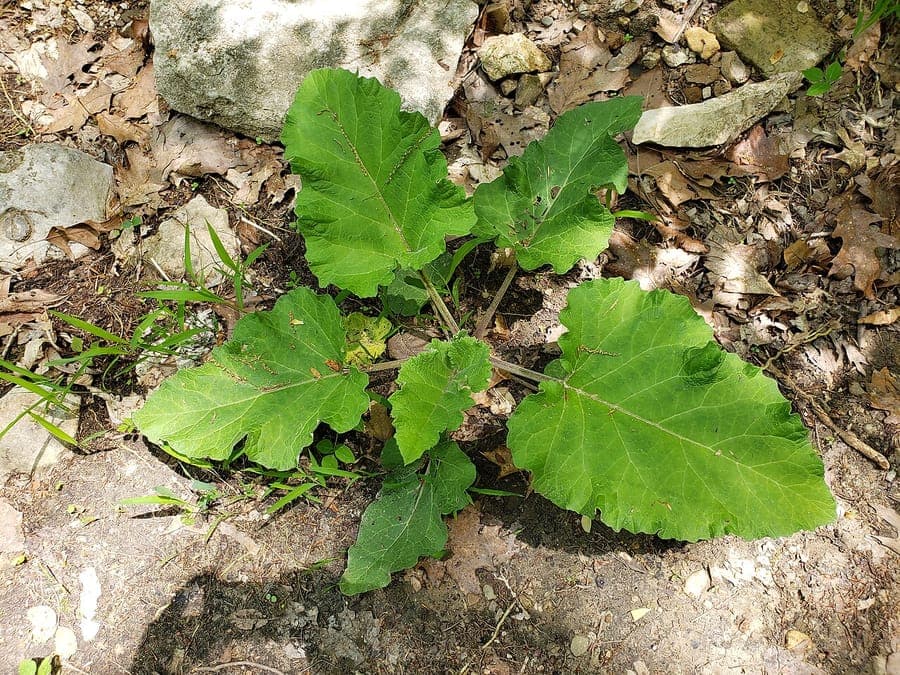
In its first year, Arctium minus produces a basal rosette of large, heart-shaped leaves up to 40 cm wide. The undersides are softly woolly and pale green. In the second year, a tall, branched stem emerges, reaching 1 to 1.5 meters. From July to August, it produces rounded, spiky flower heads about 2 cm across, with deep purple florets that attract a wide range of pollinators.
After flowering, the bracts develop into the infamous hooked burs-those sticky seed heads that cling to clothing and animal fur. These burs can remain viable in the soil for years, so if you're planting burdock intentionally, be prepared for long-term commitment. The seed heads also add visual interest in late summer and early autumn, especially when backlit by low sunlight.
Ideal location
Burdock thrives in full sun (light level 9), though it tolerates light shade if moisture is consistent. Plant it at the back of a wildlife border, along a fence line, or in a corner designated for naturalistic planting. It needs space-about 60 cm between plants-to develop properly. Avoid placing it near delicate perennials that could be shaded out or crowded.
On gardenworld.app, you can map out where burdock fits best in your garden using digital overlays, helping you balance wild growth with structured planting.
Soil requirements
This plant prefers moist, fertile loam or clay-loam with a pH between 7.0 and 7.5. It's tolerant of occasional dry spells thanks to its deep taproot, which can reach 60 cm or more. However, growth is stunted in poor, sandy, or overly dry soils. Amend the soil with well-rotted compost before planting to boost fertility. Good drainage is important-while burdock likes moisture, it won't survive in waterlogged conditions.
Free design
Want to see Common burdock: complete guide in your garden? Make a free design now.
Watering
Once established, burdock is fairly drought-tolerant. During the first growing season, water young rosettes weekly during dry spells to help them establish. After that, natural rainfall is usually sufficient. Water deeply at the base to avoid wetting the foliage, which can encourage fungal diseases like powdery mildew.
Pruning
Pruning isn't essential for plant health, but it's crucial if you want to prevent self-seeding. Cut off the flower heads before they mature into burs-ideally in late August. Use sharp secateurs and cut stems just above a leaf node. Remove and dispose of spent stalks in the winter to keep the area tidy. Compost only if you're certain the burs haven't opened.
Maintenance calendar
- January–February: Dormant. No action needed.
- March–April: Watch for seedlings. Thin or transplant as needed.
- May–June: Water rosettes during dry periods. Watch for slugs on young leaves.
- July–August: Peak bloom. Monitor for pollinators. Begin deadheading late August.
- September–December: Cut back dead stalks. Leave a few burs for birds or remove to limit spread.
Winter hardiness
As a biennial, common burdock survives winter in its first year as a leaf rosette. Second-year plants die after seeding. It's hardy in USDA zones 4–9, meaning it handles freezing temperatures well. The deep root stores energy to survive cold months, and seeds germinate in spring or autumn depending on conditions.
Companion plants
Pair burdock with other tall, robust plants like mullein, teasel, or Joe-Pye weed. It also works well with native grasses such as little bluestem or switchgrass. Avoid pairing with low-growing alpines or slow-spreading perennials that could be smothered. Consider planting near stinging nettle-both support similar insect life and thrive in similar conditions.
Closing
Common burdock isn't a showy garden staple, but it's a resilient, ecologically valuable plant. It asks little in return-just space, sun, and fertile soil. If you're designing a wildlife-friendly or low-maintenance garden, it's a solid candidate. You can find seeds or young plants at garden centres across the UK and US. For precise planning, use gardenworld.app to visualise how burdock fits into your seasonal garden flow and companion planting strategy.
Want to see Common burdock: complete guide in your garden? Make a free design now.
Upload a photo, pick a style, and get a photorealistic design with plant list in under a minute.
No credit card required


Similar plants
Calendula stellata: complete guide
Calendula stellata
Complete guide to Calendula stellata, the star-flowered marigold from Sicily: location, soil, watering and companion planting tips.
Korean chrysanthemum: complete guide
Chrysanthemum x rubellum
Chrysanthemum x rubellum is a hardy autumn perennial with single pink to copper flowers from August to November. Care and combinations.
Helianthus divaricatus: complete guide
Helianthus divaricatus
Helianthus divaricatus is a North American woodland sunflower with yellow summer blooms, ideal for naturalistic borders and shady edges.