
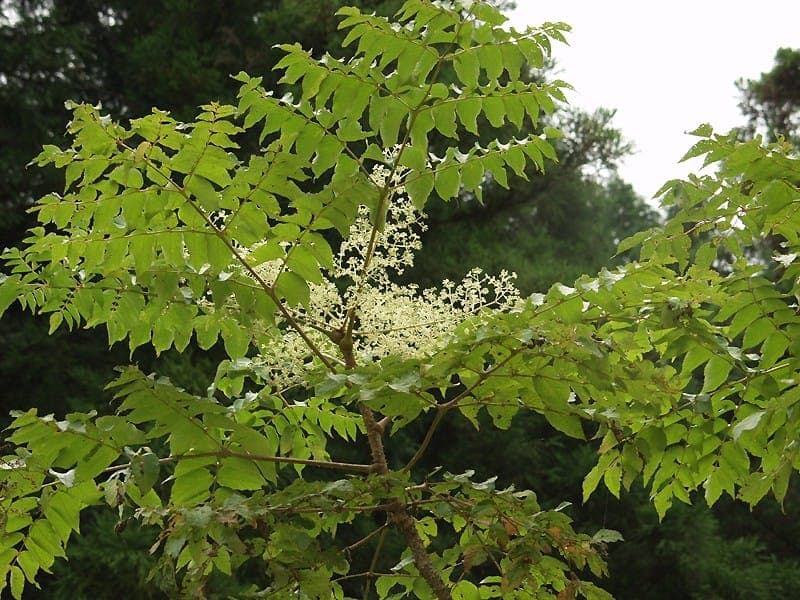
'Uncle Carl' (カールおじさん). / CC BY-SA 3.0, via Wikimedia Commons
Japanese angelica tree: complete guide
Aralia elata
Want to see Japanese angelica tree: complete guide in your garden?
1 minute, no credit card
Overview
The Japanese angelica tree, or Aralia elata, is a bold and architectural plant that brings a tropical vibe to temperate gardens. Native to Japan, Korea, and parts of eastern Russia and China, this deciduous tree can reach heights of up to 6 meters and spreads about 3 to 4 meters wide. It's not actually related to angelica but earns its name from the large, dramatic foliage and tall flower spikes. In the UK and North America, it's become a popular choice for gardeners wanting a statement plant with minimal upkeep.
Hardy in USDA zones 6 to 9, the Japanese angelica tree thrives in most garden settings, provided there's enough space and a decent soil structure. It's not invasive in most climates, but it can self-seed if conditions are ideal. For visual planning, gardenworld.app offers a smart way to preview how this tree fits into your garden layout. Try pairing it with bold foliage plants or placing it as a standalone feature in a mixed border.
Appearance & bloom cycle
This tree is most striking in mid to late summer when it sends up large, plume-like panicles of creamy-white flowers, sometimes reaching 50 cm in length. These blooms appear at the ends of mature stems and attract bees and hoverflies. Each leaf is a compound of 7 to 15 leaflets, creating a lush, tropical feel. The foliage can stretch up to 1 meter long, giving it a bold presence in the garden.
From September, leaves begin to yellow and drop, revealing the spiny, almost prehistoric-looking stems. These textured trunks add winter interest, especially when backlit by low sunlight. While the plant doesn't flower until it's at least 3 to 4 years old, patience pays off with a dramatic floral display.
Ideal location
Choose a sunny to partly shaded spot for best results. Full sun encourages denser growth and stronger flowering, but partial shade works well too, especially in hotter regions. Avoid planting too close to walkways - the stems are armed with thorns that can snag clothing or skin.
Allow at least 3 meters of clearance around the plant for airflow and to prevent crowding. This is especially important in smaller gardens. Use gardenworld.app to simulate different planting positions and see how shadows and growth patterns evolve over the seasons.
Soil requirements
The Japanese angelica tree prefers fertile, well-drained soil but tolerates a wide range of conditions. It handles clay soils if they're not waterlogged and benefits from added organic matter like compost or leaf mould. The ideal pH is between 5.5 and 7.0. Avoid highly alkaline soils, as this can lead to nutrient deficiencies.
If your garden has poor drainage, consider planting on a raised bed or mound. This helps prevent root rot, especially during wet winters.
Free design
Want to see Japanese angelica tree: complete guide in your garden? Make a free design now.
Watering
During the first two growing seasons, keep the soil consistently moist but not soggy. Water deeply once a week during dry spells. Once established, the plant is fairly drought-tolerant, though prolonged dryness can cause leaf drop or stunted growth.
Mulch around the base with organic material to retain moisture and suppress weeds. Avoid overhead watering in hot weather to prevent scorching the large leaves.
Pruning
Pruning isn't required unless you want to control size or shape. If needed, prune in early spring before new growth emerges. Cut back stems to just above a healthy bud, and remove any dead or crossing branches. Wear thick gloves - the stems are covered in sharp thorns.
Avoid heavy pruning, as it can delay flowering. The plant blooms on old wood, so cutting too much may reduce flower production the following year.
Maintenance calendar
January: Inspect stems for winter damage; remove any broken branches. February: Prepare tools for spring pruning. March: Apply a layer of compost around the base. April: Watch for emerging shoots; water if soil is dry. May: Check for pests like aphids on new growth. June: Monitor foliage health; ensure adequate moisture. July: Enjoy flowering; support tall stems if needed. August: Continue monitoring for drought stress. September: Leaves begin to yellow; reduce watering. October: Clear fallen leaves to reduce disease risk. November: Mulch around the base for winter protection. December: Minimal care required.
Winter hardiness
The Japanese angelica tree is hardy down to -23°C (USDA zone 6). In colder zones, young plants may benefit from a thick mulch layer to protect the crown. Mature specimens handle winter well, though extreme ice or snow loads can damage stems. In milder areas, the plant may retain some leaf structure into early winter.
Companion plants
Pair with shade-tolerant perennials like ferns, hostas, or astilbes. These complement the bold foliage while filling in the understory. Avoid aggressive spreaders that compete for nutrients. Smaller ornamental grasses or evergreen shrubs can also create a nice contrast.
For garden inspiration, check gardenworld.app to explore plant combinations that enhance texture and seasonal interest.
Closing
The Japanese angelica tree is a conversation starter - bold, architectural, and surprisingly easygoing once established. With room to grow and a bit of thoughtful placement, it becomes a standout feature in any garden. Buy from trusted garden centres that stock healthy, well-rooted specimens. Avoid wild-collected plants to support sustainable growing practices. With the right care, this exotic-looking tree will thrive for years.
Want to see Japanese angelica tree: complete guide in your garden? Make a free design now.
Upload a photo, pick a style, and get a photorealistic design with plant list in under a minute.
No credit card required


Similar plants
American marsh pennywort: complete guide
Hydrocotyle americana
Everything about Hydrocotyle americana: location, soil, moisture and winter care. A delicate groundcover for shaded pond edges and boggy garden borders.
Devil's club: complete guide
Oplopanax horridus
Full guide to growing Oplopanax horridus: ideal site, soil, watering, and care for this dramatic spiny woodland shrub.
Water pennywort: complete guide
Hydrocotyle umbellata
Everything about Hydrocotyle umbellata: ideal location, soil, watering, winter care and pond planting. A versatile aquatic plant for garden ponds and boggy spots.