
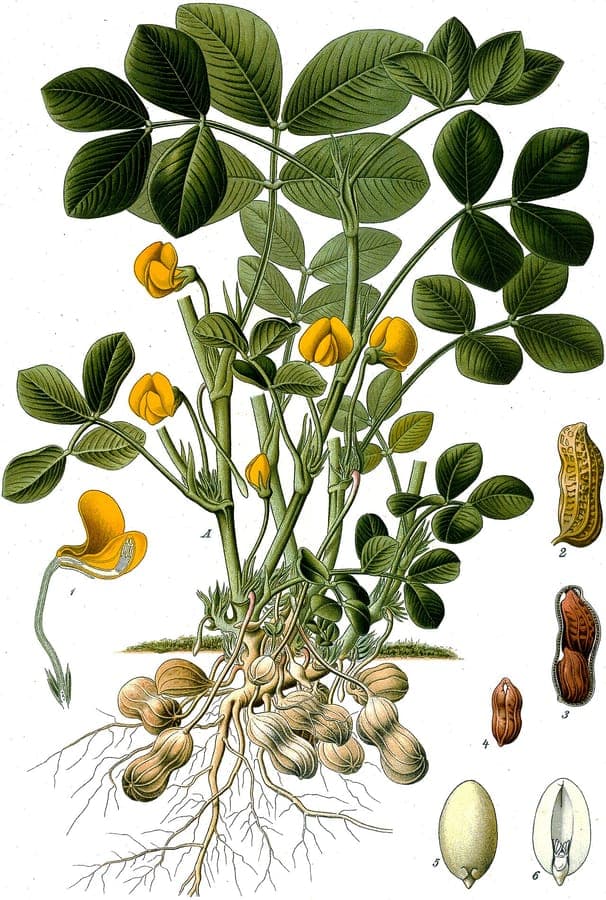
Franz Eugen Köhler, Köhler's Medizinal-Pflanzen / Public domain, via Wikimedia Commons
Goober: complete guide
Arachis hypogaea
Want to see Goober: complete guide in your garden?
1 minute, no credit card
Overview
Goober, better known as peanut (Arachis hypogaea), isn't a nut at all - it's a herbaceous annual from the Fabaceae family. Native to Bolivia, this plant thrives in warm climates and is grown for its edible seeds that develop underground. That's right - after flowering above ground, the stalks bend down and bury the ovary into the soil, where peanuts form. This rare process is called geocarpy, and it sets the goober apart from most garden crops.
In temperate regions like the UK or the northern US (USDA zones 8-11), you can grow goobers successfully if you give them a long, warm season. They need about 120 to 150 frost-free days, so starting seeds indoors in late spring is key. If you're designing a food garden, use gardenworld.app to map out your crop rotation and companion planting - goobers fix nitrogen, so they're great predecessors to heavy feeders like tomatoes.
Appearance & bloom cycle
Goober plants grow 15 to 25 cm tall with a spreading habit, reaching up to 50 cm wide. The leaves are pinnate with four oval-shaped, bright green leaflets that close at night. From June to August, small yellow flowers appear at the base of the leaves. Each flower lasts just one day, but new ones keep forming.
After pollination, the flower stalk (called a peg) elongates and pushes the developing pod into the soil. This peg grows downward at a rate of about 1–2 cm per day until it's 2.5 to 5 cm below the surface. That's where the peanuts mature over the next 30 to 40 days. You won't see the fruit unless you dig - a fun surprise at harvest time.
Ideal location
Full sun is non-negotiable. Goober plants need at least 8 hours of direct sunlight daily. Choose a warm, sheltered spot - a south-facing bed or against a brick wall works well because it retains heat. If you're short on space, grow them in containers at least 30 cm deep and wide. Use quality potting mix and place the pot in the sunniest part of your yard or patio.
Space plants 20 cm apart in rows 40 cm apart. This allows room for the pegs to reach the soil without obstruction. Planning your layout on gardenworld.app helps avoid overcrowding and ensures proper airflow, which reduces disease risk.
Soil requirements
Goobers need loose, well-drained soil. Heavy clay or compacted soil will block the pegs from entering the ground, leading to poor yields. Amend your bed with sand or compost to improve texture. The ideal pH is slightly acidic: 5.8 to 6.2. Avoid liming the soil - too much calcium can interfere with pod development.
Since goobers are legumes, they form symbiotic relationships with nitrogen-fixing bacteria. Don't add nitrogen-rich fertiliser - it'll promote leafy growth at the expense of peanuts. Instead, a balanced 5-10-10 fertiliser at planting is sufficient.
Free design
Want to see Goober: complete guide in your garden? Make a free design now.
Watering
Keep the soil evenly moist, especially during flowering and peg development (July to early August). Aim for 2.5 to 5 cm of water per week, either from rain or irrigation. Drip lines or soaker hoses work best - they deliver water directly to the roots without wetting the foliage, which helps prevent fungal diseases.
Reduce watering in late August to signal the plant that it's time to mature the pods. Overwatering in the final weeks can cause rot or delay harvest. Stop watering completely a week before digging up the plants.
Pruning
No pruning is needed. Goober plants naturally form a dense, ground-hugging mat that suppresses weeds and conserves moisture. Just remove any yellowing or diseased leaves with clean shears to prevent spread. Never top the plant - you'll risk damaging the pegs that are already forming below.
Maintenance calendar
- April: Start seeds indoors in 8 cm pots, 2.5 cm deep. Keep soil warm (21–27°C).
- May: Harden off seedlings. If your area is still cold, use cloches or row covers.
- June 1–15: Transplant outdoors after last frost (usually late May to early June in zone 8).
- July: Monitor for flowering and peg formation. Keep soil moist.
- August: Begin reducing water. Watch for yellowing leaves - a sign of maturity.
- September: Harvest in the second half, before first frost. Lift plants gently and shake off soil.
- October: Cure peanuts for 1–2 weeks in a dry, ventilated area. Store in mesh bags in a cool, dark place.
Winter hardiness
Goober is a true annual and cannot survive frost. It's not hardy below USDA zone 8. In colder zones, grow it as a summer crop only. Do not attempt to overwinter - the plant will die with the first freeze.
Companion plants
Good companions include corn, squash, and cucumbers - the Three Sisters method works well, as corn provides light shade and support. Avoid planting near other legumes to prevent disease buildup. Marigolds and nasturtiums deter aphids and nematodes when planted around the edges.
Herbs like dill and cilantro attract beneficial wasps and hoverflies, which help control pests. Avoid heavy feeders like potatoes, which compete for nutrients.
Closing
Growing goobers is a rewarding project that adds diversity to your edible garden. While it takes patience and warmth, the payoff - fresh, home-dug peanuts - is worth it. Start with a small patch, learn what works in your microclimate, and expand over time.
You can find seeds at most garden centres in early spring. Look for raw, unroasted peanuts - roasted ones won't germinate. For layout ideas and planting schedules, check gardenworld.app. Whether you're in a backyard or on a balcony, there's room for goobers if you plan right.
Want to see Goober: complete guide in your garden? Make a free design now.
Upload a photo, pick a style, and get a photorealistic design with plant list in under a minute.
No credit card required


Similar plants
Tall Silky Lupine: complete guide
Lupinus elatus
Tall silky lupine is a fast-growing Californian perennial with silvery foliage and blue-purple flower spikes, ideal for a prairie-style garden.
Garfield Lupine: complete guide
Lupinus garfieldensis
The Garfield lupine is a rare, fast-growing American perennial for alkaline, dry grassland gardens, with striking blue flower spikes.
Lupinus elegans: complete guide
Lupinus elegans
Lupinus elegans, the elegant lupine, is a spectacular blooming plant from Mexico with blue flower spikes. Care, cultivation and garden use.