
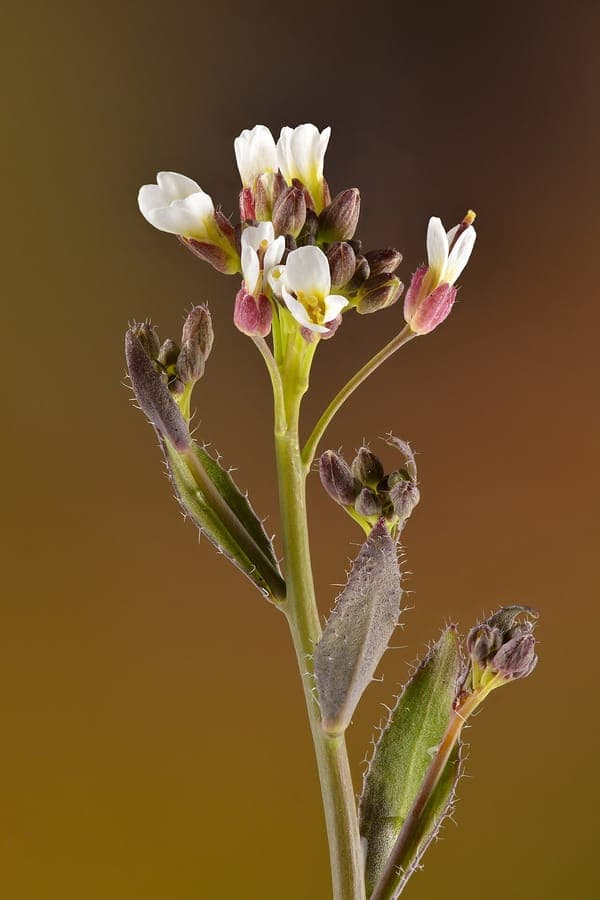
Ivar Leidus / CC BY-SA 4.0, via Wikimedia Commons
Hairy rockcress: complete guide
Arabis hirsuta
Want to see Hairy rockcress: complete guide in your garden?
1 minute, no credit card
Overview
Hairy rockcress (Arabis hirsuta) isn't the kind of plant that shouts for attention, but it earns respect over time. This low-growing perennial thrives where others struggle - in cracks between stones, along dry retaining walls, or in poor, fast-draining soil. Native to regions stretching from Alaska to the Balkans and North Africa, it's adapted to harsh conditions and delivers reliable performance with minimal fuss.
In the wild, it grows in open woodlands, rocky outcrops, and alpine meadows. In cultivation, it behaves much the same: forming dense mats up to 20 cm tall, spreading slowly but steadily. Its common name comes from the fine hairs on the stems and leaves, giving them a slightly rough texture - a subtle detail you'll notice when brushing past it in the garden.
On gardenworld.app you can design a garden layout that highlights Hairy rockcress in crevices and dry corners, pairing it with other resilient plants for a naturalistic look.
Appearance & bloom cycle
Hairy rockcress forms a compact, trailing mound of lance-shaped, grey-green leaves covered in fine hairs. The foliage stays semi-evergreen through winter, offering year-round structure, especially useful in rock gardens or gravel beds.
From April to June, slender flowering stalks rise 25–30 cm above the foliage, topped with clusters of small, four-petaled flowers. The blooms range from white to pale lilac, depending on soil conditions and light exposure. They're a magnet for early pollinators - bees, hoverflies, and small butterflies - making this plant a quiet hero in the ecological garden.
After flowering, narrow seed pods develop and can persist into autumn, adding visual interest. While it can self-seed, it rarely becomes invasive, and seedlings are easy to remove if unwanted.
Ideal location
Full sun is best - aim for at least 6 hours of direct light daily. In shadier spots, the plant becomes leggy and less floriferous. That said, it tolerates light shade, especially in hotter southern zones where afternoon shade can prevent scorching.
This is a plant for tough spots: think dry slopes, stone walls, gravel pathways, or raised beds with sharp drainage. It's perfect for xeriscaping or cottage-style crevices. Avoid planting it in rich, moist borders where more vigorous perennials will quickly overwhelm it.
Soil requirements
Well-drained soil is non-negotiable. Hairy rockcress hates wet feet, especially in winter. Heavy clay or compacted soil will lead to root rot. The ideal mix is gritty, sandy, or stony, with a pH between 6.5 and 8.0. It tolerates alkaline conditions well, making it suitable for chalky or limestone-rich areas.
When planting, amend heavy soil with 30% horticultural grit or coarse sand. Don't enrich the soil with compost or manure - this plant thrives on neglect. Too much fertility results in floppy growth and fewer flowers.
Free design
Want to see Hairy rockcress: complete guide in your garden? Make a free design now.
Watering
Once established, Hairy rockcress is drought-tolerant. Water only during extended dry spells in the first growing season. Young plants need consistent moisture for root development, but even then, let the soil dry between waterings.
Use deep, infrequent watering to encourage strong root systems. Avoid overhead irrigation - wet foliage in cool weather can encourage fungal issues. A drip system or watering at soil level works best.
Pruning
Not essential, but cutting back after flowering improves appearance and may trigger a second, lighter flush in late summer. Trim the spent flower stalks to just above the leaf rosettes using sharp secateurs.
If the center of the plant becomes woody or sparse after several years, divide it in early spring (March–April). Use a clean knife to separate vigorous outer sections and replant them, discarding the old core.
Maintenance calendar
- January–February: Check for winter damage. No active care needed.
- March: Divide or transplant if needed. Remove old leaves.
- April–June: Main flowering period. No feeding. Water only if dry.
- July: Cut back flower stems to encourage rebloom.
- August–September: Possible repeat bloom. Monitor for self-seeding.
- October–December: Leave alone. Foliage persists through winter.
Gardenworld.app offers a personalized maintenance calendar that syncs with your local climate, so you never miss a care step for Arabis hirsuta.
Winter hardiness
Hairy rockcress is hardy in USDA zones 4–8. It withstands winter lows down to -30°C, provided the soil doesn't stay waterlogged. The main winter threat isn't cold, but freeze-thaw cycles that heave shallow roots or prolonged wet soil that causes rot.
No mulch or protection is needed. The semi-evergreen leaves help insulate the crown, and the plant resumes growth quickly in spring.
Companion plants
Pair with other drought-tolerant, low-growing perennials:
- Thymus serpyllum (creeping thyme)
- Sedum spurium
- Aubrieta × cultorum
- Dianthus deltoides (maiden pink)
- Campanula carpatica
Avoid aggressive spreaders like mint or ground ivy. Also keep it away from large shrubs that cast shade or compete for moisture.
Closing
Hairy rockcress is a quiet achiever - not flashy, but dependable. It fills gaps, supports pollinators, and asks for almost nothing in return. If you've got a tricky spot with gravel, stone, or poor soil, this plant deserves a try.
You'll find Arabis hirsuta at independent garden centres across the UK and North America. While not always on the shelf, most carry it on request. Check with staff at garden centres to see if they can source it. With the right placement, it will weave itself into your garden's fabric, blooming reliably year after year.
Want to see Hairy rockcress: complete guide in your garden? Make a free design now.
Upload a photo, pick a style, and get a photorealistic design with plant list in under a minute.
No credit card required


Similar plants
Brassica cretica: complete guide
Brassica cretica
Brassica cretica, the Cretan cabbage, grows wild on Aegean cliffs. Discover how to grow this drought-tolerant, yellow-flowered Mediterranean perennial.
Corsican cabbage: complete guide
Brassica insularis
Corsican cabbage is a rare Mediterranean rock cabbage with white flowers and blue-green leaves. Location, soil and winter protection.
Prostrate cabbage: complete guide
Brassica procumbens
Prostrate cabbage is a creeping North African cliff plant with yellow flowers. Discover location, soil type and winter protection.