
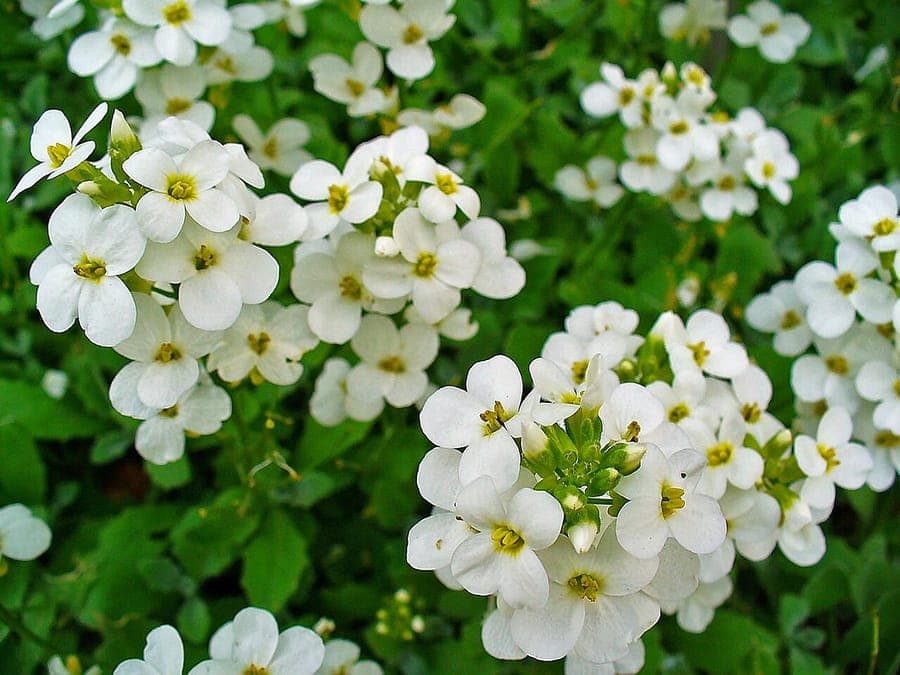
H. Zell / CC BY-SA 3.0, via Wikimedia Commons
Gray rockcress: complete guide
Arabis caucasica
Want to see Gray rockcress: complete guide in your garden?
1 minute, no credit card
Overview
Arabis caucasica, commonly known as Gray rockcress, is a compact, creeping perennial that brings reliable spring color to gardens with minimal effort. Native to rocky slopes in regions like Greece, Albania, Bulgaria, and the Caucasus, this Brassicaceae family member thrives in dry, well-drained conditions where many other plants struggle. In cultivation, it reaches just 15–20 cm in height but spreads up to 30 cm wide, forming dense mats of foliage crowned with delicate blooms.
Hardy to USDA zone 4 (-30°C to -26°C), it handles cold winters with ease and performs best in full sun to light shade-rated 8 on the light scale. Its growth habit straddles the line between herbaceous perennial and subshrub, making it resilient yet soft in texture. This plant is a longtime favorite for rock gardens, alpine beds, and as edging along pathways or low walls.
On gardenworld.app, you can visualise how Gray rockcress fits into your garden's microclimate, especially if you're designing a drought-tolerant or gravel garden.
Appearance & bloom cycle
Gray rockcress bursts into bloom from late March through mid-May, depending on local climate. The flowers are typically pure white, four-petaled, and appear in dense clusters above the foliage. Some older cultivars or stressed plants may produce pale pink blooms, adding subtle variety. Each flower is about 1–1.5 cm across, and the overall effect is a frothy blanket of light color that contrasts beautifully with darker green foliage.
The leaves are lance-shaped, dark green, and slightly hairy with a silvery-gray sheen-hence the common name. They form a semi-evergreen mat that persists through mild winters. After flowering, seed pods develop and split open to release small seeds, which may self-sow in ideal conditions. Deadheading isn't essential but helps tidy the plant and may encourage a light repeat flush in cooler summers.
Ideal location
Choose a spot with at least 6 hours of direct sunlight daily. Gray rockcress excels in alpine gardens, between paving stones, or at the front of borders where drainage is excellent. It's perfect for dry slopes, rock crevices, or raised beds filled with gritty mix. Avoid shaded, damp areas-this plant hates wet feet.
Because it spreads slowly and stays low, it works well as a living edging plant in cottage gardens or around ornamental shrubs. Pair it with early bulbs like crocus or chionodoxa for a layered spring display. Use gardenworld.app to map sun patterns in your yard and identify the best micro-spots for rockcress success.
Soil requirements
This plant demands alkaline soil with a pH between 7.5 and 8. It thrives in chalky, sandy, or gravelly soils that drain rapidly. Heavy clay or acidic soils will lead to poor growth and root rot. If your soil is too acidic, amend it with garden lime and mix in sharp sand or fine grit to improve texture and drainage.
For container growing, use a mix of two parts loam-based compost, one part perlite, and one part horticultural grit. This mimics the rocky, mineral-rich conditions of its native habitat.
Free design
Want to see Gray rockcress: complete guide in your garden? Make a free design now.
Watering
Once established, Gray rockcress is highly drought-tolerant. During the first growing season, water regularly to help roots anchor deeply. After that, natural rainfall is usually sufficient unless you experience prolonged dry spells.
Water deeply but infrequently-about once every 10–14 days during extended drought. Avoid overhead watering to prevent fungal diseases, especially in humid climates. Mulching with gravel instead of organic matter helps keep the crown dry and suppresses weeds.
Pruning
Pruning is simple: cut back the entire plant by about one-third right after flowering, usually in late May. Use clean, sharp shears to trim just above the leaf rosettes. This keeps the plant compact, encourages fresh foliage, and prevents woody stems from developing in the center.
If the plant starts to look leggy or thin in the middle after several years, it's time to divide it in early autumn. Lift the clump, split it into sections with healthy roots, and replant them in refreshed soil.
Maintenance calendar
- January: No action needed; check for winter damage.
- February: Clear debris; watch for early growth.
- March: Apply a light top-dressing of compost; increase watering if dry.
- April: Peak bloom; avoid disturbing flowers.
- May: Deadhead and prune after bloom; remove volunteer seedlings.
- June: No feeding; minimal watering.
- July-August: Drought-resistant; water only in extreme dryness.
- September: Divide or take cuttings if desired.
- October: Leave spent foliage as light mulch.
- November: Protect young plants with gravel or leaf litter in harsh zones.
- December: Monitor for frost heave; no pruning.
Winter hardiness
Gray rockcress is reliably hardy in USDA zones 4 to 8. It holds its foliage through winter in milder areas and rebounds quickly in spring. In colder zones, a light mulch of gravel or pine needles helps protect the crown from freeze-thaw cycles. Avoid heavy organic mulches that retain moisture and promote rot.
Companion plants
Pair Gray rockcress with other sun-loving, drought-tolerant species: Sedum, Thymus, Dianthus, and small Narcissus work beautifully. It contrasts well with dark-leaved Heuchera or purple sage. Use it to soften the edges of stone walls or as a filler between stepping stones.
Avoid planting near aggressive spreaders like mint or ground elder, which can overwhelm its slow expansion.
Closing
Arabis caucasica is a no-fuss, high-reward plant that thrives in tough spots with little care. Its early bloom time, tidy habit, and resilience make it a staple in alpine and cottage gardens alike. Find it at garden centres across the UK and US in spring, or order online from trusted suppliers. With a bit of planning-say, using gardenworld.app to sketch your layout-you can enjoy years of effortless beauty from this understated gem.
Want to see Gray rockcress: complete guide in your garden? Make a free design now.
Upload a photo, pick a style, and get a photorealistic design with plant list in under a minute.
No credit card required


Similar plants
Brassica cretica: complete guide
Brassica cretica
Brassica cretica, the Cretan cabbage, grows wild on Aegean cliffs. Discover how to grow this drought-tolerant, yellow-flowered Mediterranean perennial.
Corsican cabbage: complete guide
Brassica insularis
Corsican cabbage is a rare Mediterranean rock cabbage with white flowers and blue-green leaves. Location, soil and winter protection.
Prostrate cabbage: complete guide
Brassica procumbens
Prostrate cabbage is a creeping North African cliff plant with yellow flowers. Discover location, soil type and winter protection.