
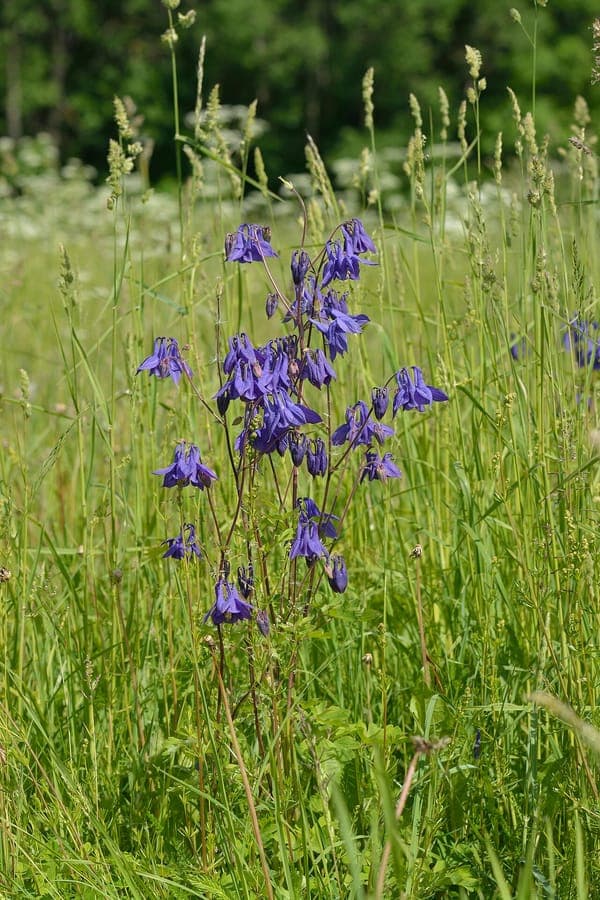
Ivar Leidus / CC BY-SA 3.0 ee, via Wikimedia Commons
European columbine: complete guide
Aquilegia vulgaris
Want to see European columbine: complete guide in your garden?
1 minute, no credit card
Overview
Aquilegia vulgaris, commonly known as European columbine, is a graceful perennial that brings elegance to gardens from late spring into early summer. Native to much of Central and Western Europe, including France, Austria, and the Baltic states, it thrives in USDA hardiness zones 3 to 8. This herbaceous forb typically grows between 15 and 80 cm tall, forming clumps of delicate, fern-like foliage crowned with nodding, spurred blue flowers. It's a long-time favorite for cottage gardens, woodland edges, and shaded borders. As a self-seeding plant, it often returns year after year, gently spreading where conditions are right.
On gardenworld.app, you can design a planting scheme that features European columbine in partial shade zones where it performs best, blending it with other shade-tolerant perennials.
Appearance & bloom cycle
European columbine blooms from May to July, depending on local climate and microsite conditions. The flowers are typically deep blue to violet-blue, though cultivated varieties may come in white, pink, or purple. Each bloom is about 4–5 cm across, with five petal-like sepals and backward-pointing spurs that hold nectar, attracting bees, bumblebees, and hummingbird moths. The finely divided, grey-green leaves form a lush mound that remains attractive even after flowering. Mature plants may produce up to 20 flower stalks per clump, creating a soft, airy display.
Ideal location
This plant prefers dappled or partial shade - think under deciduous trees or on the north side of a structure. It tolerates morning sun but struggles in hot afternoon light, especially in zone 7 and above. Aim for 4 to 6 hours of filtered sunlight daily. Full shade reduces flowering, while full sun in warm climates can lead to scorched leaves and shorter bloom periods. Good air circulation helps prevent powdery mildew, a common issue in humid springs. Use gardenworld.app to map sunlight patterns in your garden and pick the perfect spot.
Soil requirements
Columbine grows best in moist, well-drained soil rich in organic matter. A loamy or sandy loam with a pH between 7.0 and 7.5 is ideal. Avoid heavy clay or waterlogged soils, which can cause root rot. If your soil is compacted, amend it with compost or leaf mould before planting. A 5–10 cm layer of organic mulch applied in spring helps retain moisture and suppress weeds.
Free design
Want to see European columbine: complete guide in your garden? Make a free design now.
Watering
Once established, European columbine is moderately drought-tolerant but performs best with consistent moisture. During dry spells, especially in June and July, water deeply once a week - about 2.5 cm (1 inch) of water per session. Young plants in their first season need more frequent watering to establish strong roots. Always water at the base to keep foliage dry and reduce disease risk.
Pruning
After flowering, cut back flower stalks to the base to prevent excessive self-seeding if you prefer a more controlled look. For naturalistic gardens, leave some stalks to drop seed and encourage gentle spread. Remove any damaged or diseased leaves as needed. In late autumn, you can cut back remaining foliage, but leaving it through winter offers shelter for beneficial insects.
Maintenance calendar
- Jan: Check for winter damage, remove severely damaged foliage
- Feb: Prepare new beds, loosen soil in planting areas
- Mar: Divide or transplant established clumps if needed
- Apr: Apply compost, monitor for aphids and slugs
- May: Bloom begins, ensure consistent moisture
- Jun: Peak bloom, watch for powdery mildew in humid areas
- Jul: Trim spent blooms, allow some seed heads to form
- Aug: Harvest seeds or let them self-sow naturally
- Sep: Transplant seedlings or thin overcrowded patches
- Oct: Mulch with compost, cut back or leave foliage
- Nov: Prepare soil for spring planting
- Dec: Minimal care required, monitor for frost heave
Winter hardiness
European columbine is hardy in USDA zones 3–8, surviving temperatures as low as -40°C. It's semi-evergreen, often retaining a rosette of basal leaves through winter. In milder zones, new growth may appear in late winter. Mulching helps in areas with fluctuating freeze-thaw cycles, which can push shallow roots out of the ground.
Companion plants
Pair European columbine with other shade-loving perennials like Pulmonaria, Heuchera, Tiarella, and Ferns. It also works well with early spring bulbs such as Narcissus and Muscari. Avoid invasive spreaders like mint or aggressive ground covers. In woodland gardens, it blends beautifully with Epimedium and Brunnera.
Closing
European columbine is a low-maintenance, pollinator-friendly plant that adds vertical interest and soft color to shaded areas. Its delicate blooms and fine texture make it a standout in naturalistic designs. Whether you're filling a quiet corner or creating a cottage-style border, it's a reliable performer. You can find Aquilegia vulgaris at most garden centres across the UK and US. And when planning your layout, use gardenworld.app to visualise how columbine integrates with your existing plants, season by season.
Want to see European columbine: complete guide in your garden? Make a free design now.
Upload a photo, pick a style, and get a photorealistic design with plant list in under a minute.
No credit card required


Similar plants
Drummond's anemone: complete guide
Anemone drummondii
Discover Drummond's anemone (Anemone drummondii): a silvery-grey mountain plant for cool rock gardens and alpine troughs.
Korean clematis: complete guide
Clematis serratifolia
Clematis serratifolia is a hardy climber with fragrant yellow bell flowers in August-September. Pruning group 3, location and care tips.
Aquilegia brevistyla: complete guide
Aquilegia brevistyla
Discover Aquilegia brevistyla, the elegant North American columbine. Growing tips, shade tolerance, and design ideas for woodland and shadowed gardens.