
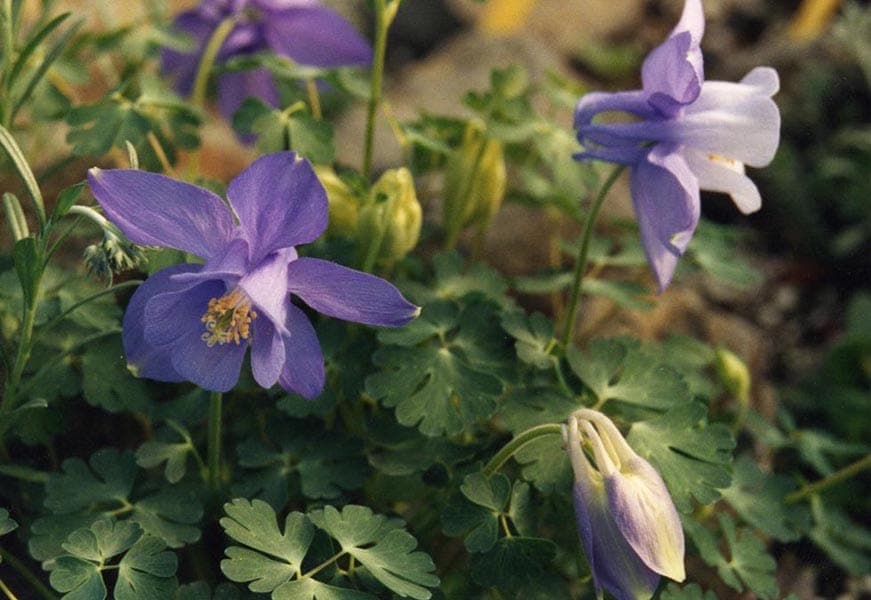
Ghislain118 (AD) http://www.fleurs-des-montagnes.net / CC BY-SA 3.0, via Wikimedia Commons
Aquilegia saximontana: complete guide
Aquilegia saximontana
Want to see Aquilegia saximontana: complete guide in your garden?
1 minute, no credit card
Overview
Aquilegia saximontana, commonly known as Rocky Mountain blue columbine, is a native wildflower from Colorado's high mountain regions. This diminutive alpine grows between rocks at elevations of 2000-3500 metres. The plant is distinguished by exceptionally compact growth (barely 10-15 centimetres) and gorgeous blue-purple flowers with yellow stamens. This is a genuine jewel for alpine gardeners and seed collectors.
Appearance and Bloom
The Rocky Mountain blue columbine forms very compact rosettes of finely divided, grey-green foliage. Flowers are relatively large compared to plant size, held upright on short stems, in stunning blue-purple colours with yellow stamens and long spurs. Blooming occurs May through July. Seed pods mature rapidly and shatter readily. This plant is a delightfully tidy alpine flower: neat, elegant, and dainty.
Ideal Location
Full sun to light dappled shade is preferred in alpine troughs or very rocky gardens. Minimum 6 hours sunlight daily. This columbine grows best at cool mountain locations; in warmer zones (below USDA zone 5) afternoon shade is welcome. Preference for north or northeast-facing gardens on mountainous terraces. Protective exposure to air movement is favourable, though strong drying winds can cause damage.
Soil
Alpine, gritty soil with excellent drainage is mandatory. Mix: 50% grit, 25% sand, 25% compost/leaf mould. Acidic soil conditions are preferred. pH 5.5-6.5 is ideal. No heavy clay soils; this plant rots in waterlogged conditions. Add gravel to potting compost for container culture. This columbine loves mountainous, steep slopes with spring moisture seeping.
Free design
Want to see Aquilegia saximontana: complete guide in your garden? Make a free design now.
Watering
Moderate watering during the growing season (April to July), then gradually reduce. Do not allow soil to dry during flowering. Once seed is collected and foliage yellows, drastically reduce water. Winter: minimal, almost completely dry. Container plants require daily checking; never allow standing water. This plant tolerates moderate dryness better than excessive moisture.
Pruning
Hardly necessary. Remove only faded flowers to limit seed production (unless you want seeds). After seed collection, stems can be cut at ground level. Old, blackened foliage is removed. However, this compact plant requires virtually no pruning; let it follow its natural growth cycle.
Maintenance Calendar
April-May: growth, light feeding, watering twice weekly. June-July: flowering, water once weekly, seed collection. August-September: dormancy period, water significantly reduced. October-March: winter rest, extremely minimal moisture management.
Winter Hardiness
Aquilegia saximontana is very frost-hardy, to -25 degrees Celsius or lower. It grows in native habitat above the snowline. The problem is not frost but winter moisture. Overhead shelters or cloches prevent water accumulation. Snowed-under plants in native Colorado are robust; in wetter European winters, protection is advisable. USDA zones 2-5 are ideal.
Companion Plants
The blue columbine pairs beautifully with other Rocky Mountain alpines: Eritrichium nanum, Thlaspi fendleri, Pulsatilla patens, Mertensia, small Primula species. In troughs combine with mineral-loving alpines like Dianthus, Minuartia. Silhouette contrast with grasses is permissible, but avoid dominant neighbours.
Closing Remarks
Aquilegia saximontana is an absolute treasure for alpine gardeners wishing to recreate their Colorado botanical heritage. With alpine grit, dry winters, and sharp light, this blue columbine will bloom in all its glory. It is not easy, but for genuine mountain flora enthusiasts, it is indispensable.
Want to see Aquilegia saximontana: complete guide in your garden? Make a free design now.
Upload a photo, pick a style, and get a photorealistic design with plant list in under a minute.
No credit card required


Similar plants
Drummond's anemone: complete guide
Anemone drummondii
Discover Drummond's anemone (Anemone drummondii): a silvery-grey mountain plant for cool rock gardens and alpine troughs.
Korean clematis: complete guide
Clematis serratifolia
Clematis serratifolia is a hardy climber with fragrant yellow bell flowers in August-September. Pruning group 3, location and care tips.
Aquilegia brevistyla: complete guide
Aquilegia brevistyla
Discover Aquilegia brevistyla, the elegant North American columbine. Growing tips, shade tolerance, and design ideas for woodland and shadowed gardens.