
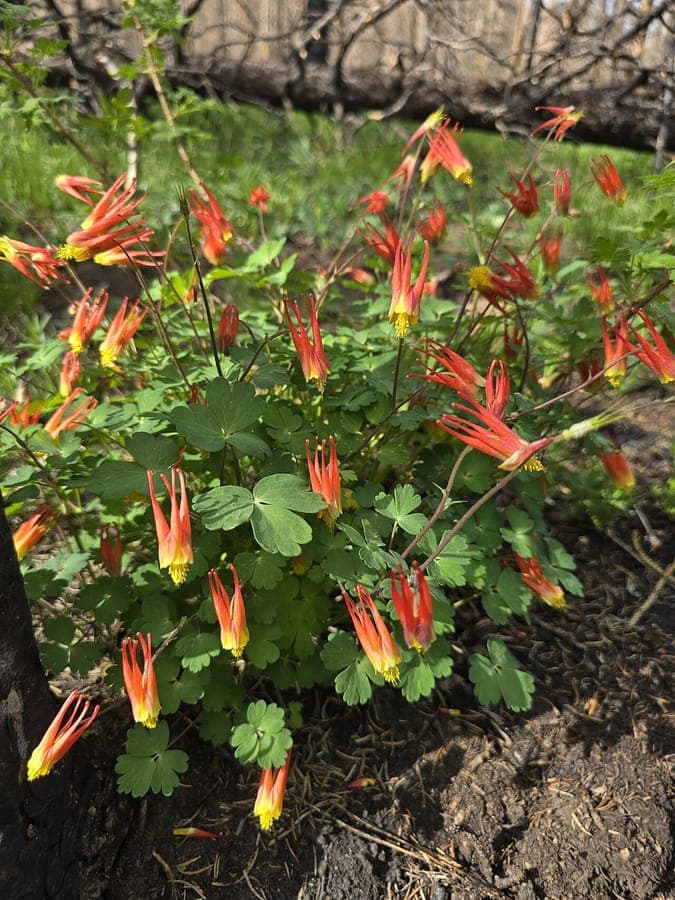
Alan Rockefeller https://www.inaturalist.org/people/alan_rockefeller / CC BY 4.0, via Wikimedia Commons
Aquilegia elegantula: complete guide
Aquilegia elegantula
Want to see Aquilegia elegantula: complete guide in your garden?
1 minute, no credit card
Overview
Aquilegia elegantula, commonly called western red columbine, is a charming mountain flower native to southwestern North America, particularly Colorado, New Mexico and northern Mexico. This delicate plant is renowned for its elegant, bicolor blooms with red and yellow tones.
The plant belongs to the Ranunculaceae family (buttercup family), the same family as delphiniums, hellebores and buttercups. Aquilegia species (columbines) are beloved by botanical enthusiasts for their complex flower structure with characteristic spurs.
This species is an excellent choice for gardens with partial shade and for those seeking something elegant and delicate without excessive care.
Appearance and bloom period
Aquilegia elegantula forms a slender, upright plant approximately 40-60 centimeters tall with finely divided, bluish-green foliage that is very decorative. The flowers are the true attraction: they range from red to orange-red with yellow centers and characteristic long, thin spurs.
Flowers emerge in May through June, measuring about 3-4 centimeters across. They hang elegantly downward and are very attractive to hummingbirds and bees. The plant forms seedheads after flowering, creating interesting architectural details.
The foliage remains decorative throughout the growing season, especially if the plant receives consistent moisture and is not dried out.
Ideal location
Aquilegia elegantula thrives best in partial shade, especially in warmer climates where full sun requires afternoon shade. The plant requires approximately 4-6 hours direct sunlight daily. A spot beneath deciduous trees is ideal.
In cooler mountainous regions, the plant can also grow in full sun as long as the soil receives consistent moisture. Shade protects against wilting in hot, dry periods. For borders, woodland gardens and shady corners, this is a perfect choice. The plant looks beautiful in groups as background for other shade-loving plants.
Soil
Aquilegia elegantula prefers well-structured, humus-rich soil with good drainage. The plant grows best in slightly acidic to neutral soil (pH 6.5-7). The soil should not be compacted; loose, fertile ground promotes strong growth.
Amend generously with compost or leaf mold before planting. This improves water retention and nutrition. The plant tolerates dry soils better than wet, waterlogged ones, so drainage is more important than water retention.
In very heavy soils the plant grows poorly and may suffer from disease. Ensure a well-prepared planting location.
Free design
Want to see Aquilegia elegantula: complete guide in your garden? Make a free design now.
Watering
Aquilegia elegantula requires regular water during the growing season, especially if the plant is in full sun. Ensure the soil does not dry out, as this causes wilting and poor flower production.
During hot periods, daily watering may be necessary. In partial shade, water evaporates more slowly and regular watering is still beneficial. After flowering, you can reduce watering, as long as the plant doesn't completely dry out.
In container cultivation the plant needs more water than in open ground. Ensure good drainage holes and quality potting soil.
Pruning
Regularly deadhead spent flowers for longer bloom and neater appearance. This also encourages lateral buds to develop. After flowering, you can trim the stems and cut the plant back to approximately 10-15 centimeters tall.
This stimulates new flower production and gives the plant a neater appearance. Leave a few seedheads for seed dispersal or collection. In autumn the aboveground parts die; cut the plant to ground level then. Remove faded parts as needed.
Maintenance calendar
March-April: Sow seeds after 3-4 weeks cold period. Germination: 14-21 days.
May: Plant outside after frost danger passes.
May-June: Regular watering, weeding, initial bloom.
June-July: Bloom period, deadhead spent flowers, apply fertilizer.
August-September: Reduce watering, plant gradually dies back.
October-November: Plant dies back, collect seeds, remove plant.
Winter hardiness
Aquilegia elegantula is reasonably winter-hardy in temperate climates (USDA zones 4-8), depending on location. In many European regions it can survive as an evergreen plant or regrow from seed.
In very cold continental climates (-30 degrees Celsius) it may die. For safety, seeds can be stratified for next spring. Overall, this species suits temperate mountainous regions and warmer European climates.
Companion plants
Aquilegia elegantula pairs beautifully with other shade-loving plants:
- Heuchera (coral bells) - foliage contrast
- Phlox subulata - underplanting flowers
- Astilbe - fine texture
- Brunnera macrophylla - foliage contrast
- Helleborus (Christmas rose) - other elegant bloomer
These combinations create interesting plantings with diverse heights and structure.
Conclusion
Aquilegia elegantula is an elegant, delicate flower that loves partial shade and requires no mass treatment. With its red and yellow blooms, fine foliage and preference for mountainous conditions, it adds subtle beauty to temperate gardens.
This is the plant for those seeking something botanically interesting that offers elegant surroundings. The flower is a classic favorite of garden designers and plant collectors. Sow this year and enjoy this delicate mountain flower!
On gardenworld.app, discover more designs featuring shade-loving plants. Find how to transform shady corners into botanical paradises.
Want to see Aquilegia elegantula: complete guide in your garden? Make a free design now.
Upload a photo, pick a style, and get a photorealistic design with plant list in under a minute.
No credit card required


Similar plants
Drummond's anemone: complete guide
Anemone drummondii
Discover Drummond's anemone (Anemone drummondii): a silvery-grey mountain plant for cool rock gardens and alpine troughs.
Korean clematis: complete guide
Clematis serratifolia
Clematis serratifolia is a hardy climber with fragrant yellow bell flowers in August-September. Pruning group 3, location and care tips.
Aquilegia brevistyla: complete guide
Aquilegia brevistyla
Discover Aquilegia brevistyla, the elegant North American columbine. Growing tips, shade tolerance, and design ideas for woodland and shadowed gardens.