
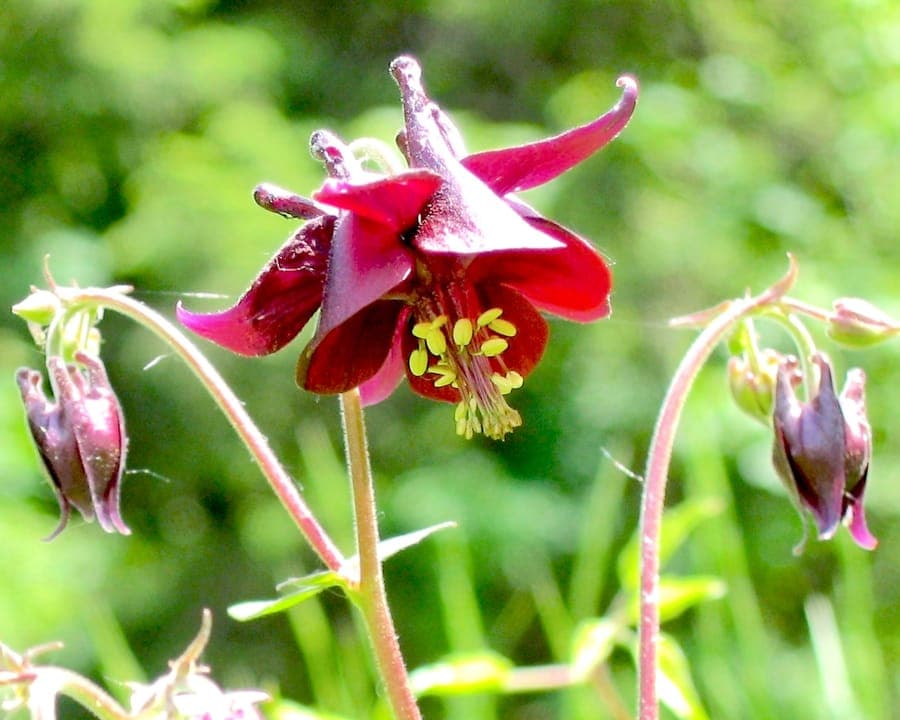
Harald Süpfle / CC BY-SA 2.5, via Wikimedia Commons
Dark columbine: complete guide
Aquilegia atrata
Want to see Dark columbine: complete guide in your garden?
1 minute, no credit card
Overview
Aquilegia atrata, commonly known as dark columbine, is a charming perennial native to the mountainous regions of central Europe, including the Alps and pre-Alpine zones of Austria, Germany, and northern Italy. Standing 30 to 50 cm tall, this plant thrives in cool, well-drained soils and brings a touch of wild elegance to gardens. It's perfectly adapted to rocky crevices and woodland edges, making it a top pick for naturalistic and rock garden designs. Hardy to USDA zone 4, it reliably returns each spring, forming clumps that slowly expand over the years. While not as widely available as other columbines, it's worth seeking out for its unique flower colour and graceful form.
Appearance & bloom cycle
The dark columbine produces striking, nodding flowers in deep blue to almost black hues, with prominent golden stamens that contrast beautifully against the dark petals. The blooms are spurred and hang gracefully from slender stems, giving them a delicate, floating appearance. Flowering occurs from May through July, depending on elevation and local climate. The foliage is finely divided, soft green, and slightly hairy, forming a lush mound that stays attractive well into summer. After blooming, the seed heads remain decorative, adding structure to the garden through late summer.
Ideal location
This columbine prefers partial shade-think dappled light under deciduous trees or the east-facing side of a wall. A spot with morning sun and afternoon shade is ideal. While it can tolerate full sun in cooler climates, intense afternoon rays in warmer zones may scorch the leaves or shorten the bloom period. Avoid exposed, windy sites, which can damage the delicate flower stems. On gardenworld.app, you can design a shaded garden layout that highlights the subtle beauty of Aquilegia atrata.
Soil requirements
Aquilegia atrata thrives in alkaline soils with a pH between 7.5 and 8.0. It naturally grows in limestone-rich substrates, so a gritty, well-drained mix with added garden lime or crushed oyster shell works well. Avoid acidic, peaty soils. The key is moisture retention without waterlogging-amend heavy clay with compost and sharp sand, or grow in raised beds. A top dressing of compost in early spring boosts fertility without smothering the crown.
Watering
Keep the soil consistently moist during the growing season, especially in dry springs and early summers. Water at the base to prevent fungal issues on leaves. Once established, the plant has moderate drought tolerance, but prolonged dry spells will reduce flowering and vigour. Mulching with gravel or fine stone helps retain moisture and keeps the root zone cool-ideal for alpine species like this one.
Free design
Want to see Dark columbine: complete guide in your garden? Make a free design now.
Pruning
Deadhead spent flowers if you want to prevent self-seeding, though allowing a few to set seed can result in charming naturalised colonies. Cut back the entire plant in late summer or early autumn once it starts to look tired. Avoid cutting too early-let the foliage die back naturally to feed the roots for next year's growth.
Maintenance calendar
- Jan: Check for crown rot in wet areas; ensure drainage.
- Feb: Prepare planting beds; improve soil if needed.
- Mar: Apply light compost; watch for emerging shoots.
- Apr: Protect new growth from slugs; water during dry spells.
- May: Flowers begin; increase watering if dry.
- Jun: Peak bloom; deadhead selectively.
- Jul: Allow some seed pods to form; monitor for aphids.
- Aug: Reduce watering if rains return; avoid fertilising.
- Sep: Begin cutting back dead foliage.
- Oct: Clear debris; protect young plants with dry mulch.
- Nov: No action needed; plant enters dormancy.
- Dec: Inspect for winter damage in mild zones.
Winter hardiness
Hardy to USDA zone 4 (-34°C), Aquilegia atrata handles cold winters well. In areas with heavy, wet snow, avoid piling snow on the crowns. In zone 3, a dry winter mulch of straw or pine boughs helps insulate the roots. Avoid wet winter soils, which are the main cause of winter kill. Mature plants are more resilient than first-year specimens.
Companion plants
Pair dark columbine with ferns, Epimedium, Pulmonaria, or Alchemilla mollis for a woodland effect. It also works well in rock gardens with Sedum, Thymus, or Campanula carpatica. Avoid aggressive spreaders like mint or ground ivy. For visual contrast, plant near white-flowering Geranium macrorrhizum or silver-foliaged Artemisia. Using gardenworld.app, you can preview plant pairings and create a balanced design before planting.
Closing
Aquilegia atrata isn't flashy, but it's deeply rewarding for gardeners who appreciate subtle beauty and alpine character. It's low-maintenance, long-lived, and brings a quiet elegance to shaded corners. Once established, it asks for little beyond occasional tidying and good drainage. Look for it at garden centres in late spring, especially at independents or specialist nurseries. OBI and Hornbach in Germany, Truffaut in France, and garden centres across the UK often carry it in May or June. Plant in autumn or early spring for the best establishment.
Want to see Dark columbine: complete guide in your garden? Make a free design now.
Upload a photo, pick a style, and get a photorealistic design with plant list in under a minute.
No credit card required


Similar plants
Drummond's anemone: complete guide
Anemone drummondii
Discover Drummond's anemone (Anemone drummondii): a silvery-grey mountain plant for cool rock gardens and alpine troughs.
Korean clematis: complete guide
Clematis serratifolia
Clematis serratifolia is a hardy climber with fragrant yellow bell flowers in August-September. Pruning group 3, location and care tips.
Aquilegia brevistyla: complete guide
Aquilegia brevistyla
Discover Aquilegia brevistyla, the elegant North American columbine. Growing tips, shade tolerance, and design ideas for woodland and shadowed gardens.