
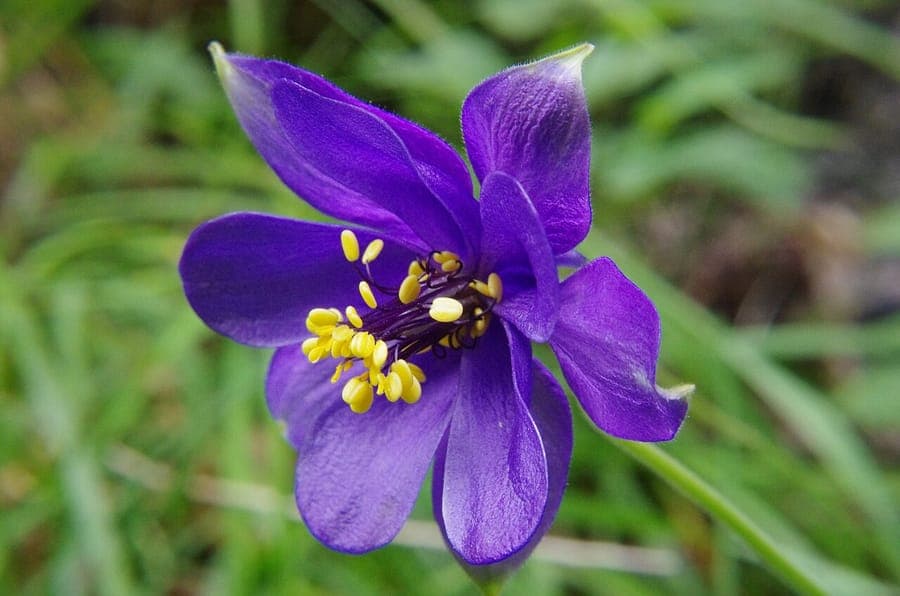
Paolo Villa / CC BY-SA 4.0, via Wikimedia Commons
Alpine columbine: complete guide
Aquilegia alpina
Want to see Alpine columbine: complete guide in your garden?
1 minute, no credit card
Overview
Aquilegia alpina, commonly known as Alpine columbine, is a hardy, clump-forming perennial native to the mountainous regions of Austria, Switzerland, Italy, and France. Standing 30–45 cm tall, it's a graceful addition to rock gardens, alpine beds, and shaded borders. With its nodding, spurred flowers and finely divided foliage, this plant brings a delicate structure and cool-toned elegance to the garden from early summer into late summer.
This species thrives in USDA hardiness zones 4–7, making it suitable for gardeners across much of Europe and North America. It's not invasive like some of its relatives, and its compact growth habit keeps it well-behaved in mixed planting schemes.
On gardenworld.app, you can upload your garden layout and receive tailored planting suggestions that include Alpine columbine in naturalistic or rock garden designs.
Appearance & bloom cycle
Alpine columbine features bushy, dark green, ternately divided leaves that form a basal rosette. The upright stems carry delicate, pendent flowers with backward-pointing spurs. The blooms are typically a soft lavender-blue on the outside, fading to white or pale violet inside, creating a subtle two-tone effect. Each flower measures about 4–5 cm across and appears in loose, airy clusters.
Flowering begins in early June and can last through August, depending on elevation and local climate. In cooler zones, the display may peak in July. The nectar-rich flowers attract bumblebees and other pollinators, enhancing the ecological value of your garden.
After blooming, seed heads form. If self-seeding is not desired, cut back the stems before seeds mature. While self-sowing is possible, it's usually moderate and manageable in garden settings.
Ideal location
Alpine columbine performs best in light shade to partial sun, with a light requirement of 6 out of 10. Full sun is acceptable only in cooler climates where the soil stays consistently moist and roots are shaded by companion plants or mulch. In hot, dry locations, the plant may wilt or go dormant early.
Ideal settings include rock crevices, the base of stone walls, or woodland garden edges. It also works well in raised beds with excellent drainage. Avoid deep shade, as this leads to leggy growth and reduced flowering.
Soil requirements
This plant prefers neutral to slightly alkaline soil with a pH between 7.0 and 7.5. Acidic, heavy clay soils should be amended with grit, sharp sand, and composted leaf matter. Incorporate crushed limestone if pH testing reveals levels below 7.0.
Soil must be well-drained yet capable of retaining some moisture. A mix of loam, coarse sand, and organic compost provides the ideal balance. Avoid waterlogged conditions - root rot is a common issue in poorly drained sites.
Use gardenworld.app to simulate soil amendments and visualize how Alpine columbine will integrate into your existing planting beds based on pH and drainage data.
Free design
Want to see Alpine columbine: complete guide in your garden? Make a free design now.
Watering
Once established, Alpine columbine is moderately drought-tolerant but performs best with consistent moisture during dry spells. Water deeply at the base to prevent fungal issues on leaves and flowers. Avoid overhead watering, especially in humid conditions.
In wet years or in shady, moist microclimates, supplemental irrigation may not be needed. Use rainwater when possible, as tap water with high mineral content can alter soil pH over time.
Pruning
Pruning is minimal. After the main flowering flush, cut back spent flower stems to just above the foliage to encourage a tidy appearance and possibly a light rebloom in September. Remove any damaged or yellowing leaves as they appear.
In autumn, you can leave the foliage in place to protect the crown during winter, especially in zone 4. In milder zones (5–7), cut back the plant in November or early December for a cleaner winter look.
Maintenance calendar
- January–February: Check for frost heaving. Push down any lifted plants and top with compost.
- March: Remove old foliage if damaged. Begin light feeding as soil warms.
- April–May: Keep soil evenly moist. Plant new specimens.
- June–August: Peak bloom. Deadhead regularly. Water during dry periods.
- September: Watch for second flush. Remove seed heads to limit self-sowing.
- October–December: Cut back or leave foliage. Mulch lightly in colder zones.
Winter hardiness
Alpine columbine is reliably hardy in USDA zones 4–7. In zone 4, apply a light mulch of compost or leaf mould after the ground freezes to prevent heaving. Avoid heavy mulches that retain moisture and promote rot.
Winter wetness is more dangerous than cold. In regions with heavy winter rain, ensure excellent drainage by planting on a slope or raised bed.
Companion plants
Pair Alpine columbine with other alpine or woodland species such as Campanula carpatica, Arabis alpina, or Geranium macrorrhizum. It also contrasts beautifully with silvery foliage plants like Artemisia schmidtiana or low-growing thymes.
Avoid aggressive spreaders like mint or goldenrod that could overwhelm it. Choose companions with similar needs: partial shade, neutral pH, and good drainage.
Closing
Alpine columbine is a refined, low-maintenance choice for gardeners seeking elegance without fuss. Its airy blooms and clean foliage make it a standout in naturalistic designs. Plant it in a rock garden, along a dry stone wall, or in a shaded border for a cool, serene effect.
You can find Aquilegia alpina at garden centres across the UK and North America. Look for it at trusted retailers or order online for spring planting. With the right conditions and a little seasonal care, it will return beautifully year after year.
For inspiration and custom layout ideas, visit gardenworld.app and explore planting plans where Alpine columbine plays a key role.
Want to see Alpine columbine: complete guide in your garden? Make a free design now.
Upload a photo, pick a style, and get a photorealistic design with plant list in under a minute.
No credit card required


Similar plants
Drummond's anemone: complete guide
Anemone drummondii
Discover Drummond's anemone (Anemone drummondii): a silvery-grey mountain plant for cool rock gardens and alpine troughs.
Korean clematis: complete guide
Clematis serratifolia
Clematis serratifolia is a hardy climber with fragrant yellow bell flowers in August-September. Pruning group 3, location and care tips.
Aquilegia brevistyla: complete guide
Aquilegia brevistyla
Discover Aquilegia brevistyla, the elegant North American columbine. Growing tips, shade tolerance, and design ideas for woodland and shadowed gardens.