
MPF / CC BY-SA 4.0, via Wikimedia Commons
Celery: complete guide
Apium graveolens
Want to see Celery: complete guide in your garden?
1 minute, no credit card
Overview
Celery (Apium graveolens) is a versatile herbaceous biennial grown as an annual in most home gardens. Belonging to the Apiaceae family, it's native to regions across southern Europe, North Africa, and Western Asia, including areas like Albania, Algeria, and the Azores. While commonly used in soups, stews, and salads, growing celery in your garden offers a fresher, more flavorful alternative to store-bought stalks. It thrives in USDA hardiness zones 2–10 when grown as an annual, requiring a long, cool growing season of about 130–140 days from seed to harvest.
This plant forms upright, tightly packed stalks with pinnate leaves that range from light to dark green. Though often grown for its crisp petioles, the entire plant is edible - including the leaves, which can be used like parsley. On gardenworld.app, you can design a custom garden layout that integrates celery with compatible crops and ideal microclimates.
Appearance & bloom cycle
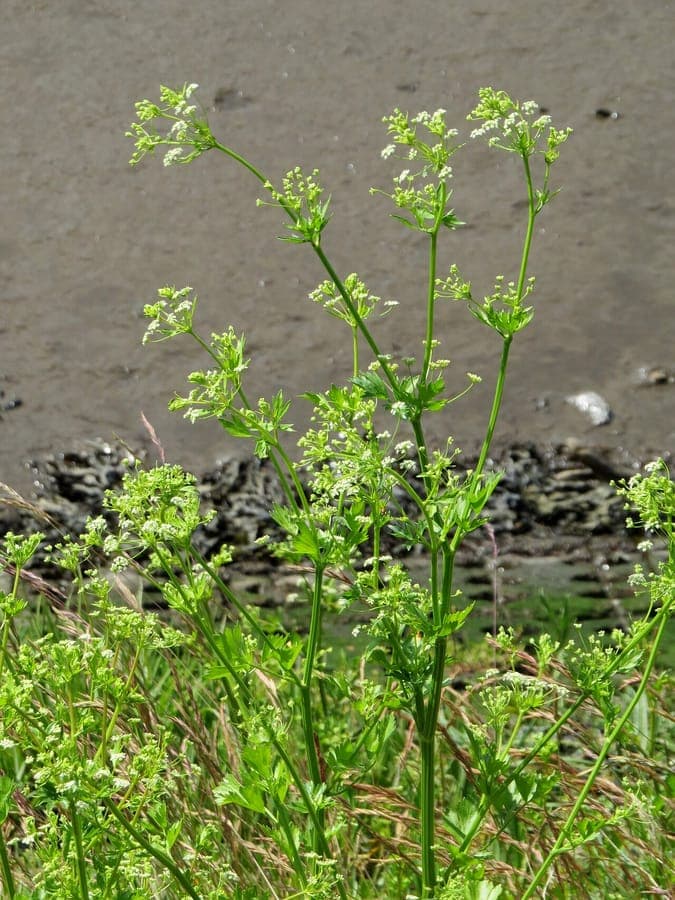
Celery grows as a compact, upright forb reaching 30–60 cm in height. Its compound leaves are finely divided, with a smooth, glossy texture and a strong aromatic scent when crushed. In its first year, it rarely flowers if grown as an annual. When it does bloom - typically in late summer (August–September) - small white or pale pink flowers appear in compound umbels, attracting beneficial insects like hoverflies and parasitic wasps.
The plant's most notable feature is its thick, juicy leaf stalks, which are harvested before the plant bolts. Bolting leads to fibrous, bitter stalks, so timely harvesting is crucial. Leaves can be picked continuously for culinary use.
Ideal location
Celery prefers a spot with full sun to light shade, scoring a 7 on the light intensity scale (1–10). Aim for 5–6 hours of direct sunlight daily, ideally with morning sun and afternoon dappled shade. In hot climates, excessive midday sun can cause stress and bolting, so partial shade during peak heat is beneficial.
Choose a sheltered location to protect the brittle stalks from strong winds. Raised beds or containers work well, especially in gardens with poor drainage. gardenworld.app offers sun exposure mapping to help you pick the best spot based on your garden's unique conditions.
Soil requirements
The ideal soil for celery is fertile, well-drained, and rich in organic matter. A pH between 6.5 and 7.0 is optimal. Heavy clay soils should be amended with compost or well-rotted manure to improve structure and drainage. Sandy soils need regular additions of compost to retain moisture.
Consistent soil moisture is critical - dry spells lead to tough, stringy stalks. Incorporate a 5–8 cm layer of compost before planting, and consider double-digging beds to encourage deep root development.
Free design
Want to see Celery: complete guide in your garden? Make a free design now.
Watering
Celery is highly sensitive to drought. It requires consistent moisture - aim for at least 2.5 cm of water per week, increasing during dry spells. Use drip irrigation or water at the base to avoid wetting foliage, which can promote fungal diseases like leaf spot.
Mulching with straw or shredded leaves (5 cm layer) helps retain moisture, suppress weeds, and keep soil temperatures cool. Water early in the morning to reduce evaporation and fungal risk.
Pruning
Celery doesn't require formal pruning, but you can remove outer stalks as needed for harvest, allowing inner stalks to continue growing. This cut-and-come-again method extends yield. Yellowed or diseased leaves should be trimmed to improve air circulation.
For blanching (producing pale, tender stalks), tie outer stalks together and wrap them with cardboard or paper two weeks before harvest. This blocks light and reduces bitterness.
Maintenance calendar
- February–March: Start seeds indoors at 18–22°C. Use seed trays with moist, sterile mix.
- April: Transplant seedlings into 7–10 cm pots. Maintain high humidity and consistent moisture.
- May: Begin hardening off. Transplant outdoors after last frost, spacing 20–25 cm apart.
- June–July: Side-dress with compost or balanced fertilizer. Monitor for aphids and slugs.
- August–September: Harvest outer stalks when 30+ cm tall. Blanch if desired.
- October: Clear plant debris to reduce disease carryover. Compost healthy material.
Winter hardiness
Celery is not winter-hardy. It's typically grown as an annual and killed by frost below 5°C. In colder zones (below USDA 6), it cannot survive winter outdoors. Even in milder climates, it rarely overwinters successfully due to its biennial nature and susceptibility to rot.
Companion plants
Good companions include tomatoes, leeks, cabbage, and bush beans. These plants can improve growth or deter pests. Celery may repel cabbage white butterflies and Colorado potato beetles, though evidence is anecdotal. Avoid planting near carrots, parsnips, or fennel - they compete for nutrients and attract similar pests like carrot flies.
Closing
Growing celery takes patience and attention, but the reward is crisp, homegrown stalks with superior flavor. Start early indoors, maintain consistent moisture, and protect from heat stress. You can find seeds or seedlings at local garden centres like those in the UK or US, or order online. Plan your celery patch smartly - on gardenworld.app, you can simulate crop rotation, companion layouts, and sunlight patterns to maximize your harvest.
Want to see Celery: complete guide in your garden? Make a free design now.
Upload a photo, pick a style, and get a photorealistic design with plant list in under a minute.
No credit card required


Similar plants
Whorled carrot: complete guide
Daucus involucratus
Daucus involucratus is a Mediterranean umbellifer with white flower heads framed by lacy bracts. Growing this gravel garden gem.
Daucus muricatus: complete guide
Daucus muricatus
Daucus muricatus, the spiny wild carrot, grows wild on Mediterranean coasts. Discover sowing, June-July bloom, and wildflower meadow use.
Daucus pumilus: complete guide
Daucus pumilus
Daucus pumilus is a dwarf wild carrot relative with white lacy umbels, thriving on dunes and coastal rock in poor, fast-draining soil.