
WayneRay / CC0, via Wikimedia Commons
Aphelandra squarrosa: complete guide
Aphelandra squarrosa
Want to see Aphelandra squarrosa: complete guide in your garden?
1 minute, no credit card
Overview
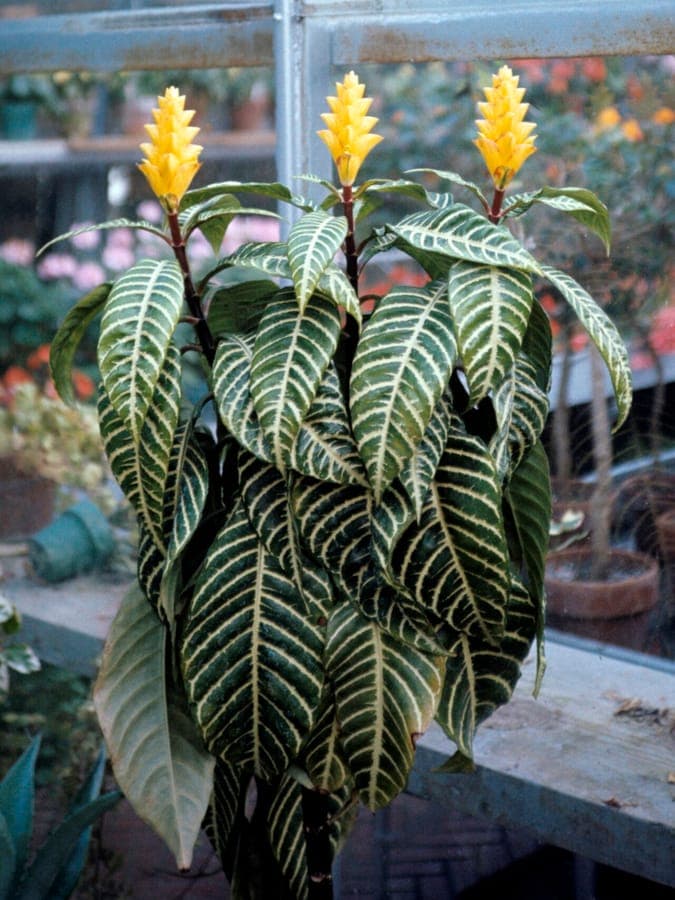
Aphelandra squarrosa, commonly known as the zebra plant or saffron spike, is a striking tropical houseplant from Brazil featuring glossy green foliage with silvery-white veins and impressive golden-yellow flower spikes. This plant is beloved by indoor gardeners for its ornamental leaf patterns and extended flowering periods. With proper care, your zebra plant can produce flowers for months at a time, making it a true showstopper in any living space.
Appearance and Bloom
The zebra plant grows to about 30-60 cm in height with a neat, compact growth habit. Its leaves are elongated and dark green with striking silver-white veins arranged in a zebra-like pattern, which explains its common name. During spring and autumn, characteristic bright yellow flowers emerge in dense, upright spikes that can reach 5-8 cm long. Individual flowers are small but numerous, creating dramatic visual impact. The plant also produces small fruits containing seeds after flowering.
Ideal Location
Aphelandra plants thrive in bright, indirect light. Position your plant where it receives 2-3 hours of diffuse daylight daily, such as near a shaded window or at a distance from a south-facing window. Direct afternoon sun can cause leaf scorch and color fading. In dim locations, the plant will struggle to grow and produce few flowers. An east or west-facing windowsill is usually perfect. Avoid placing the plant in cold drafts from doors or air conditioning units.
Soil
Use nutrient-rich, well-draining potting soil formulated for tropical plants. A blend of peat moss or coconut coir mixed with perlite or peat provides excellent drainage while retaining adequate moisture. The soil should never completely dry out but must also avoid becoming waterlogged. An ideal pH range is 5.5-7.0. Heavy garden soil is unsuitable as it retains too much moisture.
Watering
Aphelandra plants prefer consistently moist (not soggy) soil. Water regularly during the growing season so the soil remains evenly moist, especially in spring and summer. Water when the top centimeter of soil feels dry to the touch. In winter, allow the soil to dry out slightly between waterings, but never completely. Overwatering causes root rot, while underwatering leads to leaf drop. Use rainwater or distilled water at room temperature. Frequent misting promotes flowering and prevents brown leaf tips.
Free design
Want to see Aphelandra squarrosa: complete guide in your garden? Make a free design now.
Pruning
Regularly prune your zebra plant to maintain a compact, full shape. Remove spent flower spikes after blooming. Also remove any dead, yellowing, or damaged leaves. Spring pruning stimulates new branching and fuller growth. If the plant becomes too tall, you can cut it back to 20 cm height - it will regrow bushier than before. Aphelandra sap can irritate sensitive skin, so wear gloves when pruning.
Maintenance Calendar
Spring (March-May) is when your plant grows most vigorously and produces its first flower spikes. Increase watering and feeding during this period. Through summer (June-August), growth continues and more flowers develop. Maintain high humidity by misting regularly. Autumn (September-October) often brings the most spectacular blooms. Winter (November-February) is a quieter period with slower growth and reduced watering needs, though the soil should never fully dry.
Winter Hardiness
Aphelandra squarrosa is not winter hardy and cannot tolerate temperatures below 10 degrees Celsius. This is strictly a houseplant that requires protection from cold. Keep it away from chilly window sills and drafts in winter. Maintain a minimum temperature of 15-18 degrees Celsius for best results. In tropical and subtropical climates (USDA zones 10-11) it can grow outdoors, but in Europe it's suitable only for greenhouses or conservatories.
Companion Plants
The zebra plant pairs beautifully with other tropical plants that prefer humid conditions. Try combining it with monstera, anthurium, or dwarf ficus varieties. This grouping creates a tropical corner that maintains consistent humidity. Low-growing plants like calathea or maranta provide attractive contrast beneath taller Aphelandra specimens.
Closing
Aphelandra squarrosa is a spectacular tropical plant that brings joy through its unique patterned foliage and brilliant yellow flowers. With regular watering, humid air, and appropriate light, you'll enjoy extended blooming seasons. Though it requires more attention than some houseplants, the rewards are exceptional. In the UK and Europe, find Aphelandra plants at garden centers and specialty plant nurseries. Patience and attentive care are the secrets to success!
Visit gardenworld.app for more plant inspiration and design tips.
Want to see Aphelandra squarrosa: complete guide in your garden? Make a free design now.
Upload a photo, pick a style, and get a photorealistic design with plant list in under a minute.
No credit card required


Similar plants
Limestone wild petunia: complete guide
Ruellia strepens
Ruellia strepens is a long-blooming perennial native to central and eastern North America, with lavender trumpet flowers from June to September.
Shrimp plant: complete guide
Justicia brandegeeana
Everything about the shrimp plant (Justicia brandegeeana): cultivation, ideal location, watering, pruning and overwintering of this popular tender ornamental.
Caricature-plant: complete guide
Graptophyllum pictum
Grow the vibrant Caricature-plant with its striking patterned foliage. Care tips, cultivation, and pairing ideas for indoors and outdoors.