
Wikimedia Commons / Public domain, via Wikimedia Commons
Loose silky-bent: complete guide
Apera spica-venti
Want to see Loose silky-bent: complete guide in your garden?
1 minute, no credit card
Overview
Loose silky-bent, or Apera spica-venti, isn't a plant you'd typically find on a garden centre shelf. It's not bred for borders or showy displays. But for gardeners who appreciate subtle movement and natural textures, this annual grass brings quiet elegance to the late summer garden.
Native to much of Central and Southern Europe, it thrives in disturbed soils, field margins, and dry, open areas. It's not aggressive, but it does self-seed readily, which makes it a fleeting, seasonal visitor in many gardens. If you're drawn to plants that feel wild yet refined, Loose silky-bent might be just the understated accent you didn't know you needed.
On gardenworld.app, you can design a naturalistic planting scheme where the airy presence of Loose silky-bent complements perennials and groundcovers without dominating them.
Appearance & bloom cycle
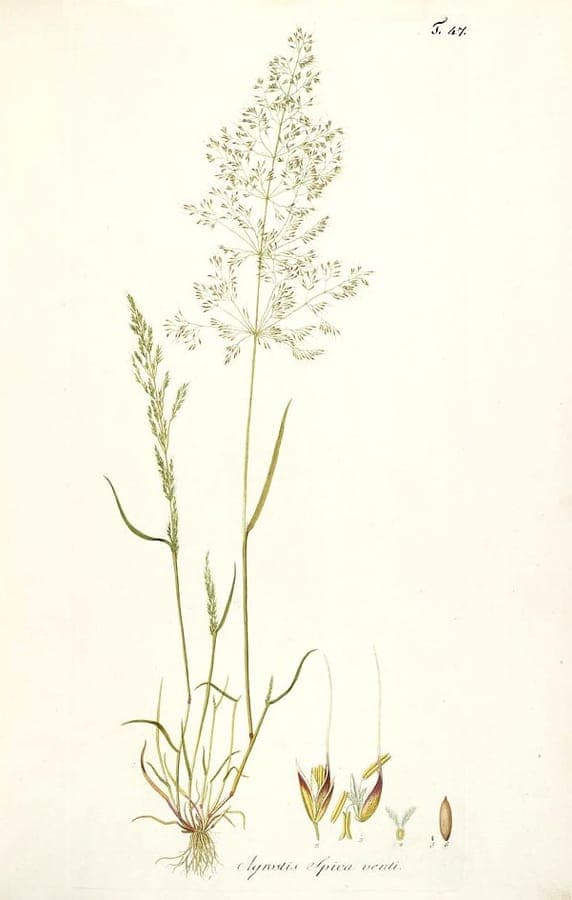
This grass reaches 12 to 28 inches (30–70 cm) in height, with slender, upright stems and narrow, pale green leaves. The foliage has a soft, silvery sheen, especially in bright sunlight. From mid-July through September, delicate, open panicles emerge-wispy, silvery-grey flower heads that catch the light and flutter in even the faintest breeze.
The bloom isn't flashy, but it's visually compelling. The plumes rise above the foliage like fine mist, adding movement and texture. By late autumn, the plant browns and collapses, leaving behind a fragile silhouette that persists into early winter.
Seed dispersal happens largely through wind, which explains its common name. The seeds mature in October and scatter easily, sometimes reappearing in the same spot the following year.
Ideal location
Loose silky-bent thrives in full sun. Choose a spot with at least six hours of direct sunlight daily. It performs best in open, unshaded areas-dry slopes, gravel gardens, or along pathways with minimal competition.
Avoid heavily shaded or damp areas. In shade, the stems elongate and flop over, ruining the upright form. For best results, pair it with low-growing, drought-tolerant plants that won't overcrowd it.
It's perfect for cottage-style or meadow-inspired gardens where a little spontaneity is welcomed. Try planting it near stone walls or in narrow beds where its vertical lines contrast with broader foliage.
On gardenworld.app, you can simulate how this grass fits into layered plantings, helping you place it where its lightness enhances rather than distracts.
Free design
Want to see Loose silky-bent: complete guide in your garden? Make a free design now.
Soil requirements
This grass isn't fussy. It grows well in poor to moderately fertile soils, as long as drainage is good. Sandy or loamy soils are ideal. Heavy clay that stays wet through winter should be avoided.
It tolerates a pH range from slightly acidic to neutral (5.5–7.0). Rich, heavily amended garden soils can lead to weak, floppy growth-so resist the urge to fertilize. Lean conditions produce sturdier, more upright plants.
Watering
Once established, Loose silky-bent is drought-tolerant. It doesn't need regular watering, even during hot summers. Young seedlings may benefit from light watering during prolonged dry spells in late spring, but mature plants manage fine on rainfall alone.
If you're growing it in containers or very sandy soil, check the top inch (2.5 cm) of soil. Water only when dry, and always at the base to prevent fungal issues.
Pruning
No pruning is needed. As an annual, it completes its life cycle in one season. You can leave the dried stems through winter for visual interest, especially when frosted. Or cut them back in late autumn if you prefer a tidier garden.
If you want it to reappear next year, allow a few plants to go to seed. Otherwise, remove flower heads before they mature to prevent self-sowing in unwanted areas.
Maintenance calendar
- March–April: Watch for seedlings. Thin if overcrowded.
- May–June: Little to no care needed. Water only in extended drought.
- July–September: Peak bloom. Enjoy the airy plumes.
- October–November: Seeds ripen and scatter. Cut back or leave for winter texture.
- December–February: Dormant. No action required.
Winter hardiness
Loose silky-bent is not winter-hardy as a mature plant. It dies back in late autumn. However, its seeds are cold-tolerant and can overwinter in the soil, germinating the following spring.
USDA zones 5–9 are suitable. In the UK and similar climates, it reliably returns from seed if conditions allow.
Companion plants
Pair it with low, sun-loving perennials like Sedum 'Autumn Joy', Thymus serpyllum, or Eryngium planum. It also works well with ornamental oregano or small-flowered asters.
Avoid tall, dense plants that block sunlight. Instead, use it to add height and movement among ground-hugging spreads.
Closing
Loose silky-bent won't win any flower shows, but it earns its place through grace and ease. It asks for little and gives back movement, texture, and a sense of quiet wildness.
You won't find it in every garden centre, but sometimes it turns up in specialty seed mixes or natural garden collections. In the UK and US, check local garden centres in spring for native or meadow-style seed packets. With the right conditions-sun, lean soil, and a bit of patience-this grass will surprise you with its delicate presence year after year.
Want to see Loose silky-bent: complete guide in your garden? Make a free design now.
Upload a photo, pick a style, and get a photorealistic design with plant list in under a minute.
No credit card required


Similar plants
Sporobolus pungens: complete guide
Sporobolus pungens
Sporobolus pungens is a stoloniferous Mediterranean coastal grass with outstanding salt and drought tolerance, perfect for seaside and dry gardens.
Mediterranean aegilops: complete guide
Aegilops biuncialis
Everything about Aegilops biuncialis, a Mediterranean annual grass with ornamental spikes and outstanding drought tolerance for dry gardens.
Silver bluestem: complete guide
Bothriochloa saccharoides
Full guide to Bothriochloa saccharoides (silver bluestem): site, soil, watering, winter hardiness, pruning, and garden companions.