
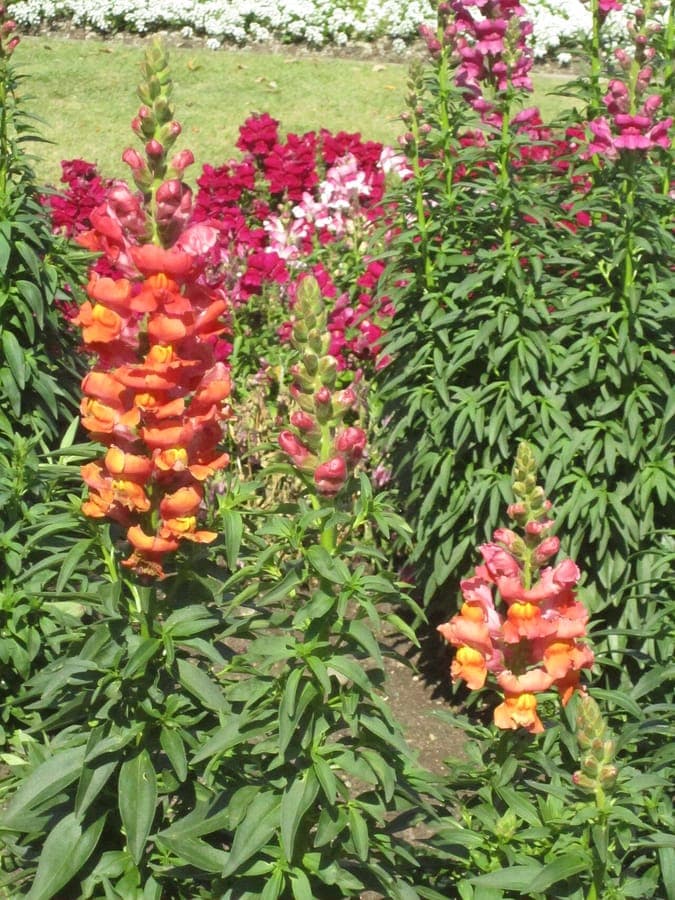
Craig Franklin / CC BY-SA 3.0 au, via Wikimedia Commons
Snapdragon: complete guide
Antirrhinum majus
Want to see Snapdragon: complete guide in your garden?
1 minute, no credit card
Overview
Snapdragon (Antirrhinum majus) is a classic garden favorite, prized for its upright spikes of whimsical, mouth-shaped flowers. Native to the rocky coasts of Spain, Portugal, and the Balearic Islands, this herbaceous forb thrives in temperate climates and has become a staple in borders, containers, and cutting gardens across Europe and North America. While often grown as an annual, it can behave as a short-lived perennial in USDA zones 7–10, though in colder regions like the UK and most of zone 6 and below, it's treated as a seasonal plant.
Snapdragons bring structure and vertical interest from late spring through early autumn. Their flowers, which snap open when gently squeezed, delight children and pollinators alike. They're also excellent cut flowers, lasting up to a week in a vase. On gardenworld.app, you can design a seasonal border layout that accounts for snapdragon height, bloom time, and spacing needs.
Appearance & bloom cycle
Antirrhinum majus grows in a bushy, upright habit, reaching heights between 15 cm (dwarf types) and 100 cm (tall varieties). Stems are sturdy and branched, with narrow, lanceolate leaves in a soft grey-green hue. The flowers form dense racemes at the top, opening from the bottom up. Each bloom has a distinctive two-lipped structure - resembling a lion's mouth - and comes in a wide palette including white, purple, pink, red, yellow, and bicolors.
Bloom time runs from May through September, depending on planting time and climate. Deadheading spent spikes encourages new growth and prolongs flowering. With consistent care, you can enjoy vibrant color for over four months.
Ideal location
Snapdragons prefer a light level of 5 out of 10 - meaning partial sun to light shade. In the UK and northern US, full sun (6+ hours) is ideal. In hotter southern regions, afternoon shade prevents wilting and extends bloom life. Avoid dark, enclosed spots with poor airflow, which invite fungal diseases like rust and powdery mildew.
Plant in borders, raised beds, or containers. Space plants 20–30 cm apart to allow for air circulation. Tall varieties may need staking in exposed areas. Use gardenworld.app to visualize how snapdragons will fill your garden space over the season, helping you avoid overcrowding.
Soil requirements
Snapdragons thrive in well-drained, loamy soil rich in organic matter. The ideal pH is neutral to slightly alkaline (7.0–7.5). Avoid acidic soils - they stunt growth and reduce flowering. If your soil tests below 6.8, amend with garden lime at planting time.
For container growing, use a mix of potting soil, compost, and perlite. Heavy clay soils should be improved with grit or coarse sand to prevent waterlogging. A 2–3 cm mulch layer helps retain moisture and suppress weeds.
Free design
Want to see Snapdragon: complete guide in your garden? Make a free design now.
Watering
Keep soil consistently moist but never soggy. Water at the base to prevent leaf spot and fungal issues. During dry spells, water 2–3 times per week, more often in containers. Morning watering is best - it reduces evaporation and gives foliage time to dry.
Avoid overhead watering, especially in humid climates. Rainwater is preferable, as tap water with high lime content can leave white deposits on leaves.
Pruning
Deadheading is crucial for continuous blooms. Cut spent flower spikes just above a leaf node. This promotes branching and new flower production. For taller types, pinch back the central stem when plants reach 15–20 cm to encourage bushier growth and prevent legginess.
If plants flag in midsummer, cut them back by half. With fresh water and a light feed, they often rebound with a second flush of blooms in late summer.
Maintenance calendar
- March–April: Start seeds indoors at 18–20°C. Use seed trays with fine compost.
- May: Harden off and plant out after last frost (typically late May in UK, earlier in milder zones).
- June–August: Deadhead weekly. Monitor for aphids and fungal spots.
- September: Allow some late blooms to set seed if saving for next year.
- October: Remove dead plants. Compost foliage and mulch bed for next season.
Winter hardiness
Snapdragons are not reliably hardy below USDA zone 7. In zone 6 and colder, they die off with the first hard frost. Even in zone 7, winter survival is spotty unless protected with mulch. They tolerate light frost (down to -2°C) but not prolonged freezing.
While they may self-seed, germination is inconsistent. For reliable returns, replant each spring. Purchase young plants or seeds from garden centres in early spring for best results.
Companion plants
Pair snapdragons with plants that share similar needs: good drainage, moderate moisture, and full to partial sun. Great companions include pansies, dwarf snapdragons with lobelia, nemesia, and marigolds. Tall varieties work well behind low-growing salvias or verbena.
Avoid planting near moisture-loving perennials like hostas or astilbes, which can create damp microclimates. Also steer clear of aggressive spreaders like mint.
Closing
Snapdragons offer months of bold color and vertical elegance with minimal fuss. Whether in a cottage border or a patio pot, they're a rewarding choice. Buy healthy transplants from garden centres in spring - look for compact, bushy seedlings without yellowing leaves. Try mixing white and deep purple spikes for dramatic contrast. And before you plant, check gardenworld.app to map out your snapdragon display and ensure perfect spacing and color flow.
Want to see Snapdragon: complete guide in your garden? Make a free design now.
Upload a photo, pick a style, and get a photorealistic design with plant list in under a minute.
No credit card required


Similar plants
White Beardtongue: complete guide
Penstemon albidus
Discover white beardtongue (Penstemon albidus) - elegant perennial with white to cream flowers. Drought-resistant, perfect for prairie and dry gardens.
Longsepal Beardtongue: complete guide
Penstemon calycosus
Discover longsepal beardtongue (Penstemon calycosus) - beautiful perennial with lilac-blue flowers. For partial shade and moist soil. Ideal for naturalized.
Penstemon cusickii: complete guide
Penstemon cusickii
Discover Cusick's beardtongue, a compact alpine flowering plant with violet-pink blooms. Perfect choice for rock gardens and water-wise landscaping.