
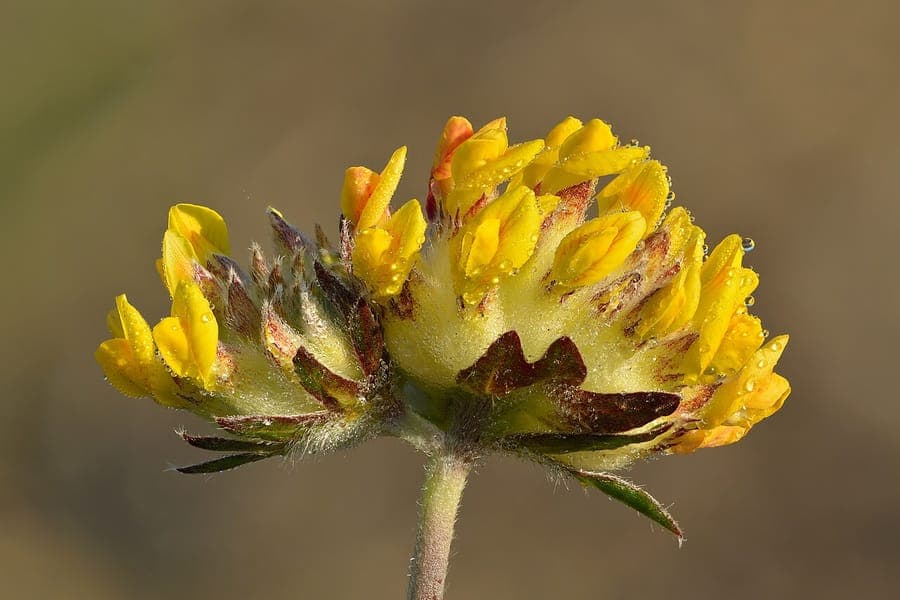
Ivar Leidus / CC BY-SA 4.0, via Wikimedia Commons
Kidney-vetch: complete guide
Anthyllis vulneraria
Want to see Kidney-vetch: complete guide in your garden?
1 minute, no credit card
Overview
Kidney-vetch, or Anthyllis vulneraria, is a resilient little herb that thrives where other plants give up. As a member of the Fabaceae family, it fixes nitrogen in the soil, quietly improving fertility beneath its silvery foliage. Native to rocky grasslands across southern and central Europe, it's naturally adapted to lean, alkaline soils and full sun. In the garden, it brings long-lasting colour and ecological value from May through August.
This plant isn't flashy, but it's dependable. It grows 15 to 30 cm tall, forms neat clumps, and blooms profusely in shades of yellow, white, or soft purple. It's a magnet for bees, hoverflies, and the rare small blue butterfly, which uses it as a host plant. If you're designing a wildlife-friendly or low-water garden, kidney-vetch deserves a spot. On gardenworld.app, you can design a planting scheme that highlights kidney-vetch alongside other drought-tolerant perennials.
Appearance & bloom cycle
Kidney-vetch has fern-like, silvery-green leaves covered in fine hairs, giving them a soft, almost felted texture. The flowers appear in tight, pom-pom-like clusters at the tips of upright stems. Each cluster contains dozens of tiny pea-shaped florets, mostly yellow in cultivation, though wild forms may bloom white or purplish.
Bloom time runs from May to August, peaking in early summer. The flowers emit a mild honey-like scent that draws pollinators during warm daylight hours. Deadheading spent blooms encourages repeat flowering and prevents excessive self-seeding. If you leave some seed heads, they'll drop and germinate nearby, creating natural drifts over time. This plant spreads slowly, so it won't take over - just fills in gaps with grace.
Ideal location
Give kidney-vetch full sun - aim for a light rating of 8 or higher. South- or southwest-facing borders, rock gardens, dry banks, or gravel paths are ideal. It hates shade and damp air, which leads to leggy growth and fungal issues. Avoid planting under trees or in crowded, humid corners.
It's perfect for xeriscaping, chalk gardens, or coastal sites where salt spray and dry soil are common. If your garden has thin, stony soil, this plant will likely thrive. Use gardenworld.app to map out your sunniest zones and place kidney-vetch where it gets uninterrupted light all day.
Soil requirements
This plant demands well-drained, alkaline soil with a pH between 7.0 and 7.5. It grows naturally on chalk and limestone, so avoid acidic, clay-heavy, or water-retentive soils. If your soil is too acidic, amend it with ground limestone or crushed oyster shells.
No fertiliser needed - in fact, too much richness will make kidney-vetch floppy and reduce flowering. Mix in horticultural grit or sharp sand when planting to improve drainage. Raised beds, rock crevices, or old stone walls make excellent homes for this plant.
Free design
Want to see Kidney-vetch: complete guide in your garden? Make a free design now.
Watering
Once established, kidney-vetch is drought-tolerant and rarely needs watering. During the first growing season, water weekly if there's no rain. After that, it survives on rainfall alone, even in prolonged dry spells. Overwatering is a death sentence - it leads to root rot, especially in winter.
Use gravel or crushed stone as mulch to keep the crown dry. Avoid organic mulches like bark or compost, which hold moisture and add too many nutrients.
Pruning
Pruning is minimal. After flowering, cut back spent flower heads to tidy up the plant or limit self-seeding. In early spring, remove any winter-damaged foliage. Don't cut it back hard - kidney-vetch doesn't respond well to heavy pruning. Keep it light and focused on hygiene.
Maintenance calendar
- Jan: Check for winter damage; remove any blackened leaves
- Feb: No action needed
- Mar: Clear old debris; watch for new growth
- Apr: No feeding; ensure good drainage
- May: Blooms begin; reduce watering
- Jun: Peak flowering; monitor pollinator activity
- Jul: Ongoing bloom; deadhead spent flowers
- Aug: Flowering slows; leave some seed heads
- Sep: Stop watering; allow seedlings to emerge
- Oct: No feeding; assess self-sown seedlings
- Nov: Cut back only if necessary; plant goes dormant
- Dec: Leave alone; protect from soggy soil
Winter hardiness
Kidney-vetch is hardy in USDA zones 5 to 8, tolerating temperatures down to -20°C. It often stays semi-evergreen in mild winters. No winter protection is required, but avoid mulching the crown with moisture-retaining materials. A light gravel topdressing helps shed winter rain.
Companion plants
Pair kidney-vetch with other sun-loving, drought-tolerant plants like thyme, sedum, yarrow, or oregano. These share similar soil and water needs, creating a cohesive, low-maintenance planting. Avoid vigorous growers like mint or goldenrod that can overwhelm it.
In a rock garden, combine it with dwarf alliums, chalk milkwort, or sea holly for texture and contrast. It also works well in coastal schemes with thrift and sea campion.
Closing
Kidney-vetch is a quiet achiever - not the star of the border, but a steady performer with real ecological value. It asks for little and gives back in pollinators, texture, and summer colour. Available at garden centres in spring, especially at UK independents and larger chains. Look for 9cm pots or sow seeds directly from May to July. With the right conditions - and a smart layout from gardenworld.app - kidney-vetch becomes a subtle yet vital part of your garden's ecosystem.
Want to see Kidney-vetch: complete guide in your garden? Make a free design now.
Upload a photo, pick a style, and get a photorealistic design with plant list in under a minute.
No credit card required


Similar plants
Tall Silky Lupine: complete guide
Lupinus elatus
Tall silky lupine is a fast-growing Californian perennial with silvery foliage and blue-purple flower spikes, ideal for a prairie-style garden.
Garfield Lupine: complete guide
Lupinus garfieldensis
The Garfield lupine is a rare, fast-growing American perennial for alkaline, dry grassland gardens, with striking blue flower spikes.
Lupinus elegans: complete guide
Lupinus elegans
Lupinus elegans, the elegant lupine, is a spectacular blooming plant from Mexico with blue flower spikes. Care, cultivation and garden use.