
Ghislain118 (AD) http://www.fleurs-des-montagnes.net / CC BY-SA 3.0, via Wikimedia Commons
Anthyllis hermanniae: complete guide
Anthyllis hermanniae
Want to see Anthyllis hermanniae: complete guide in your garden?
1 minute, no credit card
Overview
Anthyllis hermanniae, commonly called spiny kidney vetch or Spina pollice, is a robust Mediterranean dwarf shrub native to Southern Europe, particularly the Mediterranean basin, Corsica, Sardinia and the Balkans through to Turkey. This hardy plant is an excellent choice for dry, difficult-to-reach corners of your front yard.
The plant belongs to the Fabaceae family (legumes), the same family as lupines, peas and clover. This means Anthyllis hermanniae fixes nitrogen from the air through its root system, making it highly self-sufficient and vital for fertilization. This makes it ideal for eco-friendly, low-maintenance gardens.
Appearance and bloom period
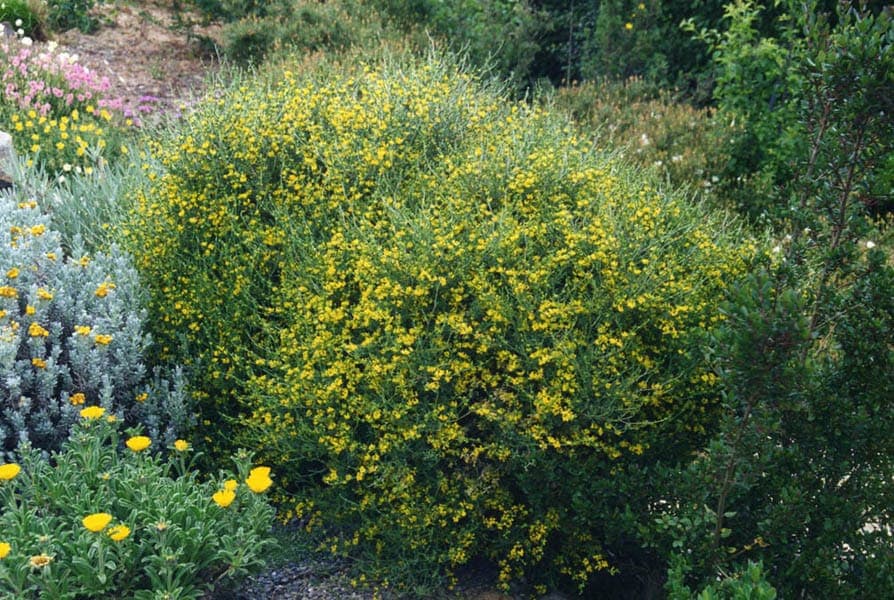
Anthyllis hermanniae forms a low, dense shrublet approximately 30-60 centimeters tall and equally wide. The main attraction is the overwhelming display of small, brilliant yellow flowers appearing in May through June in compact, knob-shaped flower heads. The twigs are considerably spiny at the base (hence the German name Dorniger Wundklee).
The leaves are compound, small and slightly hairy, giving the plant a silvery-gray tint. This silvery foliage plays beautifully against the brilliant yellow flowers. After blooming, small, papery seed pods form and persist on the plant. The plant retains its attractiveness after flowering thanks to interesting foliage and structure.
Ideal location
Anthyllis hermanniae thrives best in full sun on warm, sunny spots. The plant requires at least 6-8 hours of direct sunlight daily for optimal flower production. A south or west-facing slope or wall is perfect. This plant cannot tolerate shade; in a shady corner it will struggle and flowering will be disappointing. Protection from strong, drying winds is beneficial, but the plant handles wind well.
For rock gardens, alpine troughs, steep slopes and warm pockets, this is a perfect choice. It also grows well in containers.
Soil
Anthyllis hermanniae is extremely intolerant of heavy, wet soils. The plant prefers well-draining, gritty, alkaline soil, very similar to the rocky cliffs it inhabits in the wild. Clay or heavy loamy soils require substantial improvement. The plant prefers a pH of 5-5.5 (slightly acidic to acidic), which paradoxically contrasts with alkaline soils. In nature the plant grows on a variety of soils. Heavy soil must be amended with gravel, sand and compost.
Good drainage is absolutely critical; winter waterlogging is fatal to this plant.
Watering
Once well-established, Anthyllis hermanniae is extremely drought-tolerant. The plant has a deep root system that can extract moisture from deeper layers. During the first growing season, water regularly to stimulate root formation, but once established, supplemental watering can be almost completely eliminated.
In dry soils, extra watering is usually unnecessary. In container cultivation the plant requires more water, especially during the growing season. Water only when soil feels dry. Avoid waterlogging, which more quickly leads to root rot than in other shrubs.
During very wet periods, drainage holes in pots help. In winter rainfall, water should not cause stagnation.
Free design
Want to see Anthyllis hermanniae: complete guide in your garden? Make a free design now.
Pruning
Anthyllis hermanniae requires minimal pruning. After flowering (June-July), gentle shearing is possible to maintain shape, especially for more compact growth. Remove about a third of annual growth.
Avoid deep pruning into old wood, as this may struggle to regrow. Annual light pruning stimulates branching and denser shrub growth. Remove dead or damaged twigs as needed. The spiny twigs require gloves when pruning. This is not a plant that needs rigorous cutback.
Maintenance calendar
March-April: Sow seeds indoors at 15-18 degrees or purchase seedlings. Outside propagation possible.
May: Plant outside after frost danger passes.
May-June: Regular watering until established, frost protection if needed.
June-July: Bloom period, light pruning after flowers possible.
August-September: Plant enters dormancy, much less water.
October-December: Winter rest, no supplemental water needed.
Winter hardiness
Anthyllis hermanniae is reasonably winter-hardy in temperate maritime climates (USDA zones 8-9) and very hardy in warmer regions (zones 9-11). In Northern Europe it can survive mild winters, especially with good drainage. In harsh winters (below -10 degrees Celsius) the plant may die.
For safety, container plants can be moved to a frost-free greenhouse. In continental climates with very cold winters, frost protection is essential. All in all, this is not a plant for very cold areas without protection, but it is very suitable for temperate European regions with mild winters.
Companion plants
Anthyllis hermanniae pairs beautifully with other drought-tolerant, Mediterranean plants:
- Gaura lindheimeri (wandflower) - light, elegant
- Brachyscome multifida - purple-pink contrast
- Achillea millefolium (yarrow) - structure and texture
- Salvia nemorosa (woodland sage) - blue contrast
- Myrtus communis (myrtle) - green structure
These combinations create an authentic Mediterranean appearance.
Conclusion
Anthyllis hermanniae is the ideal choice for those wanting a strong, self-sufficient plant requiring minimal care. With its brilliant yellow flowers, spiny twigs and extreme drought tolerance, it adds authentic Mediterranean atmosphere to temperate gardens.
This is the plant to place in rocks, on sloping terrain, and wherever water is scarce. For ecological and low-maintenance gardens, this is a premier specimen. Sow this year and enjoy this robust Mediterranean beauty for years to come!
On gardenworld.app, discover more designs featuring Mediterranean plants. Transform your front yard into a warm, sun-loving paradise.
Want to see Anthyllis hermanniae: complete guide in your garden? Make a free design now.
Upload a photo, pick a style, and get a photorealistic design with plant list in under a minute.
No credit card required


Similar plants
Tall Silky Lupine: complete guide
Lupinus elatus
Tall silky lupine is a fast-growing Californian perennial with silvery foliage and blue-purple flower spikes, ideal for a prairie-style garden.
Garfield Lupine: complete guide
Lupinus garfieldensis
The Garfield lupine is a rare, fast-growing American perennial for alkaline, dry grassland gardens, with striking blue flower spikes.
Lupinus elegans: complete guide
Lupinus elegans
Lupinus elegans, the elegant lupine, is a spectacular blooming plant from Mexico with blue flower spikes. Care, cultivation and garden use.