
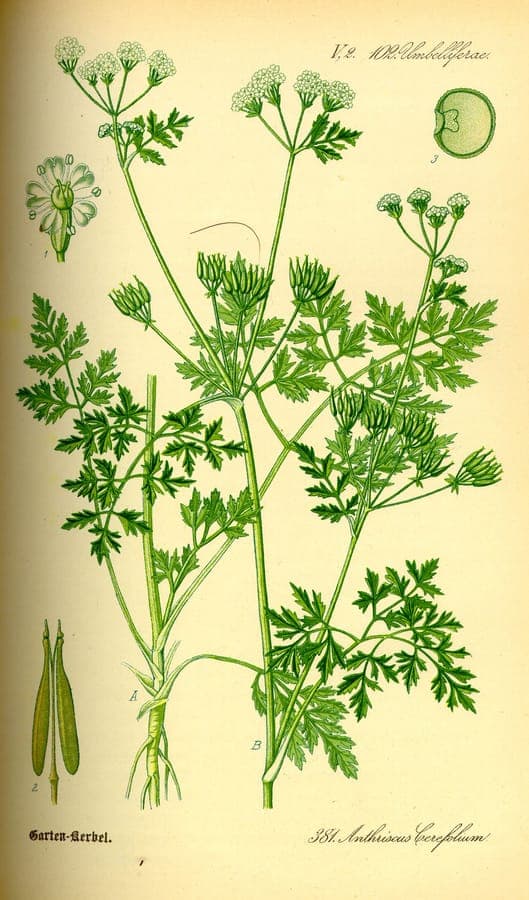
Otto Wilhelm Thomé / Public domain, via Wikimedia Commons
Chervil: complete guide
Anthriscus cerefolium
Want to see Chervil: complete guide in your garden?
1 minute, no credit card
Overview
Chervil (Anthriscus cerefolium) is a refined herb that brings both flavour and soft texture to the garden. Often overlooked, it's a staple in French cuisine and a graceful addition to any herb patch. Native to southeastern Europe - including regions in Greece, Bulgaria, and the Balkans - chervil thrives in temperate climates and is well-suited to USDA zones 6–9. It belongs to the Apiaceae family, which includes parsley, dill, and fennel, but chervil stands out with its subtle anise-like taste and airy foliage.
Unlike many herbs that dominate with strong scents, chervil offers a gentle, slightly sweet profile, perfect for delicate sauces, omelettes, and fresh salads. It's best used fresh, as drying diminishes its flavour. For gardeners who value both form and function, chervil is a quiet winner. On gardenworld.app, you can design a kitchen garden layout that integrates chervil seamlessly with other herbs and vegetables.
Appearance & bloom cycle
Chervil grows as a tender annual or biennial forb, reaching 30–60 cm in height. The leaves are finely divided, dark green, and fern-like, resembling flat-leaf parsley but softer and more lacy. This gives the plant a light, flowing habit that adds movement to planting beds.
From May through August, chervil produces small, white umbel flowers. While not showy, these blooms attract beneficial insects like hoverflies and parasitic wasps, which help control aphids. If you're growing chervil for culinary use, pinch off flower buds early to extend leaf production. Allowing the plant to flower results in self-seeding, which can be useful for low-maintenance gardeners who enjoy naturalised patches.
Ideal location
Chervil prefers partial sun to light shade, rating a 7 on the light scale. It performs best with morning sun and afternoon shade, especially in warmer regions. Full sun in midsummer can cause bolting - rapid flowering followed by plant decline.
A sheltered spot under a fruit tree, near a north-facing fence, or alongside taller crops like tomatoes works well. In containers, use pots at least 20 cm deep. Chervil's roots don't like being constricted. On gardenworld.app, you can find companion planting suggestions that help you position chervil next to compatible crops for mutual benefit.
Soil requirements
The ideal soil for chervil is well-drained, loamy, and rich in organic matter. A pH between 7.0 and 7.5 is optimal. Heavy clay soils should be amended with compost and coarse sand to improve drainage. Avoid waterlogged areas, as chervil's roots are prone to rot.
Before planting, mix in well-rotted compost or leaf mould to boost fertility and moisture retention. For container growing, use a high-quality potting mix with perlite for aeration. Chervil doesn't demand high nutrients, but poor soil leads to stunted growth and bitter leaves.
Free design
Want to see Chervil: complete guide in your garden? Make a free design now.
Watering
Chervil needs consistent moisture but not soggy soil. Water deeply once or twice a week, depending on rainfall and temperature. In hot spells, check containers daily - the soil should feel damp 2–3 cm down. Use lukewarm rainwater when possible to prevent shock to delicate roots.
Avoid overhead watering to reduce the risk of fungal diseases. Drip irrigation or watering at the base is preferable. During dry springs, mulch lightly with straw to retain moisture and suppress weeds.
Pruning
Regular harvesting is the best form of pruning. Start picking outer leaves when the plant reaches 10–15 cm. Cut just above a leaf node to encourage bushier growth. This cut-and-come-again method keeps the plant productive and delays bolting.
If flower stalks appear, pinch them off unless you want seeds. Once chervil flowers, leaf quality declines. However, allowing a few plants to go to seed ensures next year's crop without replanting.
Maintenance calendar
- March–April: Sow seeds directly in the garden or in modules. Protect from late frosts (down to -5°C).
- May–June: Harvest frequently. Watch for aphids and slugs. Keep soil moist.
- July–August: Plants may bolt. Remove flowers or allow self-seeding.
- September–October: Plants die back. Clear debris and compost.
In mild winters (zones 7–9), chervil may overwinter as a rosette if sown in late summer. Mulch lightly for insulation.
Winter hardiness
Chervil is moderately hardy, surviving light frosts down to -5°C. In USDA zones 6–7, it can persist through winter when planted in autumn. Established rosettes under mulch often survive and resume growth in spring.
In colder zones, treat it as a cool-season annual. Sow in early spring or late summer for a fall harvest. Protect young plants with horticultural fleece during cold snaps.
Companion plants
Chervil pairs well with lettuce, radishes, carrots, and cucumbers. It's believed to improve the flavour of neighbouring crops and repel slugs with its aromatic foliage. Avoid planting near fennel or dill, which may cross-pollinate or compete for resources.
In herb spirals or mixed containers, chervil complements chives, thyme, and parsley. Keep water needs in mind - chervil likes more moisture than rosemary or sage.
Closing
Chervil is a subtle yet valuable herb for both garden and kitchen. With its delicate leaves and quiet charm, it earns a place in any well-designed garden. Success comes from understanding its preference for cool, moist conditions and timely harvesting.
You can find chervil seeds at garden centres across the UK and US. Look for fresh packets in spring. When planning your layout, remember that chervil thrives in harmony - with the right companions and a thoughtful design, it will return year after year. Use gardenworld.app to visualise your ideal herb bed and track planting dates with ease.
Want to see Chervil: complete guide in your garden? Make a free design now.
Upload a photo, pick a style, and get a photorealistic design with plant list in under a minute.
No credit card required


Similar plants
Whorled carrot: complete guide
Daucus involucratus
Daucus involucratus is a Mediterranean umbellifer with white flower heads framed by lacy bracts. Growing this gravel garden gem.
Daucus muricatus: complete guide
Daucus muricatus
Daucus muricatus, the spiny wild carrot, grows wild on Mediterranean coasts. Discover sowing, June-July bloom, and wildflower meadow use.
Daucus pumilus: complete guide
Daucus pumilus
Daucus pumilus is a dwarf wild carrot relative with white lacy umbels, thriving on dunes and coastal rock in poor, fast-draining soil.