
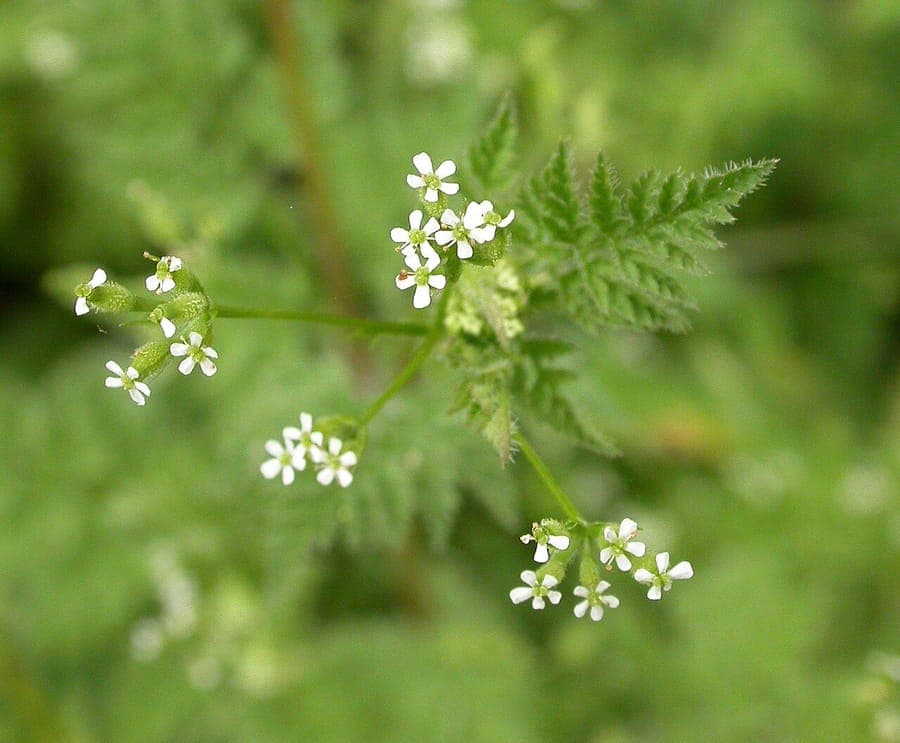
Copyright by Curtis Clark, licensed as noted / CC BY-SA 2.5, via Wikimedia Commons
Bur chervil: complete guide
Anthriscus caucalis
Want to see Bur chervil: complete guide in your garden?
1 minute, no credit card
Overview
Bur chervil (Anthriscus caucalis) isn't a household name in most gardens, but it's a quietly elegant plant that deserves more attention. Native to parts of Europe and North Africa, this herbaceous biennial or short-lived perennial fits naturally into cottage gardens, woodland edges, and naturalised planting schemes. It reaches heights of 30 to 60 cm and spreads gently through self-seeding, creating soft drifts without becoming invasive. Its fern-like foliage and airy white flowers bring texture and movement to borders, especially in late spring.
On gardenworld.app, you can visualise how Bur chervil fits into your existing planting plan, particularly when combined with other shade-tolerant perennials. It's not a high-maintenance plant, but it does have specific preferences when it comes to light and soil.
Appearance & bloom cycle
Bur chervil produces finely divided, twice- or thrice-pinnate leaves that resemble those of cultivated chervil or young fennel. The foliage is a fresh, medium green and remains tidy throughout the growing season. From May to June, it sends up slender, hollow stems topped with compound umbels of tiny white flowers. Each umbel is 3–5 cm across and consists of numerous small, star-shaped blooms that emit a faint sweet scent, attracting hoverflies, bees, and other beneficial insects.
After flowering, the plant develops small, bristly fruits that cling to passing animals or clothing-hence the 'bur' in its common name. These fruits help with natural dispersal, allowing the plant to pop up in new spots the following year. While not aggressive, it can establish persistent colonies in favourable conditions.
Ideal location
Bur chervil thrives in light shade to partial shade (light level 5/10). Full sun is acceptable only in cooler climates or if the soil remains consistently moist. In hot summers, direct afternoon sun can lead to scorched leaves and premature dieback. The best spots are under open-canopy trees, along north-facing fences, or in woodland garden settings where dappled light filters through.
It works well in naturalistic planting designs, especially in the middle to front of a border. Pair it with plants of similar height and habit for visual balance. Use gardenworld.app to preview how its delicate form complements taller spikes like Digitalis or softer mounds like Alchemilla mollis in your garden layout.
Soil requirements
This plant prefers well-drained, moderately fertile soil with a pH between 6.5 and 7.0. Heavy clay soils should be improved with grit or compost to prevent waterlogging. Sandy soils benefit from added organic matter to boost moisture retention. Avoid overly rich soils, as these can lead to lush foliage at the expense of flowering.
A single annual application of well-rotted compost in early spring is usually sufficient. No synthetic fertilisers are needed. The key is consistency-Bur chervil likes steady moisture and won't tolerate prolonged drought or soggy roots.
Free design
Want to see Bur chervil: complete guide in your garden? Make a free design now.
Watering
Water regularly during dry spells, especially in the first growing season. Once established, it's moderately drought-tolerant but performs best with consistent moisture. Aim for deep, infrequent watering rather than frequent shallow sprinkles. This encourages deeper root development and improves resilience.
Water at the base in the morning or evening to reduce evaporation. Rainwater is ideal, particularly if your tap water is alkaline. Avoid wetting the foliage to minimise fungal issues.
Pruning
No formal pruning is required. However, you can deadhead spent flower stems to prevent excessive self-seeding if you want to control its spread. Leave some seed heads intact if you welcome natural volunteers-these also provide winter interest and food for small birds.
Cut back old stems in late autumn or early spring to keep the area neat. Use clean, sharp secateurs and cut close to ground level.
Maintenance calendar
- January: Check for overwintering debris; clear if needed.
- February: None, unless starting seeds indoors.
- March: Sow seeds directly in the garden. Mix with sand for even distribution.
- April: Keep young seedlings moist; watch for slugs.
- May: Flowers begin; apply a thin compost layer if desired.
- June: Peak bloom. Monitor for self-seeding.
- July: Remove finished stems or leave some for birds.
- August: Water during prolonged dry periods.
- September: Observe new seedlings from self-sown seeds.
- October: Cut back or leave for winter structure.
- November: Amend soil with compost for next season.
- December: Minimal care; plants are dormant.
Winter hardiness
Bur chervil is hardy in USDA zones 6 to 9. In zone 5, it may behave as an annual but can survive mild winters with mulch protection. The seeds require cold stratification and germinate best after a winter chill. A light mulch of leaf mould or straw helps protect overwintering rosettes and emerging seedlings.
Companion plants
Excellent companions include Anemone nemorosa, Geranium phaeum, Alchemilla mollis, and Lamium maculatum. It also pairs well with taller plants like Digitalis purpurea or Thalictrum aquilegiifolium, where it acts as a soft filler. Avoid planting near aggressive spreaders like mint or goldenrod, which can outcompete it.
In a wildlife garden, it supports early pollinators and adds seasonal texture. Combine with native grasses or wildflowers for a low-maintenance, ecological design.
Closing
Bur chervil is a subtle but valuable addition to any garden seeking natural charm and ease of care. It doesn't demand attention, but it quietly enhances the garden's rhythm from spring into early summer. For gardeners in the UK, Ireland, or northern Europe, it's a reliable performer in shaded borders. If you're unsure where to place it, garden centres often carry similar plants, or you can explore combinations on gardenworld.app to see how it layers with other species in height, bloom time, and foliage texture. With the right spot and minimal upkeep, Bur chervil can become a quietly dependable presence year after year.
Want to see Bur chervil: complete guide in your garden? Make a free design now.
Upload a photo, pick a style, and get a photorealistic design with plant list in under a minute.
No credit card required


Similar plants
Whorled carrot: complete guide
Daucus involucratus
Daucus involucratus is a Mediterranean umbellifer with white flower heads framed by lacy bracts. Growing this gravel garden gem.
Daucus muricatus: complete guide
Daucus muricatus
Daucus muricatus, the spiny wild carrot, grows wild on Mediterranean coasts. Discover sowing, June-July bloom, and wildflower meadow use.
Daucus pumilus: complete guide
Daucus pumilus
Daucus pumilus is a dwarf wild carrot relative with white lacy umbels, thriving on dunes and coastal rock in poor, fast-draining soil.