
Wikimedia Commons / CC BY-SA 3.0, via Wikimedia Commons
Scented vernal grass: complete guide
Anthoxanthum odoratum
Want to see Scented vernal grass: complete guide in your garden?
1 minute, no credit card
Overview
Scented vernal grass (Anthoxanthum odoratum) is a delicate, aromatic perennial grass that thrives in naturalistic lawns, dry meadows, and habitat restoration projects. Native across much of Europe, including the Baltic States and the Azores, it's a hardy species adapted to poor, acidic soils. It belongs to the Poaceae family and is best known for its sweet, hay-like fragrance - especially noticeable when the grass dries or wilts.
This grass is perfect for gardeners looking to add texture and scent to low-fertility areas. On gardenworld.app, you can design a garden layout that features Scented vernal grass alongside other native grassland species, creating a self-sustaining, wildlife-friendly space.
Appearance & bloom cycle
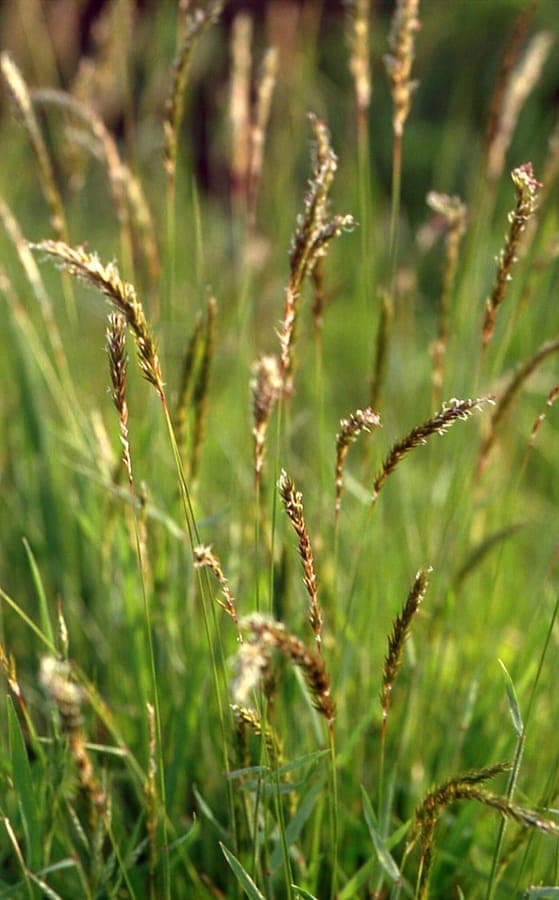
Scented vernal grass grows in neat clumps, reaching 30 to 50 cm in height. The fine, bright green blades form dense tufts, and from April through July, slender yellow flower spikes emerge, rising just above the foliage. These inflorescences have a soft, airy quality that catches the light beautifully in early summer.
The fragrance comes from coumarin, a natural compound also found in vanilla and woodruff. When the grass dries in the sun, the scent intensifies - making it a favorite for dried arrangements or sensory gardens. The bloom cycle is most vibrant in May and June, offering visual and olfactory interest just as spring transitions into summer.
Ideal location
Plant Scented vernal grass in full sun to light shade (light level 7/10). It performs best in open, sunny spots - such as dry slopes, meadow edges, or gravel gardens. Avoid heavy shade or areas under dense tree canopies where light and airflow are limited.
This grass spreads slowly by seed and does well in areas with low competition. It's ideal for corners of the garden where richer, faster-growing plants struggle. Think of it as a pioneer species for tough sites.
Soil requirements
The soil should be well-drained and acidic, with a pH between 5.0 and 5.5. Sandy or loamy soils work best; avoid heavy clay or calcareous (chalky) soils. If your soil is too rich or alkaline, consider amending it with peat-free ericaceous compost or pine needle mulch to lower the pH.
On gardenworld.app, you can run a soil compatibility check to see if your garden conditions suit Scented vernal grass, including texture and pH recommendations.
Free design
Want to see Scented vernal grass: complete guide in your garden? Make a free design now.
Watering
Once established, this grass is highly drought-tolerant. Water regularly during the first 4–6 weeks after planting to help roots settle. After that, supplemental watering is rarely needed - even during prolonged dry spells.
Overwatering is more dangerous than underwatering. Excess moisture leads to root rot and fungal issues. This grass evolved in dry, nutrient-poor conditions, so less is more when it comes to irrigation.
Pruning
Prune in late winter or early spring (February to March). Cut back old foliage to about 10 cm to make room for fresh growth. Avoid cutting during or after flowering if you want the plant to self-seed naturally.
If you prefer to control spread, trim the flower spikes after blooming ends in July. This prevents excessive seeding in formal or mixed beds.
Maintenance calendar
- Jan: Dormant; no action needed
- Feb: Begin clearing old growth
- Mar: Cut back to 10 cm
- Apr: New shoots emerge; flowering begins
- May: Peak bloom; fragrance strong
- Jun: Full flowering; monitor for seedlings
- Jul: Flowering ends; trim if needed
- Aug: Remove excess seedlings
- Sep: Growth slows naturally
- Oct: Leave foliage for winter protection
- Nov: Minimal care
- Dec: Dormancy begins
Winter hardiness
Scented vernal grass is fully winter-hardy in USDA zones 4 to 8. It stays semi-evergreen in milder climates but may turn brown in harsh winters. This is normal - new growth returns vigorously in spring.
Leave old foliage intact over winter to protect crown tissue and provide habitat for overwintering insects. The standing grass also adds subtle texture to the winter garden.
Companion plants
Pair this grass with other acid-soil lovers like heather (Calluna vulgaris), purple moor grass (Molinia caerulea), or devil's-bit scabious (Succisa pratensis). It also combines well with ferns such as Polystichum setiferum and small shrubs like birch or juniper.
Avoid aggressive spreaders like couch grass or vigorous perennials that will outcompete it. For a natural meadow look, interplant with native wildflowers such as bird's-foot trefoil or oxeye daisy.
You can find Scented vernal grass at garden centres across the UK and Ireland. Look for it in native seed mixes or as plugs during spring planting season.
Closing
Scented vernal grass is a quiet achiever in the garden. It asks for little - poor soil, minimal water, no fertiliser - yet gives back with fragrance, texture, and ecological value. Whether used in a gravel garden, wildflower meadow, or as a fragrant edging plant, it brings subtle beauty to any outdoor space. With the right conditions, it will return year after year, filling the air with its nostalgic hay-like scent each summer.
Want to see Scented vernal grass: complete guide in your garden? Make a free design now.
Upload a photo, pick a style, and get a photorealistic design with plant list in under a minute.
No credit card required


Similar plants
Sporobolus pungens: complete guide
Sporobolus pungens
Sporobolus pungens is a stoloniferous Mediterranean coastal grass with outstanding salt and drought tolerance, perfect for seaside and dry gardens.
Mediterranean aegilops: complete guide
Aegilops biuncialis
Everything about Aegilops biuncialis, a Mediterranean annual grass with ornamental spikes and outstanding drought tolerance for dry gardens.
Silver bluestem: complete guide
Bothriochloa saccharoides
Full guide to Bothriochloa saccharoides (silver bluestem): site, soil, watering, winter hardiness, pruning, and garden companions.