
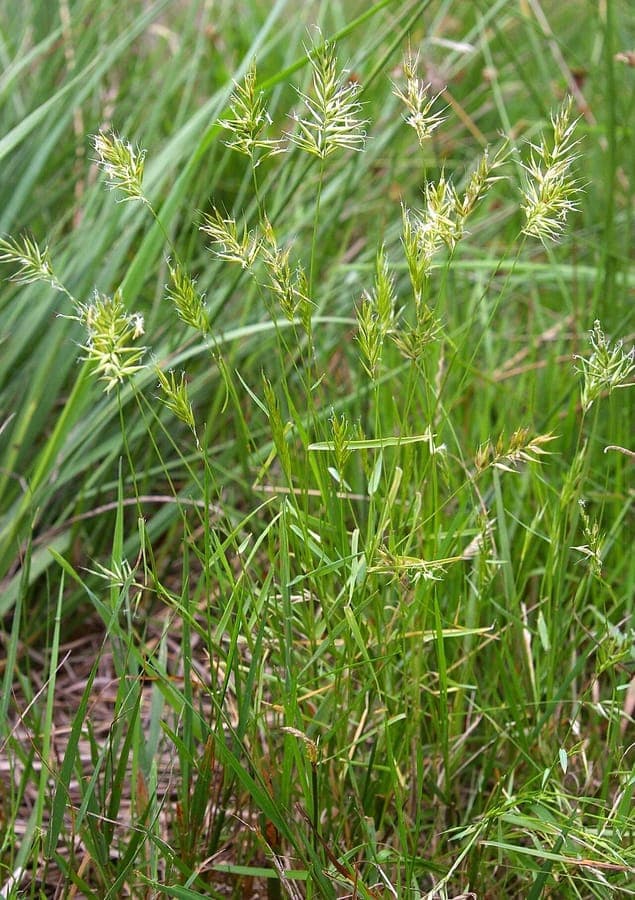
Christian Fischer / CC BY-SA 3.0, via Wikimedia Commons
Annual vernal grass: complete guide
Anthoxanthum aristatum
Want to see Annual vernal grass: complete guide in your garden?
1 minute, no credit card
Overview
Anthoxanthum aristatum, commonly known as Annual vernal grass, is a slender, short-lived annual grass species native to Southern Europe, North Africa, and parts of the Atlantic islands. It belongs to the Poaceae family and is often found in dry, open habitats like rocky slopes, roadsides, and disturbed soils. While not a mainstream garden plant in the UK or North America, it's gaining attention among eco-conscious gardeners for its ability to thrive in poor soils with minimal care. It's especially suited to naturalistic planting schemes and gravel gardens.
On gardenworld.app, you can create a custom garden layout that integrates Annual vernal grass into xeriscaped or wildlife-friendly designs.
Appearance & bloom cycle
Annual vernal grass typically grows 15–30 cm tall, forming loose tufts of fine, hair-like green to grey-green leaves. The foliage is narrow and upright, with a soft, feathery texture. From April to June, it produces slender, erect flower spikes that rise just above the leaves. These inflorescences start with a purplish tint and mature to a pale golden yellow. Each spikelet has a short, bristly awn (arista), which gives the plant its specific epithet aristatum.
One of its most distinctive features is its sweet, hay-like fragrance, especially noticeable on warm spring days. This comes from coumarin, a compound also found in sweet woodruff and new-mown hay. While not a flamboyant bloomer, its subtle charm and scent make it a delightful addition to informal plantings.
Ideal location
This grass thrives in full sun. It can tolerate light shade, but flowering diminishes and stems become leggy. The best spots are dry, well-drained, and low in fertility-think rock gardens, gravel beds, or between paving stones. It's ideal for sunny banks or poor soil patches where other plants struggle.
In temperate zones (USDA 7–9), it establishes easily from seed sown in early spring. Avoid rich garden beds or areas with heavy competition. On gardenworld.app, you can simulate microclimates in your garden to find the perfect sunny, dry nook for this grass.
Soil requirements
Annual vernal grass prefers sandy, gritty, or stony soils with excellent drainage. It tolerates a wide pH range, from 5.5 to 7.8, but performs best in neutral to slightly acidic conditions. Crucially, it dislikes rich, organic-heavy soils. High fertility encourages weeds and aggressive grasses that outcompete it.
If your soil is heavy clay, amend it with sharp sand or fine gravel to improve drainage. Do not add compost or fertilizer-this species thrives on neglect. Poor soil is an asset, not a limitation.
Free design
Want to see Annual vernal grass: complete guide in your garden? Make a free design now.
Watering
Once established, it's highly drought-tolerant. Young seedlings need light, consistent moisture for the first 2–3 weeks after germination, especially if spring is unusually dry. After that, rainfall is usually sufficient. Overwatering leads to weak growth and root rot.
In regions with summer droughts, no supplemental irrigation is needed. This grass is adapted to survive long dry spells, typical of its native Mediterranean habitats.
Pruning
No pruning is required. As an annual, it completes its life cycle in one growing season. After flowering and seed set, the plant dies back naturally. You can cut or pull dead foliage in late summer if desired, but leaving some spent stems encourages self-seeding.
For naturalized plantings, allow at least a few plants to drop seed. This ensures next year's generation without needing to resow.
Maintenance calendar
- January–February: Prepare seedbeds by clearing weeds and debris. Sow seeds in mild spells.
- March–April: Germination occurs as soil warms. Keep seedlings moist until established.
- May–June: Peak flowering. Enjoy the fragrance and observe pollinators.
- July–August: Plants senesce. Collect seed or allow natural dispersal.
- September–December: Dormant period. No action needed.
Winter hardiness
As an annual, Anthoxanthum aristatum is not winter-hardy in the perennial sense. However, its seeds survive winter dormancy in the soil and germinate the following spring when temperatures rise above 10°C. It's well-suited to USDA zones 7–9, where winters are mild and wet but not waterlogged.
In colder zones (6 and below), it can still grow as a spring-sown annual, though self-seeding may be less reliable.
Companion plants
Pair Annual vernal grass with other drought-tolerant species like Thymus, Sedum, Eryngium, or small Alliums. It blends well with fine-textured perennials such as Stipa tenuissima or Carex flacca. Avoid pairing with vigorous groundcovers like Vinca or ivy that will smother it.
It works beautifully in gravel gardens, green roofs, or wildflower meadows with low fertility. Its airy structure adds movement and contrast without dominating.
Closing
Annual vernal grass is not a showstopper, but a quiet performer with ecological benefits. It's perfect for gardeners who value resilience, simplicity, and subtle beauty. Though rarely stocked in mainstream garden centres, seeds can be sourced from specialist suppliers or collected responsibly from wild populations.
If you're designing a low-input, wildlife-supporting garden, consider giving this humble grass a place. And use gardenworld.app to plan where it fits best in your landscape-whether in a dry corner or a natural meadow patch.
Want to see Annual vernal grass: complete guide in your garden? Make a free design now.
Upload a photo, pick a style, and get a photorealistic design with plant list in under a minute.
No credit card required


Similar plants
Sporobolus pungens: complete guide
Sporobolus pungens
Sporobolus pungens is a stoloniferous Mediterranean coastal grass with outstanding salt and drought tolerance, perfect for seaside and dry gardens.
Mediterranean aegilops: complete guide
Aegilops biuncialis
Everything about Aegilops biuncialis, a Mediterranean annual grass with ornamental spikes and outstanding drought tolerance for dry gardens.
Silver bluestem: complete guide
Bothriochloa saccharoides
Full guide to Bothriochloa saccharoides (silver bluestem): site, soil, watering, winter hardiness, pruning, and garden companions.