
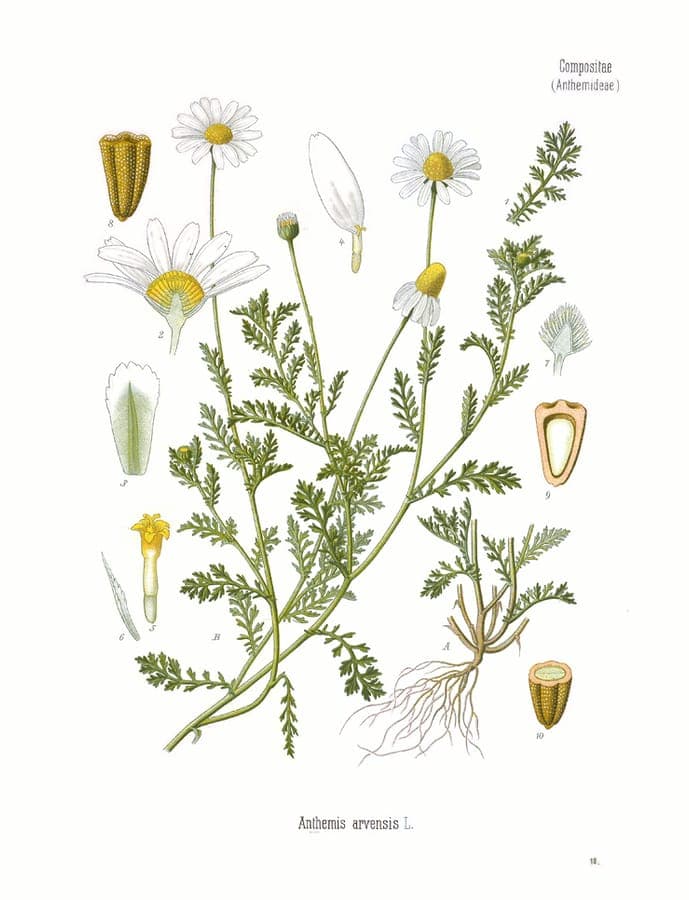
Köhler, F. E. (Franz Eugen) / Public domain, via Wikimedia Commons
Field chamomile: complete guide
Anthemis arvensis
Want to see Field chamomile: complete guide in your garden?
1 minute, no credit card
Overview
Anthemis arvensis, commonly known as field chamomile, is an annual flowering plant that brings a soft, wild charm to gardens. Unlike true chamomile (Matricaria chamomilla), it doesn't have the same sweet apple-like scent or herbal uses, but it's unmatched for creating a natural, meadow-like feel. Native to much of Europe, including the Baltic States, Belgium, and the Balkans, it thrives in open fields and disturbed soils-making it perfect for cottage gardens and low-effort landscapes.
Growing 20 to 40 cm tall, field chamomile blooms from June to September, producing delicate daisy-like flowers with white ray florets surrounding a bright yellow centre. It's an excellent choice for self-sown drifts and informal planting schemes. On gardenworld.app, you can design a planting plan that includes field chamomile and other self-seeding annuals for year-round spontaneity.
Appearance & bloom cycle
The plant features finely divided, grey-green foliage that feels soft to the touch. Each flower measures about 2–3 cm across and opens fully in sunlight. Blooms appear 8–10 weeks after sowing, typically starting in early summer. Because it's an annual, it completes its life cycle in one season, but it reliably self-seeds if conditions are right.
Seeds drop in late summer and germinate the following spring, usually from March onward. If you want controlled spread, harvest seeds in paper bags in September. For a wilder look, leave the plants standing over winter to encourage natural reseeding.
Ideal location
Choose a spot with full sun to light shade. Field chamomile performs best in at least 6 hours of direct sunlight per day. In partial shade, it may become leggy and produce fewer flowers. Good air circulation is essential-avoid damp, stagnant areas to prevent mildew, especially during humid summers.
This plant fits beautifully in cottage-style borders, gravel gardens, or between paving stones. It pairs well with other airy annuals like cornflowers or poppies. Use gardenworld.app to visualise how field chamomile blends with neighbouring plants in height, colour, and texture.
Soil requirements
Field chamomile is undemanding when it comes to soil. It grows well in poor, well-drained soils and actually prefers lean conditions. Avoid overly fertile ground, as this encourages lush foliage at the expense of flowers.
The ideal pH range is between 5.5 and 7.5. Sandy or loamy soils work best. If your garden has heavy clay, improve drainage by mixing in grit or coarse sand. No fertiliser is needed-this plant thrives on neglect.
Free design
Want to see Field chamomile: complete guide in your garden? Make a free design now.
Watering
Once established, field chamomile is drought-tolerant. During germination and the first few weeks, keep the soil lightly moist-especially in dry spells. Water at the base to avoid wetting the foliage, which can encourage fungal issues.
After the first month, reduce watering significantly. Overwatering is more harmful than underwatering; soggy soil leads to root rot and weak stems. In most UK and US zones, natural rainfall is sufficient once plants are mature.
Pruning
Deadheading spent flowers encourages longer blooming. Simply pinch or snip off faded blooms just above a leaf node. This prevents early seed set and redirects energy into new flower production.
If you want the plant to self-seed, stop deadheading by mid-August. Allow the final flowers to dry on the stem and release their seeds naturally.
Maintenance calendar
- March–April: Sow seeds directly outdoors after last frost, or check for self-sown seedlings. Thin if overcrowded.
- May: Water young plants during dry periods. Keep weed competition low.
- June–August: Deadhead regularly. Watch for slugs on young foliage.
- September: Collect seeds or leave plants for natural reseeding.
- October–November: Remove dead plant material, unless encouraging self-seeding.
Winter hardiness
As an annual, field chamomile is not winter-hardy. It dies back after the first hard frost (below -2°C). However, its seeds are cold-tolerant and can survive winter dormancy in the soil, germinating when temperatures rise in spring.
No winter protection is needed. In mild climates (USDA zones 7–9), some seeds may germinate in late winter, giving an early start to the season.
Companion plants
Pair field chamomile with plants that share its sunny, dry preferences. Good companions include Centaurea cyanus (cornflower), Papaver rhoeas (common poppy), and small ornamental grasses like Festuca glauca. It also works well in front of taller perennials such as Echinacea or Rudbeckia.
Avoid aggressive spreaders or heavy feeders that might outcompete it. The airy habit of field chamomile allows pollinators like hoverflies and bees to move freely through the border.
Closing
Field chamomile isn't flashy, but it's a reliable performer in informal gardens. It asks for little and gives back charm, movement, and ecological value. You can find seeds at garden centres across the UK and US, or order online as part of wildflower mixes. Because it self-seeds so readily, a single planting can return for years with minimal effort. Plan your ideal wildflower scheme on gardenworld.app and see how field chamomile fits into your garden's rhythm.
Want to see Field chamomile: complete guide in your garden? Make a free design now.
Upload a photo, pick a style, and get a photorealistic design with plant list in under a minute.
No credit card required


Similar plants
Calendula stellata: complete guide
Calendula stellata
Complete guide to Calendula stellata, the star-flowered marigold from Sicily: location, soil, watering and companion planting tips.
Korean chrysanthemum: complete guide
Chrysanthemum x rubellum
Chrysanthemum x rubellum is a hardy autumn perennial with single pink to copper flowers from August to November. Care and combinations.
Helianthus divaricatus: complete guide
Helianthus divaricatus
Helianthus divaricatus is a North American woodland sunflower with yellow summer blooms, ideal for naturalistic borders and shady edges.