
Wikimedia Commons / CC BY-SA 3.0, via Wikimedia Commons
Cat's-foot: complete guide
Antennaria dioica
Want to see Cat's-foot: complete guide in your garden?
1 minute, no credit card
Overview
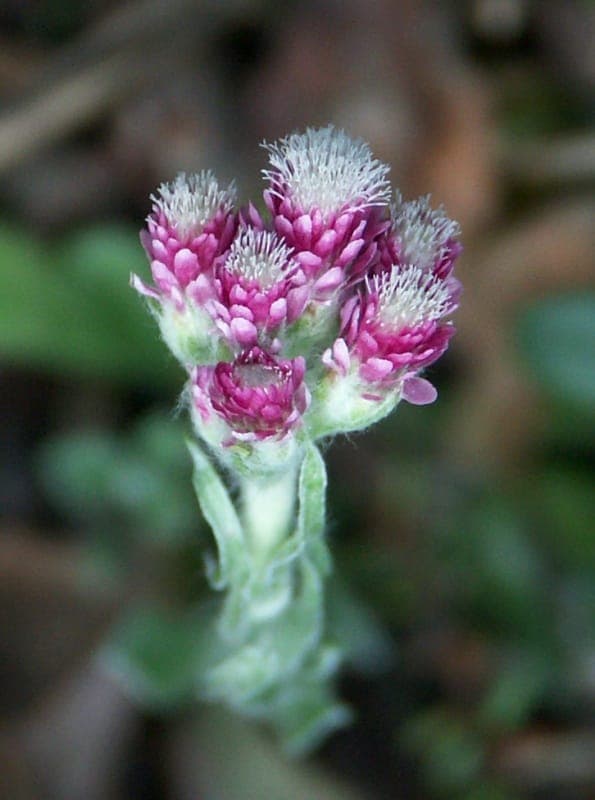
Cat's-foot, or Antennaria dioica, is a resilient little perennial that deserves a spot in more gardens. Native to rocky slopes and open woodlands across Central and Eastern Europe – from the Alps to the Baltic States – this forb thrives where other plants struggle. It's a low-grower with silvery, felt-like leaves and clusters of cottony white or pale purple flowers that resemble tiny paws, hence the common name. Unlike many perennials, it's dioecious, meaning male and female flowers grow on separate plants. That's a quirky botanical detail that adds interest for observant gardeners.
If you're designing a drought-tolerant front yard, gardenworld.app lets you create a custom planting plan that features cat's-foot as a key structural element.
Appearance & bloom cycle
Cat's-foot forms tight mats 5–10 cm tall and spreads slowly to about 30 cm wide. The leaves are woolly, silvery-green, and densely covered in fine hairs that reduce water loss – a classic adaptation to dry environments. From May to June, upright flower stalks rise 10–15 cm, topped with small, button-like flower heads. Male plants tend to have fuller, more showy blooms than female ones. The flowers are mostly white, sometimes with a faint purple tinge, and persist long after blooming, drying into attractive, everlasting tufts.
Even after flowering, the plant maintains visual interest through late summer and into autumn, thanks to its durable flower structures. This makes it a smart choice for gardens that need year-round texture.
Ideal location
Cat's-foot wants full sun – think 8 out of 10 on the light scale. It performs best in hot, dry spots: rock gardens, gravel beds, green roofs, or between stepping stones. It's perfect for south-facing slopes or sandy banks where moisture drains fast. Because it's so low, it works well as an edging plant or in cracks of flagstone paths. Avoid shady or damp areas; in those conditions, the foliage becomes leggy and prone to rot.
Keep in mind that while established plants tolerate intense sun, young ones need a little protection during their first summer. A bit of afternoon shade or light mulch can help them settle in.
Soil requirements
This plant likes sharply drained, sandy, or gravelly soil with a pH between 4.5 and 5.0. It prefers acidic, poor soils – think heathland or alpine conditions. Heavy clay or rich compost-heavy soil will cause it to rot or grow too lush. If your soil is dense, mix in sharp sand or small gravel to improve drainage. A thin layer of grit on top after planting helps prevent stem rot and keeps foliage dry.
You can use gardenworld.app to assess your soil type and see if it's suitable for cat's-foot before you plant.
Free design
Want to see Cat's-foot: complete guide in your garden? Make a free design now.
Watering
Once established, cat's-foot is extremely drought-tolerant. Water young plants weekly during dry spells in their first growing season. Water at the base, not over the leaves – the fuzzy foliage holds moisture and can develop fungal issues if kept wet. After year one, supplemental watering is rarely needed, even in long dry spells. Overwatering is a bigger risk than underwatering.
If parts of the plant start collapsing or turning brown, check for poor drainage rather than assuming it needs more water.
Pruning
Pruning isn't necessary. After flowering, you can trim back spent stalks for a neater look, but it won't encourage rebloom. Leaving the dried flower heads provides winter interest and food for birds. In early spring, remove any dead or damaged foliage with clean scissors to tidy up the mat.
Avoid cutting into old wood – this plant doesn't regenerate well from bare stems.
Maintenance calendar
- Jan: Check for winter damage; remove loose debris
- Feb: Inspect soil compaction; prep for spring
- Mar: Clear old leaves and flower stalks
- Apr: Water young plants if dry; no fertiliser needed
- May: Bloom begins; watch for slugs on new growth
- Jun: Peak bloom; check for fungal spots in wet weather
- Jul: No maintenance; plant is self-sufficient
- Aug: Monitor young plants in heatwaves
- Sep: Leave seed heads for birds and texture
- Oct: Reduce care; let plant go dormant
- Nov: No pruning; protect from heavy mulch
- Dec: Dormant; fully hardy
Winter hardiness
Cat's-foot is hardy to at least -25°C (USDA zones 4–8). The foliage stays evergreen or semi-evergreen, providing structure in the winter garden. In areas with wet, heavy winters, poor drainage can lead to crown rot. Ensure the site has excellent drainage – a raised bed or slope helps. Snow cover insulates well, but isn't required.
Companion plants
Pair cat's-foot with other drought-tolerant species like creeping thyme (Thymus serpyllum), sedum, dwarf dianthus, or helianthemum. It works well under taller sun-lovers like echinacea or rudbeckia. In rock gardens, it complements sempervivum and aubrieta. Avoid aggressive groundcovers like ivy or mint that will smother it.
Closing
Cat's-foot is a quiet achiever – not flashy, but tough, beautiful, and low-maintenance. It's ideal for tough spots where you want texture without fuss. You'll find it at garden centres across the UK and North America, often in the alpine or rock garden section. Try it in a gravel driveway, green roof, or dry border. Once settled, it asks for almost nothing and gives back texture, resilience, and charm. For design inspiration, check out gardenworld.app's drought-tolerant garden templates.
Want to see Cat's-foot: complete guide in your garden? Make a free design now.
Upload a photo, pick a style, and get a photorealistic design with plant list in under a minute.
No credit card required


Similar plants
Calendula stellata: complete guide
Calendula stellata
Complete guide to Calendula stellata, the star-flowered marigold from Sicily: location, soil, watering and companion planting tips.
Korean chrysanthemum: complete guide
Chrysanthemum x rubellum
Chrysanthemum x rubellum is a hardy autumn perennial with single pink to copper flowers from August to November. Care and combinations.
Helianthus divaricatus: complete guide
Helianthus divaricatus
Helianthus divaricatus is a North American woodland sunflower with yellow summer blooms, ideal for naturalistic borders and shady edges.