
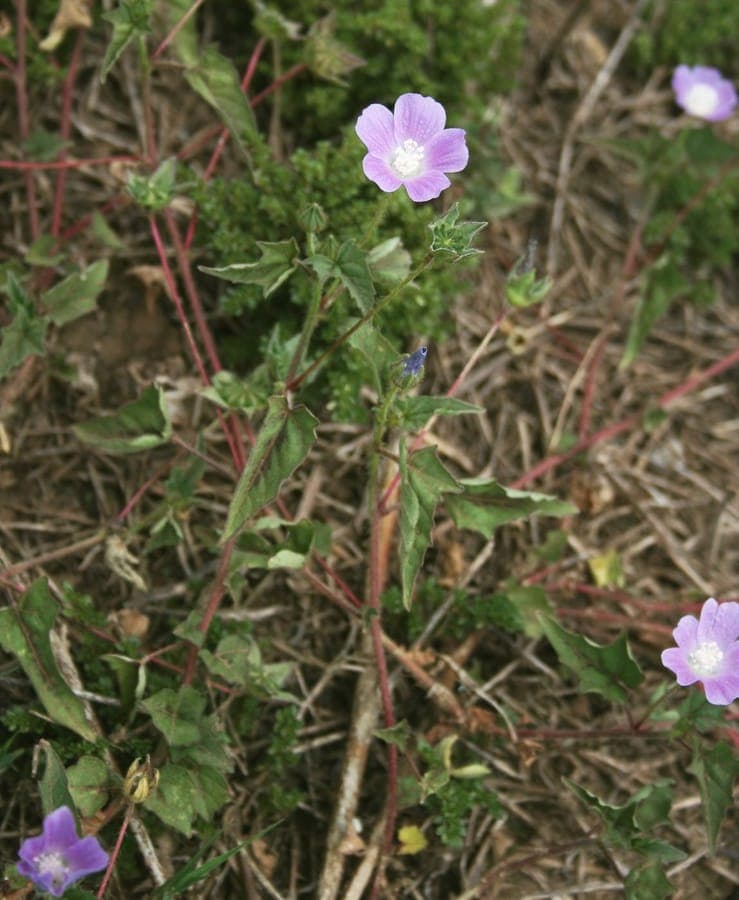
Franz Xaver / CC BY-SA 3.0, via Wikimedia Commons
Anoda-weed: complete guide
Anoda cristata
Want to see Anoda-weed: complete guide in your garden?
1 minute, no credit card
Overview
Anoda-weed, or Anoda cristata, is one of those plants gardeners either pull out or quietly admire - depending on their taste. A member of the Malvaceae family, it's related to mallows and hibiscus but grows as a fast-spreading, herbaceous annual. Native to warm regions like Argentina, Bolivia, and Arizona, it thrives in hot, dry conditions and can pop up uninvited in gravel paths or neglected corners. In the UK and US, it's often seen as a weed, but with a bit of intentionality, it can be a useful plant in low-maintenance or wildflower gardens. On gardenworld.app you can design a planting scheme that works with self-seeding species like Anoda-weed, turning what some see as a nuisance into a feature.
It's a true summer plant, germinating in late spring and blooming through summer into early autumn. While not hardy below USDA zone 8, it reliably self-seeds in milder climates. In cooler zones (5–7), it acts as a warm-season annual, dying back after frost but leaving behind seeds for next year.
Appearance & bloom cycle
Anoda-weed grows 30 to 80 cm tall, with upright, slightly hairy stems and deeply lobed, bright green leaves that resemble small maple or vine leaves. The foliage is soft to the touch and can reach up to 6 cm wide. From June to September, it produces small, vivid purple-blue flowers, just 1–2 cm across. Each flower opens in the morning and often closes by midday, especially in intense heat.
What sets it apart is its fruit: a distinctive star-shaped capsule that gives the plant its scientific name (cristata means 'crested'). These woody, wheel-like structures persist into winter and add visual interest long after the leaves have faded. The bloom cycle is long and steady, especially if you deadhead lightly or remove competing weeds.
Ideal location
Full sun is best - at least 6 hours of direct light daily. A south-facing wall, gravel garden, or dry border works perfectly. It tolerates light shade but won't bloom well. Avoid damp, shaded spots under trees or near downspouts. In the UK, it does well in urban gardens with warm microclimates. In the US, it's common in zones 7–10, especially in well-drained soils.
If you're designing a low-effort, drought-tolerant space, consider placing Anoda-weed at the front or middle of a border. It pairs well with other informal growers. On gardenworld.app, you can map out a layout that uses its self-seeding habit to fill gaps naturally, reducing the need for replanting.
Free design
Want to see Anoda-weed: complete guide in your garden? Make a free design now.
Soil requirements
This plant isn't picky. It grows in sandy, loamy, or rocky soils as long as drainage is good. Avoid heavy clay unless amended with grit or sand. A pH between 6.0 and 7.5 is ideal. Don't enrich the soil with compost - rich beds encourage leafy growth at the expense of flowers.
If sowing directly, rake the soil lightly and scatter seeds in April or May. Keep the area weed-free for the first few weeks so seedlings aren't crowded out.
Watering
Water sparingly. Once established, Anoda-weed is highly drought-tolerant. In dry summers, give a light soak every 10–14 days, but avoid overhead watering if possible. Overwatering leads to weak stems and fewer blooms. Rain is usually enough in the UK, but in drier US regions like Arizona or California, occasional watering helps.
Pruning
Pruning isn't necessary, but you can pinch back young plants to encourage bushiness. If you want to limit spread, cut stems before seed pods ripen (around September). Use clean shears and dispose of plant material to prevent unwanted seeding. For ornamental effect, leave some stalks through winter - they add texture and shelter for overwintering insects.
Maintenance calendar
- March–April: Clear area, prepare soil, sow seeds
- May: Thin seedlings, remove weeds
- June–September: Monitor for pests, water in drought
- October: Cut back or leave for winter interest
- November–February: No action needed
Winter hardiness
Not winter-hardy as a mature plant. Dies with first frost (below -2°C). However, seeds survive light frosts and germinate the next spring. In USDA zones 8–10, it may act as a short-lived perennial. In cooler zones, rely on self-seeding. Leave old stems standing to protect soil and host beneficial insects.
Companion plants
Pair with drought-tolerant species like Gaura lindheimeri, Linaria, or small salvias. Avoid aggressive spreaders like mint or bamboo. In a gravel garden, it complements sedums, yarrows, or dwarf grasses. It also looks good near faded perennials, adding a splash of unexpected colour.
Closing
Anoda-weed isn't for every garden - but if you like plants that grow where nothing else will, it's worth a try. It's low-maintenance, bee-friendly, and brings an informal charm to dry, sunny spots. Buy seeds or plants at garden centres in late spring, or collect your own in autumn. Whether you're in the UK or US, this plant fits well in a relaxed, ecological approach. And remember, on gardenworld.app you can design a planting plan that turns self-seeders like Anoda-weed into intentional, beautiful elements of your garden.
Want to see Anoda-weed: complete guide in your garden? Make a free design now.
Upload a photo, pick a style, and get a photorealistic design with plant list in under a minute.
No credit card required


Similar plants
Crimean linden: complete guide
Tilia × euchlora
Crimean linden is an elegant, fast-growing shade tree ideal for large gardens. Discover cultivars, spacing, maintenance tips and winter hardiness.
California flannelbush: complete guide
Fremontodendron californicum
Everything about California flannelbush (Fremontodendron californicum): sunny placement, drainage, pruning and care for this spectacular yellow-flowering shrub.
Hairy rose mallow: complete guide
Hibiscus moscheutos subsp. lasiocarpos
Full growing guide for hairy rose mallow (Hibiscus moscheutos subsp. lasiocarpos): location, soil, watering, winter hardiness and garden design tips.