
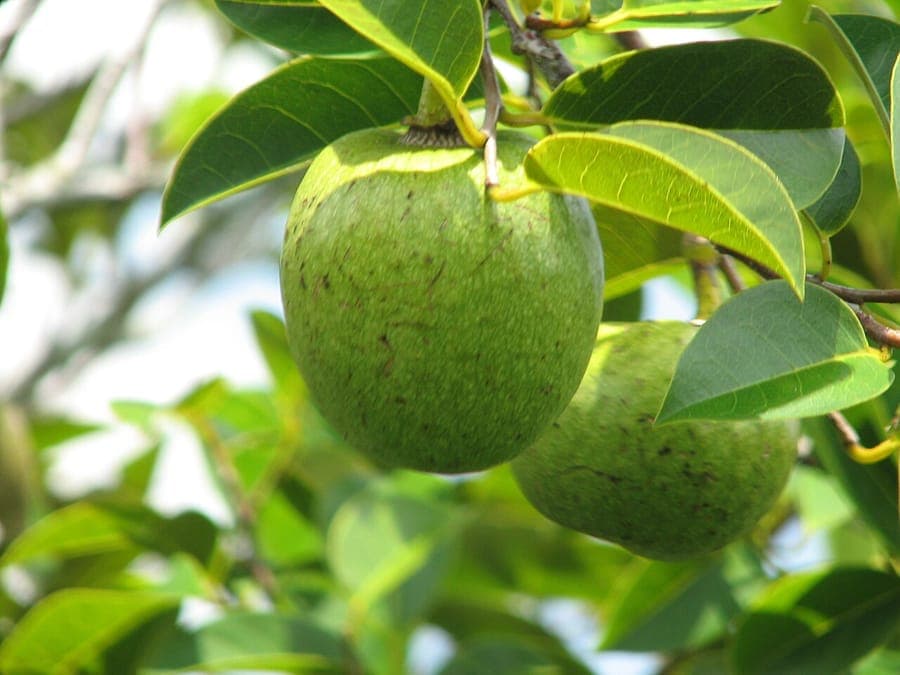
CiXeL at English Wikipedia / CC BY-SA 3.0, via Wikimedia Commons
Corkwood: complete guide
Annona glabra
Want to see Corkwood: complete guide in your garden?
1 minute, no credit card
Corkwood grows best on soil rich in organic matter with moderate to good water retention. The plant tolerates acidic soils very well (pH 5.0-6.5) though it also grows in neutral conditions. In very dry regions, add abundant compost or decomposed sawdust to improve moisture retention. Planting should occur in full sun locations (at least six to eight hours of direct sun daily), though the tree appreciates afternoon shade in very hot climates. Water regularly during the first two growing seasons to encourage deep root development, but avoid waterlogging that causes root rot. Mature trees are very drought-tolerant though they fruit better with consistent moisture during flowering and fruit-setting periods. Fertilize twice yearly (March and September) with complete NPK fertilizer or specialized fruit tree formulations per package directions. Extra magnesium and zinc may be applied if leaves appear yellowish. The tree naturally forms an open crown requiring minimal pruning, though you may remove dead wood and thin overlapping branches to improve air circulation. Pruning directly after harvest encourages new growth for next season. Corkwood is rarely troubled by serious pests though fruit flies sometimes pose problems in very humid regions; keep fruit indoors until fully ripe. The tree propagates easily from seed, but seed-grown plants show genetic variation in fruit quality, so topworking or budding onto seedlings guarantees propagation of select cultivars.
Want to see Corkwood: complete guide in your garden? Make a free design now.
Upload a photo, pick a style, and get a photorealistic design with plant list in under a minute.
No credit card required


Similar plants
Wild custard-apple: complete guide
Annona senegalensis
Discover Annona senegalensis - a delicious African fruit tree with creamy, sweet fruit. Read our full guide on growing, harvesting, and cultivating this exotic fruiting plant.
Calabash-nutmeg: complete guide
Monodora myristica
Discover Monodora myristica, a tropical fruit tree with striking blooms and aromatic seeds. Learn cultivation techniques for warm and subtropical climates.
Pawpaw Tree: complete guide
Asimina triloba
Discover Asimina triloba, the Pawpaw or Indian-banana. A North American fruit tree with large leaves, purple flowers, and delicious yellow-green fruits. Edible fruits.