
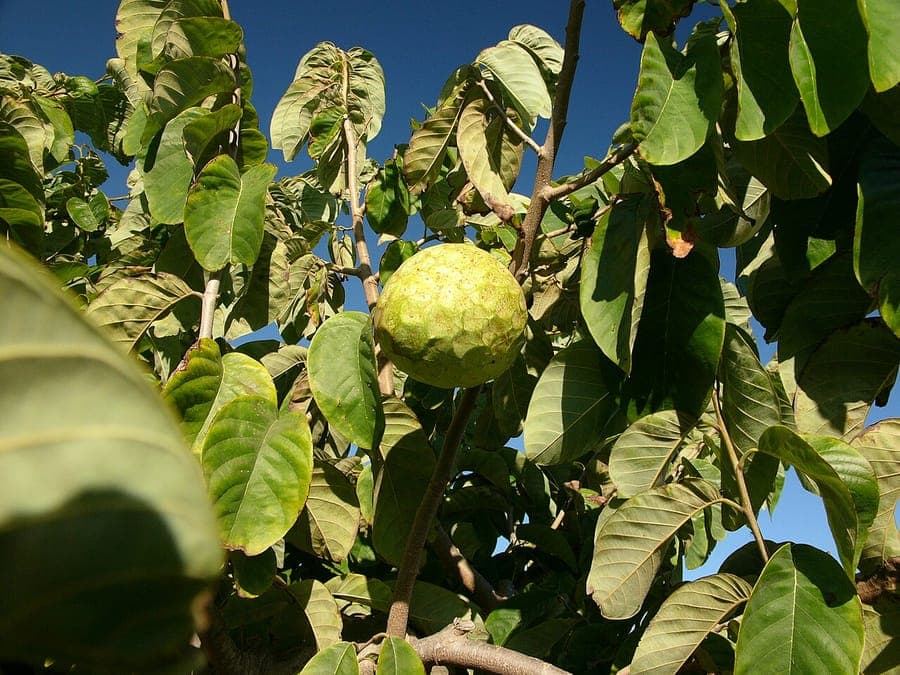
Hannes Grobe 21:31, 5 November 2006 (UTC) / CC BY-SA 2.5, via Wikimedia Commons
Cherimoya: complete guide
Annona cherimola
Want to see Cherimoya: complete guide in your garden?
1 minute, no credit card
Overview
Annona cherimola, better known as cherimoya, is a subtropical fruit tree native to the Andes of Peru, Ecuador, Colombia, and Bolivia. While it doesn't naturally thrive in temperate climates, with careful attention it can be grown successfully in the UK and similar regions-especially in containers or against sheltered, sunny walls. The fruit is prized for its creamy, sweet flesh, often described as a blend of banana, pineapple, and vanilla. It's not hardy outdoors year-round, but with protection, it can survive and even fruit in milder zones.
On gardenworld.app, you can design a garden layout that incorporates a cherimoya into a warm microclimate, such as a south-facing wall or greenhouse corner. The platform also helps track seasonal care tasks specific to subtropical species.
Appearance & bloom cycle
Cherimoya grows into a small to medium-sized tree, typically reaching 4–8 meters when mature. It has lance-shaped, glossy green leaves up to 25 cm long, with a silvery underside. In spring, unusual maroon and green flowers appear-three fleshy outer petals and three inner ones that rarely open fully. These blooms are mostly self-infertile, so hand pollination is often required in cooler climates. The flowering period runs from April to June.
Fruit development is slow. Young fruits form shortly after pollination but take until late autumn to ripen-usually October to December. They're heart-shaped, 10–20 cm long, with a scaly green skin. Inside, the flesh is white, creamy, and dotted with black, inedible seeds. Never eat the seeds-they contain toxic alkaloids.
Ideal location
Cherimoya needs full sun-ideally 6–8 hours daily. Choose a south- or southwest-facing spot, preferably against a warm brick or stone wall that radiates heat. If planting in the ground, ensure the site is sheltered from cold winds and frost pockets. For container growing, use a pot at least 50 cm in diameter with excellent drainage. This allows you to move the tree indoors or to a greenhouse during winter. Avoid low-lying areas where cold air settles.
Soil requirements
The tree prefers rich, well-drained soil with a pH between 6.0 and 7.0. Heavy clay soils should be amended with coarse sand, compost, and grit to improve drainage. In pots, use a high-quality loam-based compost like John Innes No. 3, mixed with perlite. Add a layer of organic compost each spring to replenish nutrients. Avoid waterlogged conditions-root rot is a common issue.
Free design
Want to see Cherimoya: complete guide in your garden? Make a free design now.
Watering
Keep the soil consistently moist but never soggy. Water deeply 1–2 times per week during the growing season (April–September), increasing frequency during dry spells. In winter, reduce watering to once every 10–14 days, as the tree enters dormancy. Use rainwater when possible, as cherimoya is sensitive to lime and high mineral content in tap water.
Pruning
Prune in late winter or early spring after fruiting. Remove dead, crossing, or inward-growing branches to improve airflow and light penetration. Keep the tree open and bushy by cutting back vigorous upright shoots. You can maintain a manageable height of 2.5–3 meters by tipping the main leader. This also encourages lateral branching and makes harvesting easier. Always use clean, sharp tools to prevent disease.
Maintenance calendar
- Jan: Inspect for pests, minimal watering
- Feb: Light pruning, prepare for growth
- Mar: Start feeding, check for root health
- Apr: Hand-pollinate flowers, increase watering
- May: Monitor for aphids, maintain moisture
- Jun: Support fruiting branches, ensure pollination
- Jul: Continue regular watering, watch for fungal issues
- Aug: Feed monthly, avoid overwatering
- Sep: Begin reducing water, harvest starts
- Oct: Complete harvest, prepare for winter
- Nov: Move container plants indoors, reduce watering
- Dec: Dormant period, no feeding
Winter hardiness
Cherimoya is not hardy below USDA zone 9. In the UK (zones 7–8), it must be protected. Mature trees may survive brief dips to 5°C if dry and sheltered, but prolonged cold or frost will damage or kill them. For outdoor trees, consider using horticultural fleece or a temporary greenhouse frame. Container-grown trees should be moved to a cool greenhouse or bright conservatory with temperatures between 8–12°C.
Companion plants
Avoid planting cherimoya near aggressive root competitors. Good companions include drought-tolerant, low-growing herbs like thyme or oregano, which help suppress weeds without stealing moisture. In containers, plant rosemary or sage around the base-they deter pests and thrive in similar conditions. Do not plant near walnuts or other juglone-producing trees.
Closing
Growing cherimoya outside the tropics is a challenge, but the reward-a homegrown exotic fruit-is worth it. Success depends on consistent warmth, good drainage, and protection from cold. Buy young trees from reputable garden centres that specialise in unusual fruit, and always inspect for healthy roots and foliage. With proper care, a cherimoya can live 20–25 years and produce fruit annually.
Using gardenworld.app, you can simulate how a cherimoya would fit into your garden design, factoring in space, sun exposure, and seasonal maintenance. It's a smart way to plan for long-term success with this unique tree.
Want to see Cherimoya: complete guide in your garden? Make a free design now.
Upload a photo, pick a style, and get a photorealistic design with plant list in under a minute.
No credit card required


Similar plants
Corkwood: complete guide
Annona glabra
Grow corkwood (Annona glabra) for tropical fruit. Pond-apple tree for wet gardens, edible fruit, soft tropical flesh.
Wild custard-apple: complete guide
Annona senegalensis
Discover Annona senegalensis - a delicious African fruit tree with creamy, sweet fruit. Read our full guide on growing, harvesting, and cultivating this exotic fruiting plant.
Calabash-nutmeg: complete guide
Monodora myristica
Discover Monodora myristica, a tropical fruit tree with striking blooms and aromatic seeds. Learn cultivation techniques for warm and subtropical climates.