
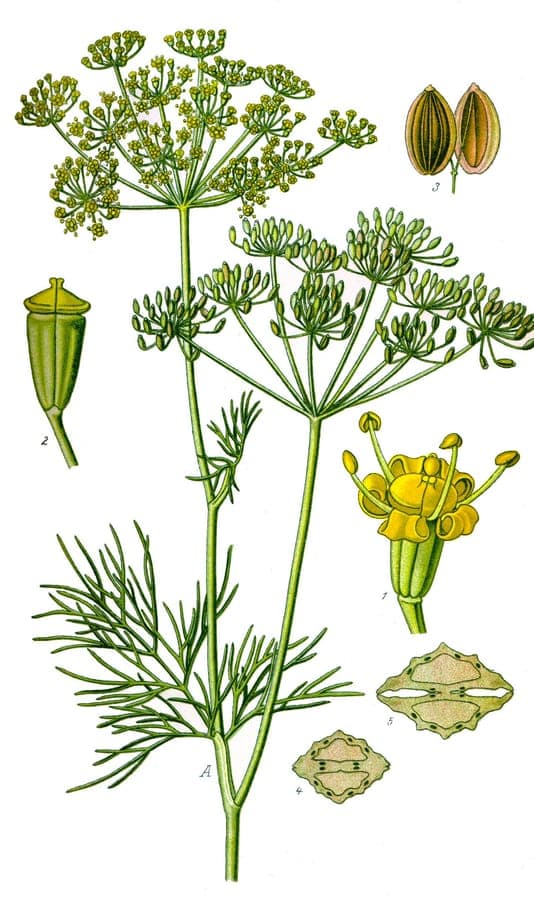
Illustration_Anethum_graveolens0.jpg: Prof. Dr. Otto Wilhelm Thomé derivative work: Aroche (talk) / Public domain, via Wikimedia Commons
Garden dill: complete guide
Anethum graveolens
Want to see Garden dill: complete guide in your garden?
1 minute, no credit card
Overview
Garden dill (Anethum graveolens) is an annual herb in the Apiaceae family, prized for its aromatic feathery leaves and flavourful seeds. Native to North Africa and the Middle East - including Iran, Libya, and Saudi Arabia - it thrives in temperate climates and is a staple in kitchen gardens across Europe. In the UK and similar zones, dill grows well from late spring to early autumn, adding both culinary value and visual interest to the garden. It's commonly used in pickling, fish dishes, and salads, and its flowers attract beneficial insects.
On gardenworld.app you can design a herb garden layout that integrates dill with companion plants like cucumbers and onions for optimal growth. Dill is easy to grow from seed, but it dislikes transplanting, so it's best sown directly where it's to grow. It's relatively low-maintenance but benefits from thoughtful placement and consistent care. Watch out for slugs, mildew, and bolting in hot weather.
Appearance & bloom cycle
Dill grows 40 to 120 cm tall, depending on conditions, with soft, thread-like blue-green foliage that forms delicate, fern-like clumps. From June to August, it produces flat-topped yellow umbel flowers, which later develop into oval, tan-coloured seeds. These seeds mature from late July onwards and can be harvested for cooking or saved for next year's planting.
The flowers are highly attractive to pollinators, especially hoverflies and parasitic wasps, making dill a valuable addition to a wildlife-friendly garden. However, once dill flowers, leaf production slows and the stems become woody. If you're growing for foliage, pinch back the tips regularly to delay flowering. For seed production, let the plant flower freely.
Ideal location
Dill needs full sun - at least 6 hours of direct sunlight daily. A south- or southeast-facing spot is ideal. In shade, the plant becomes leggy, weak, and prone to disease. If growing indoors on a windowsill, choose a bright spot, preferably south-facing.
You can buy dill seeds or young plants from garden centres like B&Q, Wyevale, or local nurseries. When planting in beds or containers, allow 25–30 cm between plants. Dill self-seeds readily, so if you don't want volunteers next year, remove flower heads before they go to seed. That said, self-sown dill often establishes in perfect spots naturally.
Soil requirements
Dill prefers well-drained, loamy soil rich in organic matter. A pH between 6.0 and 7.0 is ideal. Avoid heavy clay or waterlogged soils, as dill's taproot is prone to rotting. If your soil is compact or clay-heavy, mix in 10–15 cm of compost or well-rotted manure to improve structure.
For container growing, use a good-quality multipurpose or herb potting mix. Don't over-fertilise - too much nitrogen leads to lush but flavourless foliage. A light top-dressing of compost in spring is usually sufficient.
Free design
Want to see Garden dill: complete guide in your garden? Make a free design now.
Watering
Keep soil consistently moist, especially during germination and early growth (May–July). Water at the base to prevent leaf wetness, which can encourage fungal diseases. In dry spells, water 2–3 times per week, more often in containers.
Dill in pots dries out faster, so check daily in summer. Use rainwater if possible, as dill can be sensitive to high lime content in tap water, leading to yellowing leaves. Avoid overwatering - soggy soil kills dill faster than drought.
Pruning
To encourage bushy growth and delay flowering, pinch out the growing tips once the plant reaches 15–20 cm. Harvest no more than one-third of the foliage at a time. Use fresh leaves in salads, sauces, or with fish.
For seed harvest, stop pruning in early summer. Cut flower heads when seeds turn light brown, and hang them upside down in a paper bag to dry. Store seeds in airtight containers in a cool, dark place.
Maintenance calendar
- March–April: Start seeds indoors at 18–22°C in modules.
- May: Harden off and transplant outdoors after last frost (late May in UK).
- June–July: Water regularly, harvest leaves, pinch tips to delay bolting.
- August: Seeds ripen; continue leaf harvest.
- September: Harvest mature seeds; allow some to self-sow.
- October: Plants die back. Clear debris to prevent disease carryover.
On gardenworld.app you can generate a custom care calendar based on your location and planting date, helping you stay on track all season.
Winter hardiness
Dill is a true annual and does not survive winter in the UK (USDA zone 8b). It's hardy in zones 3–11 but behaves as a summer plant here. Mature plants won't overwinter, but seeds can survive frost and germinate in spring. For year-round supply, sow indoors in winter or use a heated greenhouse.
Companion plants
Dill grows well with cucumbers, onions, cabbage, and lettuce. It's said to improve cucumber flavour and repel aphids. Avoid planting near carrots, tomatoes, or potatoes, as dill may inhibit their growth. Keep it away from fennel to prevent cross-pollination, which can alter flavour.
Good companions include chives, basil, and lettuce. Dill also attracts beneficial insects that help control pests in nearby crops.
Closing
Garden dill is a versatile, easy-to-grow herb that brings flavour, fragrance, and function to any garden. Whether in a border, container, or veg patch, it rewards with lush foliage and edible seeds. With full sun, decent soil, and a little attention, you'll enjoy fresh dill all summer. And when you're planning your layout, remember to use gardenworld.app to visualise your herb combinations and track plant care.
Want to see Garden dill: complete guide in your garden? Make a free design now.
Upload a photo, pick a style, and get a photorealistic design with plant list in under a minute.
No credit card required


Similar plants
Whorled carrot: complete guide
Daucus involucratus
Daucus involucratus is a Mediterranean umbellifer with white flower heads framed by lacy bracts. Growing this gravel garden gem.
Daucus muricatus: complete guide
Daucus muricatus
Daucus muricatus, the spiny wild carrot, grows wild on Mediterranean coasts. Discover sowing, June-July bloom, and wildflower meadow use.
Daucus pumilus: complete guide
Daucus pumilus
Daucus pumilus is a dwarf wild carrot relative with white lacy umbels, thriving on dunes and coastal rock in poor, fast-draining soil.