
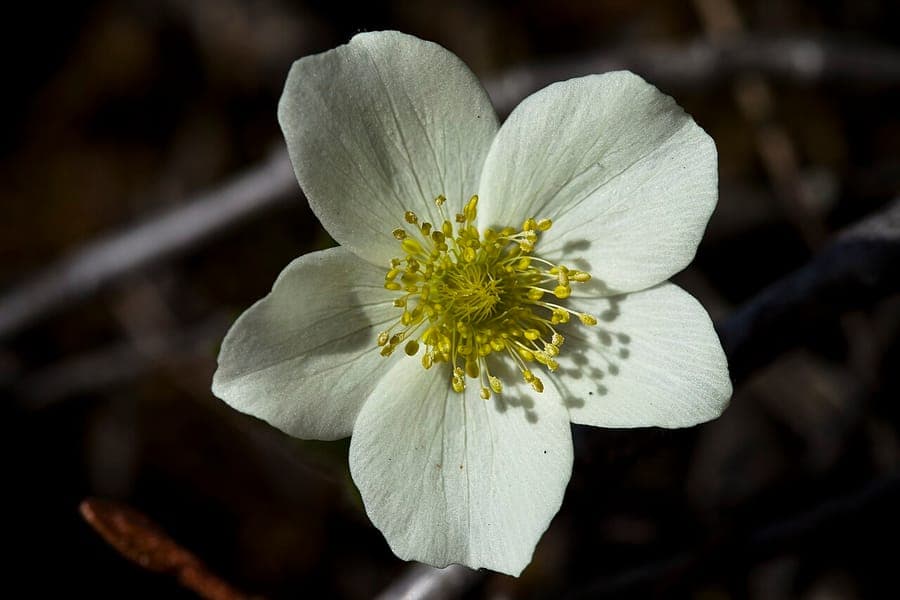
DenaliNPS / Public domain, via Wikimedia Commons
Northern Anemone: complete guide
Anemone parviflora
Want to see Northern Anemone: complete guide in your garden?
1 minute, no credit card
Overview
The Northern Anemone (Anemone parviflora), also called Small-flower Anemone, is a delicate alpine plant from the Ranunculaceae family. Native to subarctic North America and Russia, from Alaska through the Rocky Mountains to Colorado and Utah, this charming species thrives in cool, moist conditions.
It is perfect for alpine gardens, rock gardens and shaded borders. The plant grows low and dense, offering delicate flowers suited to naturalistic planting schemes. This is a plant for dappled shade and consistently moist soil, not for full sun and drought.
Appearance and bloom
Northern Anemone typically reaches only 10-30 cm tall, forming compact, tight cushions. The leaves are deeply divided into narrow, filigree-like segments that remain attractive even outside bloom time.
Flowers emerge in June and July, small (roughly 1-1.5 cm across), usually white or pale pink-tinged. They grow on slender stems above the foliage with 5-7 petals. The bloom period is relatively short (4-6 weeks), but intense and charming.
Ideal location
This plant thrives in partial to full shade. It grows naturally in mountains where larger plants and trees provide shelter. Avoid direct afternoon sun, especially in warm climates.
Plant in well-draining, humus-rich soil in a spot where water does not stagnate, but the soil stays regularly moist. Perfect for woodland edges, alpine lawn borders and shaded rockeries.
Soil
Northern Anemone prefers well-draining, humus-rich soil with plenty of organic matter. A pH of 5.5-7.0 (slightly acidic to neutral) is ideal. The plant comes from mountains where deeper, nutrient-rich soils occur naturally.
Amend the soil thoroughly with compost or leaf mould before planting. The plant dislikes waterlogging or completely dry conditions. Ensure water drains well but never dries out fully.
Free design
Want to see Northern Anemone: complete guide in your garden? Make a free design now.
Watering
Northern Anemone loves consistently moist (not waterlogged) soil during the growing season (April-October). During peak growth (May-July), water regularly so the soil feels lightly moist always.
In hot periods, daily watering may be needed, especially in pots. In autumn and winter, rainfall usually reduces watering needs. Check regularly and water early morning by preference.
Pruning
Pruning is minimal. Remove only dead leaves and stems. After flowering, you can remove spent stems, but leave foliage so nutrients return to the underground system.
In autumn, the foliage naturally disappears. Simply tidy any dead material in late autumn.
Maintenance calendar
March: Plant out or divide existing clumps. April-May: Regular watering, no feeding needed (alpine soils are naturally poor). June-July: Peak bloom period, monitor moisture. August-October: Let it grow, minimal care. November-February: Winter dormancy, minimal intervention.
Winter hardiness
Northern Anemone is extremely hardy, naturally occurring in subarctic regions (USDA zones 1-5). It thrives in zones 3-7. It needs cold in winter for proper bud formation.
In warm zones (8-9), growth may be delayed. Try only if you can provide cooler, moist summer conditions.
Companion plants
Northern Anemone grows well with other alpine and woodland plants: Hepatica, Primula, small astilbes, Helleborus and Tiarella. It combines beautifully with shrubs like Ilex crenata and small Acer species.
It loves growing with ferns that prefer similar moist conditions.
Closing
Northern Anemone is a delicate, enduring choice for shaded, moist gardens. It thrives where many other plants struggle. Source plants from alpine nurseries or shade border specialists. For more tips on alpine gardens and shade management, visit gardenworld.app. Happy growing of this charming mountain beauty!
Want to see Northern Anemone: complete guide in your garden? Make a free design now.
Upload a photo, pick a style, and get a photorealistic design with plant list in under a minute.
No credit card required


Similar plants
Drummond's anemone: complete guide
Anemone drummondii
Discover Drummond's anemone (Anemone drummondii): a silvery-grey mountain plant for cool rock gardens and alpine troughs.
Korean clematis: complete guide
Clematis serratifolia
Clematis serratifolia is a hardy climber with fragrant yellow bell flowers in August-September. Pruning group 3, location and care tips.
Aquilegia brevistyla: complete guide
Aquilegia brevistyla
Discover Aquilegia brevistyla, the elegant North American columbine. Growing tips, shade tolerance, and design ideas for woodland and shadowed gardens.