
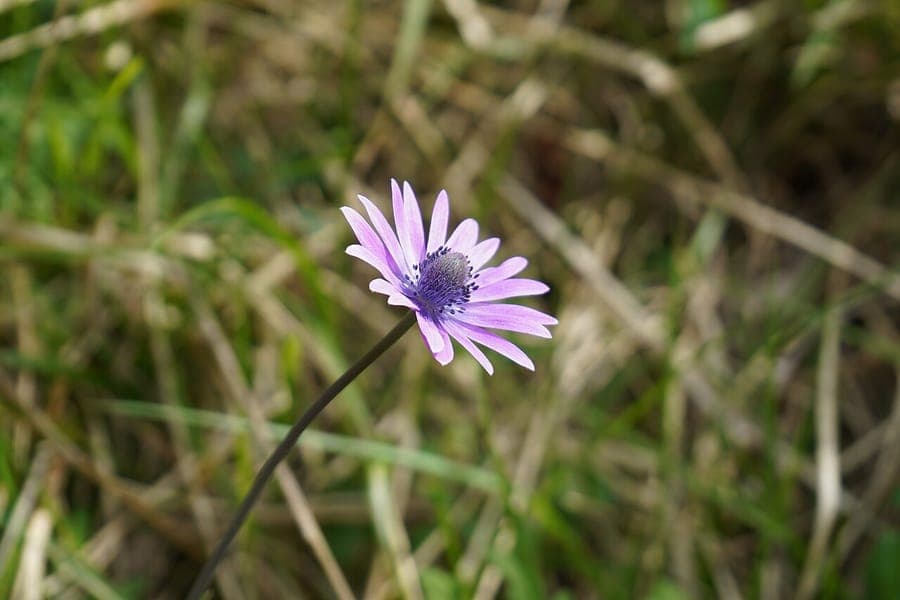
Christian Orlandi / CC BY-SA 4.0, via Wikimedia Commons
Broad-leaved anemone: complete guide
Anemone hortensis
Want to see Broad-leaved anemone: complete guide in your garden?
1 minute, no credit card
Overview
Anemone hortensis, commonly known as the Broad-leaved anemone, is a graceful early spring perennial that returns year after year with minimal care. Native to southern Europe-including Greece, Italy, and southern France-it thrives in gardens across USDA zones 6 to 9. In temperate climates, this member of the Ranunculaceae family reaches 20 to 30 cm in height and blooms from March to April, making it a welcome sight after winter.
Its slow-spreading nature suits naturalistic plantings, rock gardens, or under deciduous trees. Since the foliage dies back by early summer, it's wise to mark its location or plant companions nearby to avoid disturbing dormant tubers. With gardenworld.app, you can design a seasonal planting scheme that accounts for its lifecycle and integrates it seamlessly into your garden layout.
Appearance & bloom cycle
This anemone stands out with deeply divided, broad leaves and elegant, star-shaped flowers that open only in sunlight. On overcast days, the blooms stay closed, conserving energy. The flowering period runs from March to April, though in milder winters, buds may appear as early as February.
Flower colors range from pure white through soft blue to rich purple, often with a darker central eye. Each bloom measures about 3 to 4 cm across, held on slender, upright stems. Foliage persists until June before the plant retreats into dormancy.
It's a charming addition to the spring garden, pairing well with other early bloomers like snowdrops and crocuses. To explore compatible designs, browse the planting library on gardenworld.app and find inspiration for natural, low-effort schemes.
Ideal location
Anemone hortensis prefers light to partial shade-rated 7 on the light scale-meaning it thrives with 3 to 6 hours of morning sun. Full sun in hot climates can dry the soil too quickly, shortening the bloom window. Full shade reduces flowering and weakens stems.
Plant under open-canopied trees like birch or hazel, where sunlight reaches the ground in early spring before full leaf-out. Avoid dense root competition from large trees. It also performs well in rockeries, crevices, or along garden walls where drainage is excellent.
Soil requirements
This species favors well-draining, calcareous soil with a pH between 7.0 and 7.5. Heavy clay soils should be amended with grit or sharp sand to improve drainage. Waterlogged conditions lead to tuber rot, especially during summer dormancy.
At planting, mix in a handful of gravel to enhance drainage. Avoid rich composts or fertilizers-this plant prefers moderate fertility. A light mulch of leaf mold or pine bark in autumn helps protect tubers and maintain soil structure.
Free design
Want to see Broad-leaved anemone: complete guide in your garden? Make a free design now.
Watering
Water primarily during active growth, from February to June. Keep the soil moist but never soggy. In dry springs, a deep watering once a week is sufficient. After flowering, reduce watering as foliage begins to yellow.
Once dormant, the plant requires no irrigation. If grown in containers, store pots in a dry, shaded spot or bring them under cover. In garden beds, proper drainage ensures survival through wet winters.
Pruning
No pruning is needed for Anemone hortensis. Allow the foliage to die back naturally-it channels energy back into the tuber. Disturbing the leaves too early can weaken next year's bloom.
If tidiness is a concern, remove yellowed foliage in June using clean, sharp shears. Never pull leaves, as this may damage the tuber. Let fallen leaves decompose around the base to enrich the soil naturally.
Maintenance calendar
- January: Check for emerging shoots; ensure soil isn't waterlogged
- February: Light watering in dry spells; protect from frost with mulch
- March: Start of bloom; watch for slugs
- April: Peak flowering; take photos for your garden journal
- May: Flowers fade; reduce watering
- June: Foliage yellows; mark spot for next season
- July–December: Dormant period; no action needed
Plant new tubers in September or October. Use the seasonal planner on gardenworld.app to schedule planting and track growth patterns.
Winter hardiness
Anemone hortensis is winter hardy in USDA zones 6–9. In regions like the UK and northern Europe (zone 8), it survives winter without protection if drainage is adequate. In colder zones, a thin layer of mulch prevents frost heave.
Avoid planting in frost pockets. In containers, elevate pots on feet and cover with horticultural fleece during prolonged freezes.
Companion plants
Pair with early bloomers like Eranthis hyemalis, Chionodoxa, and small narcissi. Low-growing perennials such as Ajuga reptans or Pulsatilla vulgaris provide good ground cover.
Under trees, combine with Narcissus 'Tête-à-tête' or Scilla mischtschenkoana for overlapping bloom times. In rock gardens, Sedum rupestre or Sempervivum create a striking contrast with the anemone's delicate flowers.
Closing
Anemone hortensis is a subtle yet impactful addition to any garden seeking natural charm and seasonal rhythm. It asks for little and rewards with a burst of spring beauty. Ideal for beginners and seasoned gardeners alike, it thrives on neglect once established.
Purchase tubers from garden centres in autumn, especially at trusted retailers like Truffaut in France or local suppliers in the UK. Choose firm, undamaged specimens. With the right conditions, they'll bloom reliably for years. Plan your planting layout on gardenworld.app and see how this anemone enhances your garden's spring display.
Want to see Broad-leaved anemone: complete guide in your garden? Make a free design now.
Upload a photo, pick a style, and get a photorealistic design with plant list in under a minute.
No credit card required


Similar plants
Drummond's anemone: complete guide
Anemone drummondii
Discover Drummond's anemone (Anemone drummondii): a silvery-grey mountain plant for cool rock gardens and alpine troughs.
Korean clematis: complete guide
Clematis serratifolia
Clematis serratifolia is a hardy climber with fragrant yellow bell flowers in August-September. Pruning group 3, location and care tips.
Aquilegia brevistyla: complete guide
Aquilegia brevistyla
Discover Aquilegia brevistyla, the elegant North American columbine. Growing tips, shade tolerance, and design ideas for woodland and shadowed gardens.