
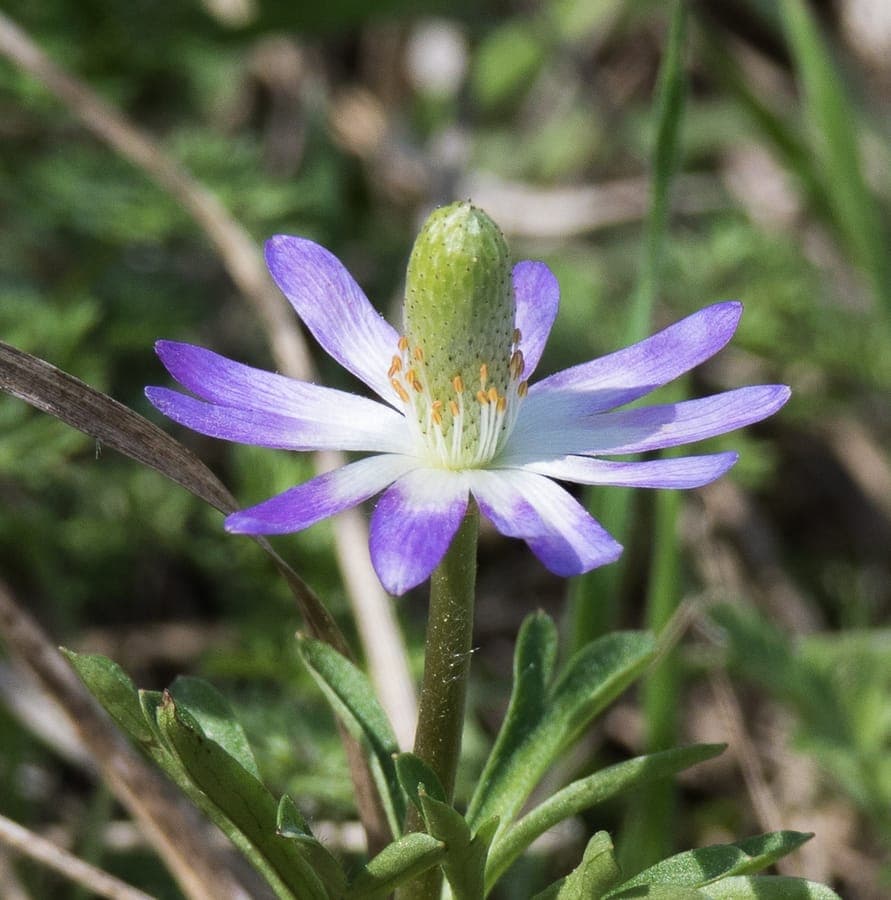
(c) Michael D Fox, some rights reserved (CC BY) / CC BY 4.0, via Wikimedia Commons
Ten-petal Anemone: complete guide
Anemone berlandieri
Want to see Ten-petal Anemone: complete guide in your garden?
1 minute, no credit card
Overview
The Ten-petal Anemone, scientifically known as Anemone berlandieri, is a delicate and elegant wildflower originating from the central and southeastern United States extending to Mexico. This anemone is noted for its distinctive ten petals (hence the name) and grows in natural prairie environments. It is an underrated plant in home gardens but deserves much more attention for its graceful appearance and ecological importance. With its preference for dry conditions and low maintenance requirements, it is a wonderful choice for native plant gardens.
Appearance and bloom
Anemone berlandieri grows as a compact plant with finely divided, hairy foliage that is quite decorative. The flowers are white to pink with typically ten petals. Blooms appear in late spring (April-May) and have a soft, graceful appearance. Flowering plants usually reach 20-40 cm in height. After blooming, the plant forms interesting, fluffy seed heads that remain decorative. Many insects, especially bees, visit these flowers.
Ideal location
Anemone berlandieri thrives in full sun to light shade. The plant prefers 6+ hours of direct sunlight but can tolerate 2-3 hours of afternoon shade in very hot climates. This native wildflower naturally grows on open prairies where sunlight is abundant. In gardens: plant in unshaded locations with good light. Woodland gardens can also work as long as light is available.
Soil
This anemone grows from seed and prefers well-draining, dry to moderately moist soil. It can tolerate heavy clay but grows best in loose, sandy or loam-sand mixture. Native prairie soil usually has low nutrient values, so rich garden soil is not essential. The plant prefers neutral to slightly acidic pH (6.0-7.0). Good drainage is important to prevent root rot in wet winters.
Watering
Once established, Anemone berlandieri is drought-tolerant. During the first growing season, provide regular water until roots deepen. After establishment: water only during drought. This plant grows from seed in early spring, so winter moisture is beneficial. Summer watering can be reduced to minimum when the plant becomes dormant. In very wet climates, extra drainage helps.
Free design
Want to see Ten-petal Anemone: complete guide in your garden? Make a free design now.
Pruning
Minimal pruning needed. This plant grows low and compact, so shape pruning is not necessary. Remove wilted flowers if you want to limit seed production and encourage more blooming. Leave seed heads, however, if you want to harvest seeds or keep them for visual interest. After spring blooming in summer, the foliage dies back and should be left to rest.
Maintenance calendar
Winter to early spring: Seed germination occurs. Plant develops roots. Spring: Foliage growth, bloom preparation. Regular watering. Late spring: Bloom period. Bee visitation. Late summer: Seed ripening, plant begins to decline. Fall: Plant goes dormant. Winter preparation. Winter: Rest period, no water needed.
Winter hardiness
Anemone berlandieri is a cold-hardy species that can withstand temperatures to -15°C. It grows from seed each spring so freezing of mature plants is not a major concern. The plant adapts to cold, dry winters in northern states where it naturally grows. In warm climates, it may not thrive and the bulblets may need deeper planting.
Companion plants
This anemone combines beautifully with other prairie wildflowers. Try it with Coreopsis, Echinacea, Rudbeckia, and other native North American plants. In mixed borders: plant in groups for effective display. The white-pink flowers contrast nicely with yellow blooms. In naturalization areas: allow it to self-seed.
Conclusion
The Ten-petal Anemone is an underrated but highly valuable addition to native plant gardens. With its delicate flowers, low maintenance requirements, and ecological importance, it deserves much more popularity. Start with seed in early spring, water regularly until roots deepen, and enjoy the elegant blooms. Support native ecosystems by growing this plant. Discover more plant guides on gardenworld.app. Create a sustainable garden with native species.
Want to see Ten-petal Anemone: complete guide in your garden? Make a free design now.
Upload a photo, pick a style, and get a photorealistic design with plant list in under a minute.
No credit card required

