
Mnolf / CC BY-SA 3.0, via Wikimedia Commons
Bog-rosemary: complete guide
Andromeda polifolia
Want to see Bog-rosemary: complete guide in your garden?
1 minute, no credit card
Overview
Bog-rosemary (Andromeda polifolia) isn't related to culinary rosemary or lavender, despite the name. It's a delicate evergreen shrub from the Ericaceae family, sharing kinship with blueberries, rhododendrons, and heathers. Native to cold, wet bogs across northern Europe and northeastern North America, it thrives where few plants dare – in acidic, nutrient-poor, constantly moist soils. If you've got a soggy patch in your garden that stays wet year-round, Bog-rosemary might be the perfect fit.
Typically growing 15–30 cm tall, it forms dense, creeping mats with narrow, leathery leaves. It's not flashy, but its quiet beauty and resilience in tough conditions make it a gem for naturalistic planting schemes. On gardenworld.app, you can design a moisture-loving garden layout that highlights Bog-rosemary alongside other bog specialists.
Appearance & bloom cycle
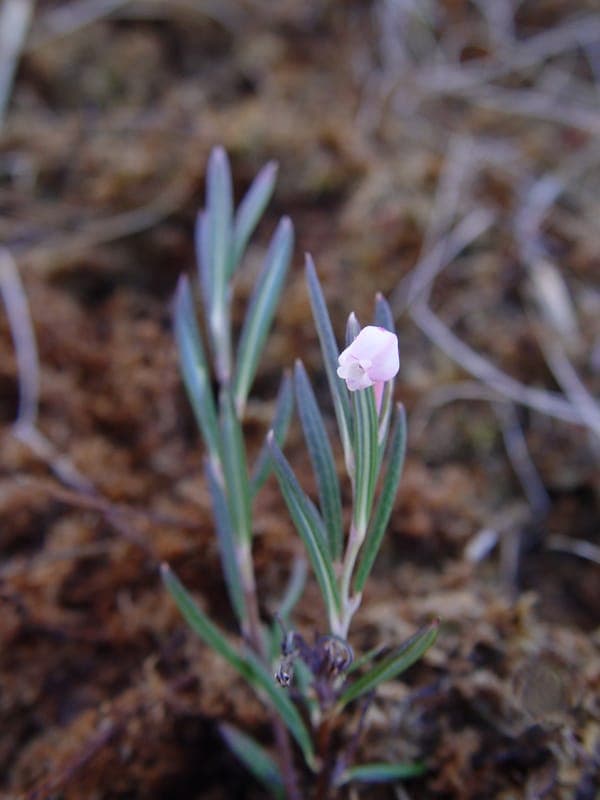
The leaves are the first thing you'll notice – narrow, 2–4 cm long, dark green and glossy on top, with a striking silvery-white underside coated in a waxy cuticle. This wax layer helps prevent water loss and protects against fungal issues in damp air. From May to June, delicate, urn-shaped flowers dangle in one-sided clusters along the stems. They start pale pink and fade to near white, often with a greenish tinge. The scent is light and sweet, just enough to attract early-season bees and hoverflies.
After blooming, small, dry capsules form and persist through winter, splitting open in spring to release tiny seeds. The evergreen foliage stays through the year, turning slightly bronzed or purplish in winter, adding subtle seasonal interest.
Ideal location
Choose a spot with partial to full shade, especially protection from hot afternoon sun. Bog-rosemary burns easily in direct, scorching light. A north- or east-facing slope, the edge of a woodland garden, or under open-canopied trees like birch or alder works best. It's ideal for bog gardens, pond margins, or damp heathland plantings.
If you're unsure about light levels in your garden, gardenworld.app offers shade-mapping tools to help you pinpoint the best microclimate for acid-loving, moisture-dependent plants like Bog-rosemary.
Soil requirements
This plant demands acidic soil – pH 4.0 to 5.5 is ideal. Neutral or alkaline soils will cause yellowing leaves (chlorosis) and eventual decline. The soil must be rich in organic matter: use a mix of peat-free ericaceous compost, leaf mould, and sphagnum moss. Avoid garden compost or manure – they're too rich and often too alkaline.
Good drainage isn't the goal here; consistent moisture is. The root zone should stay damp but not waterlogged. In containers, use a pot with drainage holes and sit it in a shallow tray of water, refilled as needed. Use ericaceous compost from garden centres like those stocking specialist heather soils.
Free design
Want to see Bog-rosemary: complete guide in your garden? Make a free design now.
Watering
Keep the soil constantly moist. From March to September, check daily in dry spells. Use rainwater whenever possible – tap water, especially in hard water areas, can raise pH over time and harm the roots. If you must use tap water, let it sit for 24 hours to off-gas chlorine.
During summer droughts, mist the foliage lightly in the morning to increase humidity. A mulch of pine needles or reed can help retain moisture and keep soil temperatures cool.
Pruning
Pruning is rarely needed. Bog-rosemary grows slowly and naturally stays compact. Remove only dead, damaged, or overcrowded stems in early spring before new growth starts. Use clean, sharp secateurs to avoid spreading disease.
If a plant becomes sparse or leggy after several years, you can cut back the oldest stems to about 5 cm above soil level to encourage fresh shoots. Don't cut into old wood without leaves – it won't regenerate.
Maintenance calendar
- January – February: Check for frost damage. Protect container plants with fleece if temperatures drop below -20°C.
- March: Start light feeding with acidic liquid fertiliser. Clear away old leaves.
- April: Plant new specimens in prepared bog soil. Keep soil moist.
- May – June: Flowering period. Ensure consistent moisture.
- July – August: Monitor for drought. Mist foliage in heatwaves.
- September: Stop feeding. Leave seed capsules for winter texture.
- October – December: Minimal care. Let leaf litter accumulate as natural mulch.
Winter hardiness
Bog-rosemary is extremely cold-hardy, surviving down to USDA zone 2 (-45°C). Foliage may bronze or curl in severe cold but usually recovers. Container-grown plants are more vulnerable – insulate pots with bubble wrap and elevate them off cold ground to prevent root freeze.
Companion plants
Pair with other bog lovers: cotton grass (Eriophorum), bog asphodel (Narthecium ossifragum), marsh marigold (Caltha palustris), and carnivorous plants like sundews (Drosera). It also complements dwarf rhododendrons, heathers, and ferns like Matteuccia struthiopteris.
Closing
Bog-rosemary won't dominate your garden, but it brings quiet elegance to difficult, wet corners. With acidic soil, steady moisture, and a little shade, it asks for little and gives back texture, year-round structure, and delicate blooms. It's a must for wildlife gardens, bog features, or naturalistic plantings. Pick up a plant from your local garden centre and use gardenworld.app to visualise how it fits into your damp garden design.
Want to see Bog-rosemary: complete guide in your garden? Make a free design now.
Upload a photo, pick a style, and get a photorealistic design with plant list in under a minute.
No credit card required


Similar plants
Zenobia pulverulenta: complete guide
Zenobia pulverulenta
Everything about Zenobia pulverulenta (honeycup): siting, acid soil, pruning and the fragrant white bells, in this complete care guide.
Dwarf huckleberry: complete guide
Gaylussacia dumosa
Everything about dwarf huckleberry (Gaylussacia dumosa): acidic soil, partial shade, pruning and care for this compact North American berry shrub.
Drooping leucothoe: complete guide
Leucothoe fontanesiana
Everything about drooping leucothoe (Leucothoe fontanesiana): shade tolerance, soil, watering, pruning, hardiness and companion plants.