
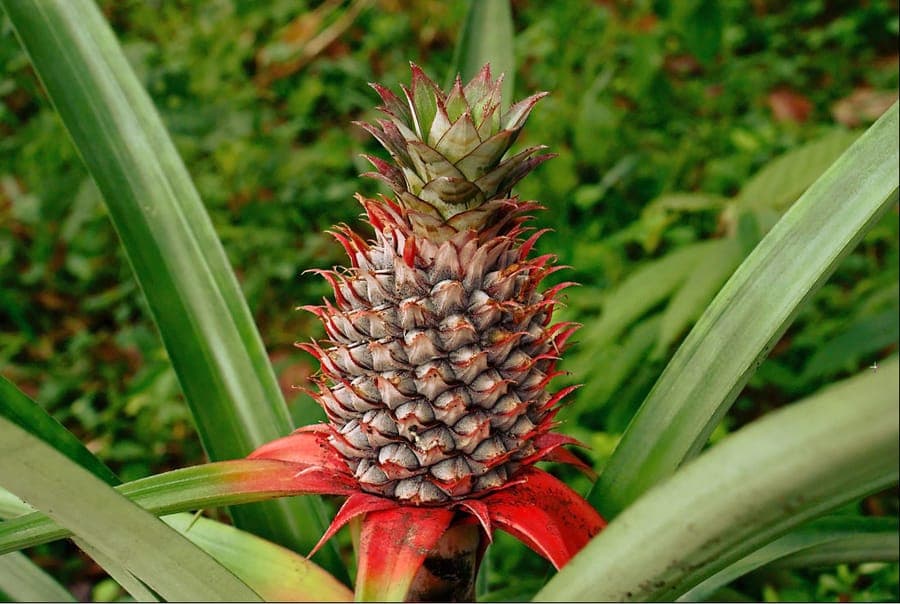
Suniltg at Malayalam Wikipedia / CC BY 3.0, via Wikimedia Commons
Pineapple: complete guide
Ananas comosus
Want to see Pineapple: complete guide in your garden?
1 minute, no credit card
Pineapples require only shallow root systems, so a pot measuring 30-40 cm in diameter and 25 cm deep accommodates a plant for three to four years. The growing medium must drain freely: combine peat, coconut coir, and coarse sand or orchid bark in a 1:1:1 ratio by volume. Add perlite or broken terracotta to enhance root aeration. The ideal soil pH ranges from 4.0 to 6.0, confirming that pineapples are acid-loving plants. Check drainage annually and refresh the top 5 cm of potting mix if it becomes compacted or saline. Feed every two weeks during the growing season (April to October) with half-strength liquid fertilizer. Use a balanced formula such as 10-10-10 nitrogen-phosphorus-potassium, or slightly higher potassium for fruit production. During dormancy (November to March), reduce feeding to once monthly. Many pineapple specialists apply extra potassium in late August and September to encourage flowering. Add magnesium by applying Epsom salt twice per season if leaves show yellowing between veins. Water when the top 2 cm of soil becomes dry, but ensure drainage holes remain clear at all times. Pineapples tolerate brief dry periods better than most tropical plants due to their xerophytic adaptations, but consistent moisture during the active growing season produces the best results. In winter, reduce watering sharply as the plant enters dormancy and water uptake slows significantly. Many commercial growers acetylene gas above the plant rosette to induce flowering if fruiting is delayed; home gardeners can achieve similar results by placing a ripe apple or banana next to the plant in a plastic bag for several days, as the natural ethylene gas triggers flowering hormones.
Want to see Pineapple: complete guide in your garden? Make a free design now.
Upload a photo, pick a style, and get a photorealistic design with plant list in under a minute.
No credit card required


Similar plants
Puya raimondii: complete guide
Puya raimondii
Discover the Queen of the Andes: care, cultivation, origin from Peru and Bolivia, and how this remarkable flower can thrive in your garden.
Spanish Moss (Tillandsia usneoides): complete guide
Tillandsia usneoides
Tillandsia usneoides, known as Spanish moss, is an epiphytic bromeliad without roots. Perfect for indoors or protected outdoor spots, this unusual plant offers magical, airy appeal.
Urnplant: complete guide
Aechmea fasciata
Discover the stunning Urnplant (Aechmea fasciata), an exotic bromeliad with striking silver-banded foliage and brilliant red inflorescences. An easy tropical houseplant.