
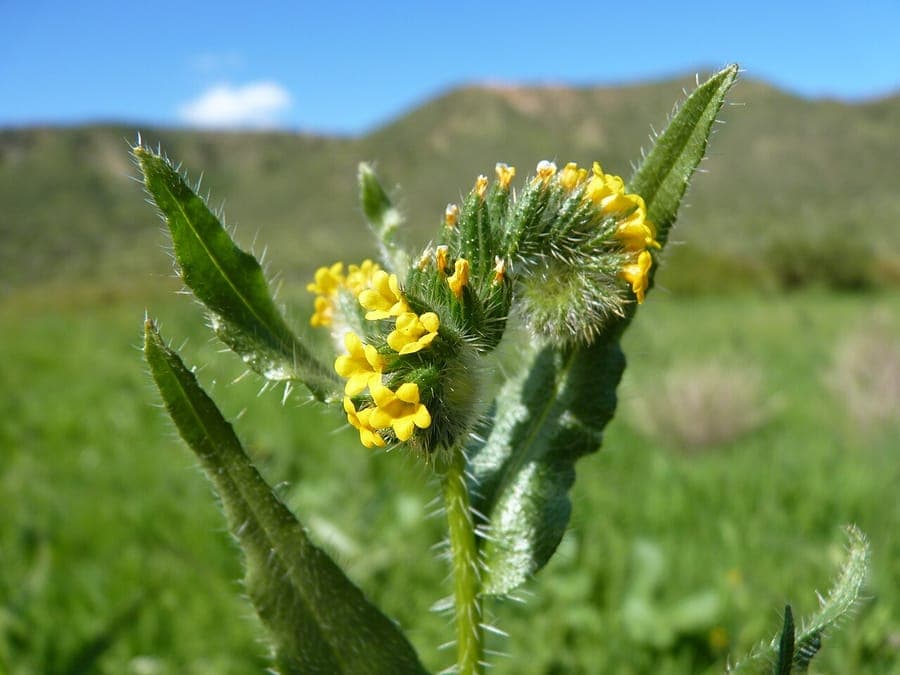
Pato Novoa / CC BY 2.0, via Wikimedia Commons
Amsinckia calycina: complete guide
Amsinckia calycina
Want to see Amsinckia calycina: complete guide in your garden?
1 minute, no credit card
Overview
Amsinckia calycina, commonly called hairy fiddleneck or corn gromwell, is a delightful annual plant native to the mountainous regions of South America, particularly Peru, Bolivia, and Ecuador. This distinctive species captures attention with its delicate, bright yellow flowers that bloom from May through June. Though relatively unknown in European garden culture, this rare gem deserves the attention of plant collectors and botanical enthusiasts.
The plant belongs to the Boraginaceae family, the same family as forget-me-nots and pulmonaria. The name "fiddleneck" refers to the characteristic coiled flower clusters reminiscent of a violin's neck. This uncommon plant is a valuable specimen for gardeners seeking something extraordinary in their front yard.
Appearance and bloom period
Amsinckia calycina forms a compact, shrubby plant reaching approximately 40-60 centimeters in height. The hairy stems give the plant its distinctive name and provide unique texture. The narrow, lance-shaped leaves share the same soft hairs as the stems, creating a silken appearance.
Yellow flowers emerge from April to June in dense spirals (helicoid clusters), characteristic of Boraginaceae plants. Each tiny bloom measures just 5-8 millimeters, yet the abundant profusion creates an impressive floral display. After flowering, small, rough seeds persist on hairy calyxes, sometimes dispersed by insects and birds.
The plant maintains decorative interest even after blooming thanks to the interesting seed heads that subtly contrast against the green background.
Ideal location
Amsinckia calycina thrives in warm, sunny positions receiving at least 6-8 hours of direct sunlight daily. This South American mountain dweller loves full sun and produces far more flowers with adequate light. A sheltered, heat-reflecting wall or stone surface proves beneficial in temperate climates.
The plant grows well in borders or containers. In pots, you can move it to sheltered spots during very wet or cold periods if necessary. Avoid shaded locations; beneath trees or against north-facing walls, flowering will significantly diminish. Good air circulation helps prevent mildew in humid seasons.
Soil
This plant makes no exceptional soil demands but performs best in well-draining, light soil mixes. Heavy clay or loamy soil requires amendment with sand or grit to prevent waterlogging.
The plant prefers a pH between 6.5-7, neutral to slightly acidic. In overly rich soil, the plant produces excessive foliage at the expense of flowers. A moderately fertile soil proves ideal. Ensure good drainage by mixing in compost and sand for heavier soils. Water stagnation is fatal to this species, especially in wet winters.
Watering
Once established, Amsinckia calycina is quite drought-tolerant, developing a strong taproot that penetrates deep soil. During the growing season (April-June), regular watering benefits growth, especially during dry spells. Allow soil to dry slightly between waterings.
Container plants require more water than garden soil plants. Water when the top centimeter of soil feels dry. Avoid waterlogging, as this inevitably causes root rot. In wet climates, supplemental watering usually isn't necessary except during extreme drought. During winter, when the plant dies as an annual, no watering is needed.
Free design
Want to see Amsinckia calycina: complete guide in your garden? Make a free design now.
Pruning
As an annual, Amsinckia calycina requires minimal pruning. Deadhead spent flowers regularly for extended bloom period and neater appearance. This also encourages the plant to branch and produce more flowers.
If the plant becomes leggy, gentle pinching helps: remove the top 5-10 centimeters of growing tips to encourage branching. However, avoid excessive pruning, as this can extend growth without significant flower production. Remove faded plant parts as needed. At season's end (October-November in most regions), the plant dies and can be completely removed.
Maintenance calendar
March-April: Sow in greenhouses at minimum 15-18 degrees Celsius. Germination takes 10-15 days.
May: Plant outside after last frost. Acclimatize first.
May-June: Regular watering, weeding, and flower bud formation.
June-August: Consistent flowering, deadhead spent flowers, adjust watering based on rainfall.
September-October: Flowering begins to decline, reduce watering.
November: Plant dies back completely.
Winter hardiness
Amsinckia calycina is not winter-hardy in temperate European climates. This is an annual (occasionally winter-annual) incapable of withstanding frost. In its South American homeland (Andes of Peru, Bolivia and Ecuador), the plant grows at elevations of 3,000-4,500 meters but still cannot endure the harsh winters of northern Europe.
In warmer regions (USDA zones 9-10), the plant might survive mild winters as a winter annual. In continental and Atlantic climates (Belgium, Netherlands, northern France), it will freeze. For repeated cultivation, resow annually in spring. This is actually advantageous as you obtain fresh, vigorous plants each year.
Companion plants
Amsinckia calycina pairs beautifully with other yellow bloomers and sun-loving border plants:
- Linaria maroccana (Moroccan snapdragon) - low, colorful complement
- Gaillardia pulchella - yellow-orange display
- Tagetes tenuifolia (Mexican student) - yellow pompoms
- Limonium sinuatum (statice) - soft structure
- Salvia miltiorrhiza (red sage) - contrast
Avoid vigorous overgrown species that might smother this delicate plant.
Conclusion
Amsinckia calycina is a relatively unknown treasure for collectors seeking something extraordinary. With its yellow flower clusters, hairy texture, and preference for sunny, dry spots, it adds a tropical touch to temperate gardens.
While not a mass-blooming plant for large garden areas, it excels in rock gardens, sandy areas, and warm pockets. For plant enthusiasts, it's certainly worth trying at least once. Resow each spring and enjoy the exotic blooms!
On gardenworld.app, discover more designs featuring southern and rare plants. Find how to transform your front yard into a botanical paradise.
Want to see Amsinckia calycina: complete guide in your garden? Make a free design now.
Upload a photo, pick a style, and get a photorealistic design with plant list in under a minute.
No credit card required


Similar plants
Western waterleaf: complete guide
Hydrophyllum occidentale
Full growing guide for western waterleaf (Hydrophyllum occidentale): shade tolerance, soil needs, watering, winter hardiness and naturalistic garden use.
Limestone phacelia (Phacelia affinis): complete guide
Phacelia affinis
Full guide to Phacelia affinis, the limestone phacelia: sowing tips, purple-blue bee flowers, drought tolerance and uses in dry or wildlife gardens.
Pyrenean viper's bugloss: complete guide
Echium asperrimum
Echium asperrimum is a striking biennial from the western Mediterranean with rough bristly stems and vivid blue flowers. A magnet for bees and a bold border plant.