
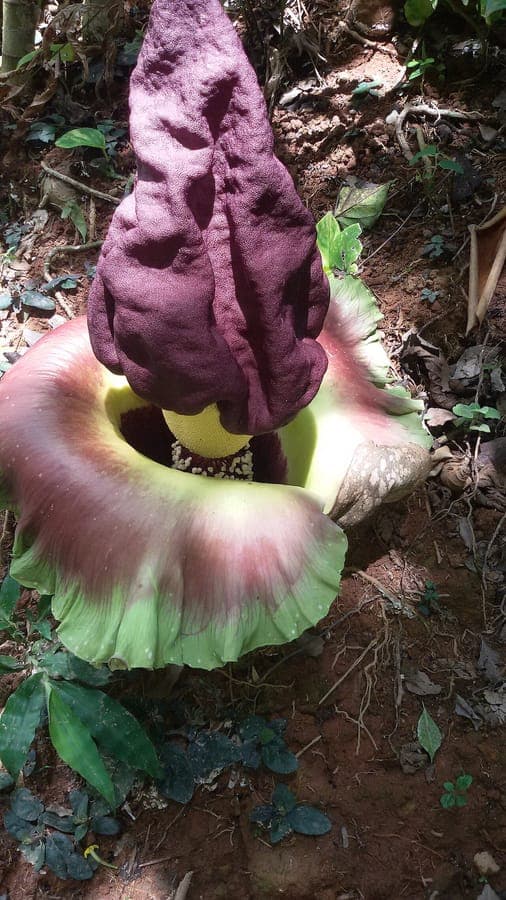
J A Forbes / CC BY-SA 4.0, via Wikimedia Commons
Elephant foot yam: complete guide
Amorphophallus paeoniifolius
Want to see Elephant foot yam: complete guide in your garden?
1 minute, no credit card
Overview
Elephant foot yam (Amorphophallus paeoniifolius), also called Suweg or Pungapung, is a fascinating tropical plant from the Araceae family. In many tropical countries, this plant is cultivated as a vegetable. The underground edible corm is an important food crop in Asia. The plant is also prized for its spectacular massive deeply lobed leaves.
Appearance and Bloom
Elephant foot yam grows from a large underground corm. After sprouting, a spectacular inflorescence appears with a large deep purple spathe. Later, enormous triangular, deeply lobed leaves unfurl. These leaves can reach 60-200 cm in length and are deeply cut. The leaf petiole is thick, blotched, and can exceed 1-2 meters long. Red berries may form later in the season.
Ideal Location
Grow in warm tropical conditions: 20-30C. In temperate climates, grow indoors in a greenhouse or bring outdoors only during very hot summers. The plant loves high humidity. Position in bright indirect light to light shade.
Soil
Use well-draining, nutrient-rich potting soil with ample humus and compost added. Ensure excellent drainage. Use large pots: minimum 50L capacity.
Free design
Want to see Elephant foot yam: complete guide in your garden? Make a free design now.
Watering
During active growth: keep soil consistently moist. Water 2-3 times weekly in summer. During dormancy (winter), reduce watering significantly. Mist foliage regularly for humidity.
Pruning
Remove old yellowing leaves as they decline. While not essential, this improves overall appearance.
Maintenance Calendar
- March/April: Corm sprouting, begin watering
- May/June/July: Peak growth period, maximum watering
- August/September: Continue watering
- October: Begin reducing water
- November/December/January: Dormancy period, minimal water
- February: Prepare for new season
Winter Hardiness
Elephant foot yam is tropical and cannot tolerate frost. In winter, grow indoors or protect the corm carefully.
Companion Plants
Pair with other large-leaved plants like bananas, tropical foliage plants, and cannas. Perfect for creating vertical green spaces.
Closing
Elephant foot yam is a unique combination of edible and ornamental interest. Discover more tropical vegetables at gardenworld.app and add exotic dimensions to your front yard today!
Want to see Elephant foot yam: complete guide in your garden? Make a free design now.
Upload a photo, pick a style, and get a photorealistic design with plant list in under a minute.
No credit card required


Similar plants
Arrowhead vine: complete guide
Syngonium auritum
Everything about Syngonium auritum, the tropical five-fingers houseplant. Care, location, watering, and pruning explained clearly for beginners and enthusiasts.
Minute duckweed: complete guide to Lemna perpusilla
Lemna perpusilla
Everything about Lemna perpusilla, the minute duckweed: ecology, pond management, water quality and care in garden water features.
Dead horse arum lily: complete guide
Helicodiceros muscivorus
Everything about the dead horse arum lily (Helicodiceros muscivorus): growing conditions, spectacular bloom, thermogenesis, and care for this Mediterranean aroid.