
Dalgial / CC BY-SA 3.0, via Wikimedia Commons
Bastard indigo-bush: complete guide
Amorpha fruticosa
Want to see Bastard indigo-bush: complete guide in your garden?
1 minute, no credit card
Overview
Amorpha fruticosa, commonly known as bastard indigo-bush, is a tough, adaptable shrub that thrives where many others fail. Native to regions including Alabama, Arizona, California, and northeastern Mexico, it's built to handle heat, humidity, and fluctuating moisture levels. In the garden, it shines in wet or poorly drained areas, making it a top pick for stream banks, pond edges, or low-lying spots that collect water. It reaches 5 to 10 feet (1.5–3 m) in height with a spread of about 5 feet (1.5 m) and grows quickly, often filling in within 5 to 7 years.
Hardy in USDA zones 4 through 9, it handles winter cold down to -30°F (-34°C), rebounding strongly each spring. Its open, suckering habit makes it ideal for informal hedges or naturalized areas. If you're planning a rain garden or a low-maintenance border, the bastard indigo-bush is a solid candidate. On gardenworld.app, you can design a layout that incorporates this shrub into wet zones without disrupting existing plants.
Appearance & bloom cycle
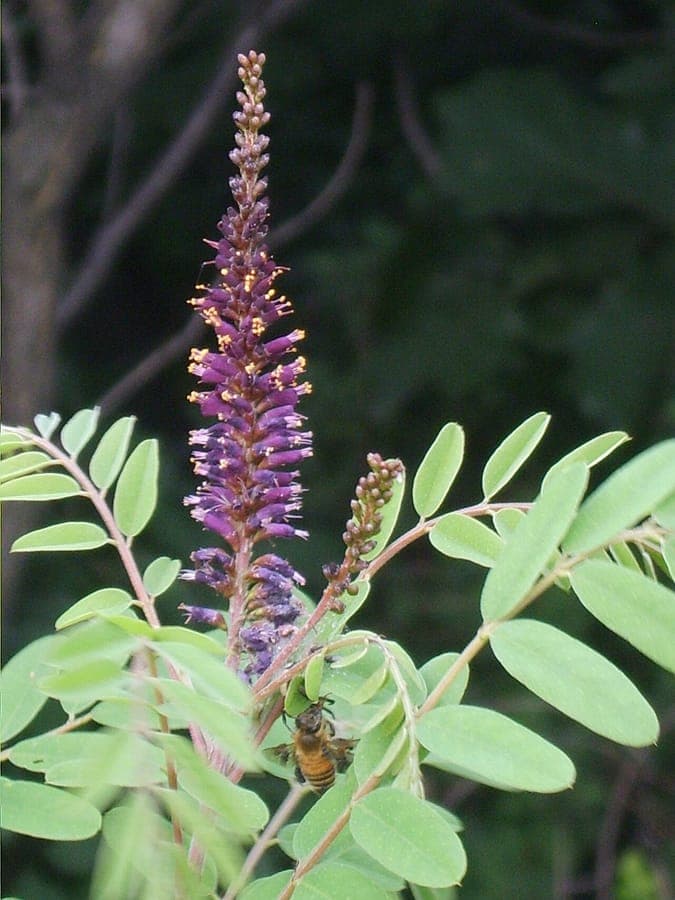
The plant has pinnately compound leaves with 11 to 25 narrow leaflets, giving it a soft, feathery texture. In early to mid-summer-typically June and July-it produces upright spikes of small, pea-like flowers. These aren't your typical purple blooms; they're deep indigo with bright orange glandular hairs that add contrast and attract pollinators. Bees, especially native species, love them. The flowering period lasts 3 to 4 weeks, depending on climate and moisture.
After blooming, the plant develops small, glossy brown seed pods about 0.4 inches (1 cm) long. These persist into winter, adding visual interest when little else is happening in the garden. The overall form is loose and spreading, never stiff or formal-perfect for a relaxed, natural aesthetic.
Ideal location
Full sun is best-aim for at least 6 hours of direct light-but it tolerates light shade. Avoid deep shade, which reduces flowering. The shrub spreads by root suckers, so give it space. Don't plant it too close to sidewalks, foundations, or delicate perennials, as the suckers can pop up 3 to 6 feet (1–2 m) away.
It's a great choice for erosion control on slopes or along water features. On gardenworld.app, you can simulate how the plant will spread over time and adjust spacing accordingly in your virtual garden plan.
Soil requirements
Amorpha fruticosa isn't fussy. It grows in clay, loam, or sand, as long as the soil stays consistently moist. It prefers a pH between 5.5 and 7.5 but adapts to slightly outside that range. While it loves wet feet, it shows surprising drought tolerance once established. However, avoid planting in dry, sandy soils unless you're prepared to water regularly in summer.
Free design
Want to see Bastard indigo-bush: complete guide in your garden? Make a free design now.
Watering
Water deeply once a week during the first two growing seasons, especially in dry spells. Provide about 10 litres per shrub weekly if rainfall is less than 1 inch (2.5 cm). After establishment, it survives most droughts, though growth may slow. In consistently wet areas, no supplemental watering is needed.
Pruning
Prune in late winter or early spring (February to early March) to maintain shape and encourage new growth. Since it blooms on previous year's wood, avoid fall or early winter pruning, which removes flower buds. For renewal, cut stems back to 12 inches (30 cm) from the ground. For light shaping, remove dead, damaged, or crossing branches.
If suckering becomes excessive, dig out or cut off unwanted shoots at soil level. This is easiest in spring when new growth makes them visible.
Maintenance calendar
- Jan: Inspect for winter damage
- Feb: Start pruning; remove dead wood
- Mar: Finish pruning; apply mulch
- Apr: Monitor new shoots
- May: No action needed
- Jun: Bloom begins; watch for pollinators
- Jul: Peak bloom
- Aug: Water during dry spells
- Sep: Seed pods form
- Oct: Remove suckers if needed
- Nov: Leaves drop
- Dec: Final check; protect base if needed
Winter hardiness
This shrub is fully hardy in zones 4–9. In zone 4, it may die back to the ground in harsh winters but resprouts from the roots. In milder zones, it keeps more top growth. Mulching the base helps in colder areas, especially for young plants. The bare stems add structure to the winter garden, and the persistent pods catch frost and light beautifully.
Companion plants
Pair with moisture-loving plants like buttonbush (Cephalanthus occidentalis), Joe-Pye weed (Eutrochium maculatum), or cardinal flower (Lobelia cardinalis). For contrast, add switchgrass (Panicum virgatum) or obedient plant (Physostegia virginiana). Avoid aggressive groundcovers that might compete with young shoots.
Closing
The bastard indigo-bush is a low-maintenance, high-impact shrub that brings life to tough spots. It's not commonly found in standard garden centres, but check specialty nurseries or order online. In the UK or US, look for it at local garden centres in spring. With its toughness, wildlife value, and unique blooms, it deserves a spot in more gardens. For design help, use gardenworld.app to test how it fits with your existing plants and layout.
Want to see Bastard indigo-bush: complete guide in your garden? Make a free design now.
Upload a photo, pick a style, and get a photorealistic design with plant list in under a minute.
No credit card required


Similar plants
Tall Silky Lupine: complete guide
Lupinus elatus
Tall silky lupine is a fast-growing Californian perennial with silvery foliage and blue-purple flower spikes, ideal for a prairie-style garden.
Garfield Lupine: complete guide
Lupinus garfieldensis
The Garfield lupine is a rare, fast-growing American perennial for alkaline, dry grassland gardens, with striking blue flower spikes.
Lupinus elegans: complete guide
Lupinus elegans
Lupinus elegans, the elegant lupine, is a spectacular blooming plant from Mexico with blue flower spikes. Care, cultivation and garden use.