
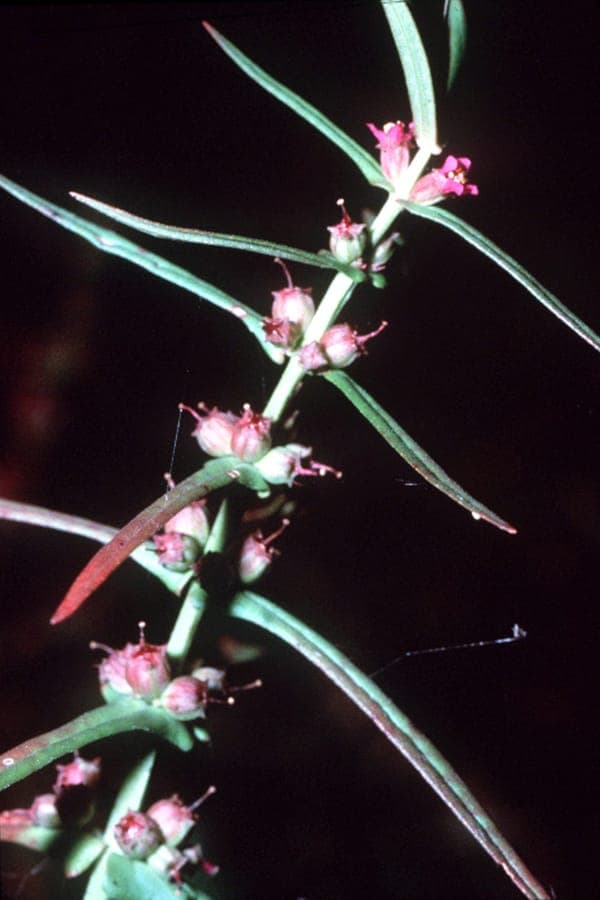
Robert H. Mohlenbrock / Public domain, via Wikimedia Commons
Ammannia coccinea: complete guide
Ammannia coccinea
Want to see Ammannia coccinea: complete guide in your garden?
1 minute, no credit card
Overview
Ammannia coccinea, commonly called toothcup or purple ammannia, is a versatile aquatic plant renowned for its vibrant red-purple foliage and slender growth habit. This stem plant thrives in both freshwater aquaria and shallow water gardens. Its attractive colour transformation and rapid growth make it a favourite among aquascapers. Toothcup is native to North America and occurs naturally in wetlands from southeastern United States through to Ecuador.
Appearance and Bloom
Toothcup produces upright, thin stems bearing small, lanceolate leaves. Under high light conditions, foliage displays brilliant red to deep purple-red coloration. Flowers are minute and pale purple, largely inconspicuous. Aquarists value this plant chiefly for its dramatic colour shift from green to red as the plant matures and receives adequate illumination. Heights of 30-60 centimetres are typical in both aquatic and semi-terrestrial conditions.
Ideal Location
Ammannia coccinea grows optimally with abundant light: 8-12 hours daily in aquaria. Without sufficient illumination, foliage remains green and loses its distinctive crimson hue. Position this plant in well-lit zones of the aquarium, not too deep. In water gardens, 6 hours of direct sunlight promotes vibrant colour. Temperatures between 18-28 degrees Celsius support active growth; below 15 degrees C, growth significantly decelerates.
Soil
In aquaria, Ammannia coccinea requires no special substrate; it absorbs nutrients directly from the water column. A nutrient-rich aquarium substrate nonetheless accelerates growth rates. In water gardens or semi-aquatic cultivation, soft sediment enriched with organic matter is beneficial. Peat-based or compost-amended substrates yield good results. pH of 6.0-7.5 is acceptable. This adaptable plant accommodates varied conditions.
Watering
In aquaria, Ammannia coccinea requires no traditional watering; it remains fully submerged. Maintain water quality through regular partial water changes (25-30% weekly). In water gardens, natural rainfall and top-ups suffice. Growth becomes fuller with liquid fertilizer (NPK ratio 1:2:3) dosed twice weekly. For optimal red coloration, add micronutrients (iron, trace elements) via specialized fertilizer products.
Free design
Want to see Ammannia coccinea: complete guide in your garden? Make a free design now.
Pruning
Ammannia coccinea benefits from regular pruning. Trim stem tops once they reach 20-25 centimetres; this stimulates lateral branching and denser habit. Remove lower leaves shadowed or yellowing. The plant regenerates quickly from cut points. Pruning also intensifies red pigmentation as new growth appears more vividly coloured. Use sterile scissors to prevent bacterial infection at cut sites.
Maintenance Calendar
January to March: cooler temperatures, reduced light; minimal fertilization. April to October: peak growth, intensive lighting, twice-weekly fertilization, frequent pruning. November to December: dormancy preparation, stepwise reduction of nutrient dosing. Year-round: monthly filter cleaning and water parameter testing.
Winter Hardiness
Ammannia coccinea is not frost-tolerant. In temperate climates, this plant suits only heated indoor aquaria or tropical-styled conservatory pools. Temperatures below 10 degrees Celsius cause leaf drop and plant death. Move outdoor-grown specimens indoors before first frost or maintain them in a heated greenhouse. In tropical and subtropical regions, the plant thrives year-round as a permanent outdoor water garden resident.
Companion Plants
Ammannia coccinea pairs attractively with other aquarium species: Ludwigia, Bacopa, Rotala, and small tetras. The plant serves as refuge and fry nursery for breeding communities. Larger, aggressive fish may damage it; reserve this plant for gentle-natured small species. In water gardens, combine with Echinodorus, Pontederia, and contrasting foliage forms to create visual interest and ecological layering.
Closing Remarks
Ammannia coccinea is a reliable, beautiful choice for aquarium enthusiasts and water gardeners. With ample light, consistent water quality, and regular pruning, you create a stunning red-purple accent in any aquatic ecosystem. The plant is straightforward and fast-growing, making it suitable for beginners and experts alike. Warm water and generous light are the keys to thriving toothcup specimens.
Want to see Ammannia coccinea: complete guide in your garden? Make a free design now.
Upload a photo, pick a style, and get a photorealistic design with plant list in under a minute.
No credit card required


Similar plants
Winged loosestrife: complete guide
Lythrum alatum
Everything about Lythrum alatum, the winged loosestrife. Care, location, pruning and garden pairings for this native North American wetland perennial.
Dnieper loosestrife: complete guide
Lythrum borysthenicum
Everything about Lythrum borysthenicum, the Dnieper loosestrife: location, bloom season, care in pond margins and bog gardens. Full growing guide included.
Grand redstem: complete guide
Ammannia robusta
Everything about Ammannia robusta: pond margins, bog gardens, soil, care and propagation. Practical advice for water garden enthusiasts in temperate climates.