
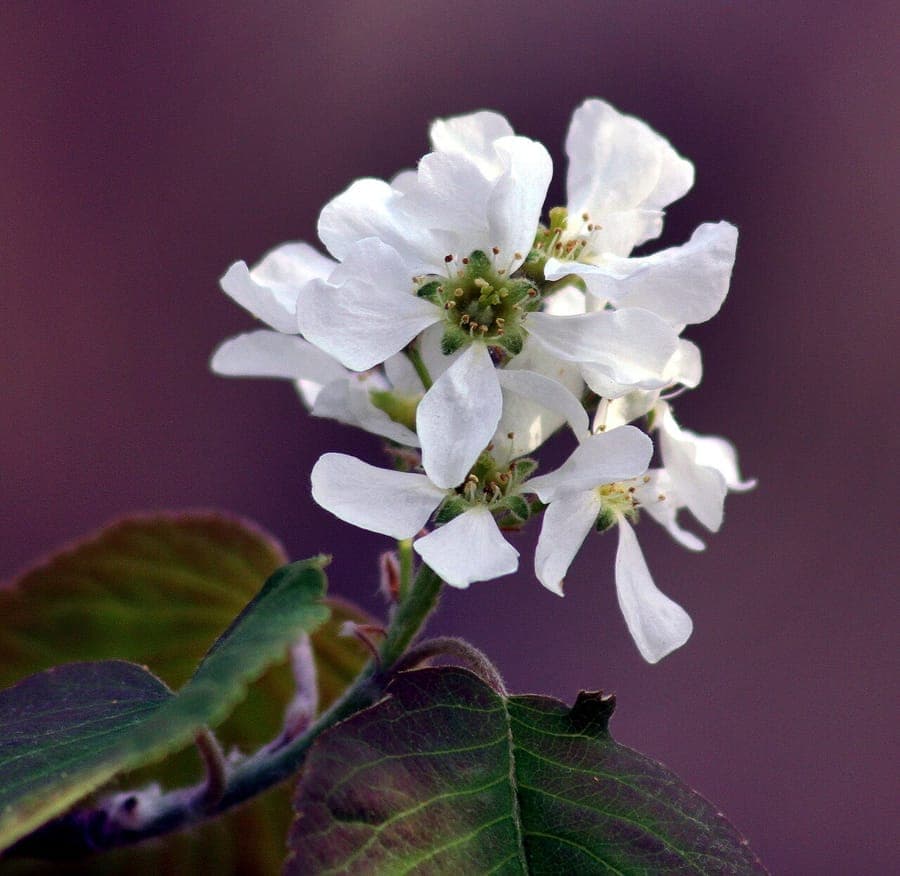
Hardyplants at English Wikipedia / Public domain, via Wikimedia Commons
Garden shadblow: complete guide
Amelanchier spicata
Want to see Garden shadblow: complete guide in your garden?
1 minute, no credit card
Overview
Garden shadblow (Amelanchier spicata), also known as low serviceberry, running serviceberry, and thicket shadbush, is a charming North American shrub from the rose family. This plant stands out for its elegant, densely clustered white flowers, followed by black or deep blue berries that attract numerous birds.
The plant is particularly valuable in modern garden designs because it offers multiple seasons of interest: white flowers in April/May, edible berries in June/July, and bronze to red fall foliage.
Appearance and Bloom
Garden shadblow grows as a compact, heavily branched shrub 1 to 2 meters tall and equally wide. The growth habit is naturally full and shrubby.
From April to May, numerous white flowers appear in dense, upright clusters (hence the name spicata). These flowers are highly conspicuous and attractive to pollinators.
Following bloom, reddish berries first appear, then dark blue to black fruits about 5 to 8 mm in diameter. These are highly attractive to birds and can be eaten by humans (sweet, slightly almond-like taste).
Foliage changes from green to bronze to red in autumn, providing color for months longer.
Ideal Location
Garden shadblow grows well in sun to partial shade. However, for maximum flowering and fruit production, full sun location (at least 4 hours direct sunlight) is recommended.
The shrub is very flexible and accepts more shade, although this comes at the expense of flowers and fruits.
Soil
Garden shadblow is not particular about soil type. The plant grows well in virtually all garden soils, including acidic and neutral soils. Well-draining soil is preferred but not wet locations are tolerated.
Importantly: avoid heavy clay that can cause water stagnation.
Free design
Want to see Garden shadblow: complete guide in your garden? Make a free design now.
Watering
Once well-established, garden shadblow is relatively drought-sensitive. During dry periods (more than 2 weeks without rain), regular watering deserves attention, especially in the first year after planting.
Mulching around the plant helps improve moisture retention.
Pruning and Maintenance
Garden shadblow requires minimal pruning. Only dead or damaged branches need removal. The plant develops a naturally attractive form.
Optionally, some shaping can be done after flowering. Pruning is best done right after bloom in May.
Maintenance Calendar
March to April: First growth burst. Check water needs. Start mulching if not already done. April to May: Bloom. Enjoy flowers and pollinator visits. June to July: Fruit formation and ripening. Birds eat the berries. August to September: Foliage coloring. Some fruits remain hanging. October to November: Full fall color. Plant prepares for winter rest. December to February: Winter dormancy. Minimal maintenance.
Winter Hardiness
Garden shadblow is extremely winter-hardy, tolerating USDA zone 3 (down to about -35 degrees Celsius). This makes it suitable for nearly all of the Netherlands and Belgium.
Suitable Combinations
Garden shadblow combines beautifully with other spring bloomers like magnolia and forsythia. In a mixed hedge it is an excellent choice, especially blended with other bird-friendly shrubs.
In borders, garden shadblow works well with perennials like helleborus and fern. The white flowers contrast nicely with dark hornbeam and red barberry.
In Conclusion
Garden shadblow is an essential shrub for bird-friendly, sustainable gardens with seasonal interest. The combination of flowers, fruits, and fall coloring makes it a valued choice for serious gardeners.
Available at most tree nurseries. A 40-60 cm plant costs approximately 15-25 euros. Good investment given the long lifespan (20+ years) and low maintenance needs.
Visit gardenworld.app for more garden integration tips.
Want to see Garden shadblow: complete guide in your garden? Make a free design now.
Upload a photo, pick a style, and get a photorealistic design with plant list in under a minute.
No credit card required


Similar plants
Siberian crab apple: complete guide
Malus x robusta
Complete guide to the Siberian crab apple (Malus x robusta): location, soil, pruning, winter hardiness and the best companion plants for your garden.
Chinese flowering crabapple (Malus x spectabilis): complete guide
Malus x spectabilis
Meet the Chinese flowering crabapple (Malus x spectabilis): a classic spring bloomer with carmine buds and pink blossom.
Potentilla crassinervia: complete guide
Potentilla crassinervia
Potentilla crassinervia, the Corsican cinquefoil, grows wild on Corsica and Sardinia's peaks. Discover how to grow this hardy alpine rock garden gem.