
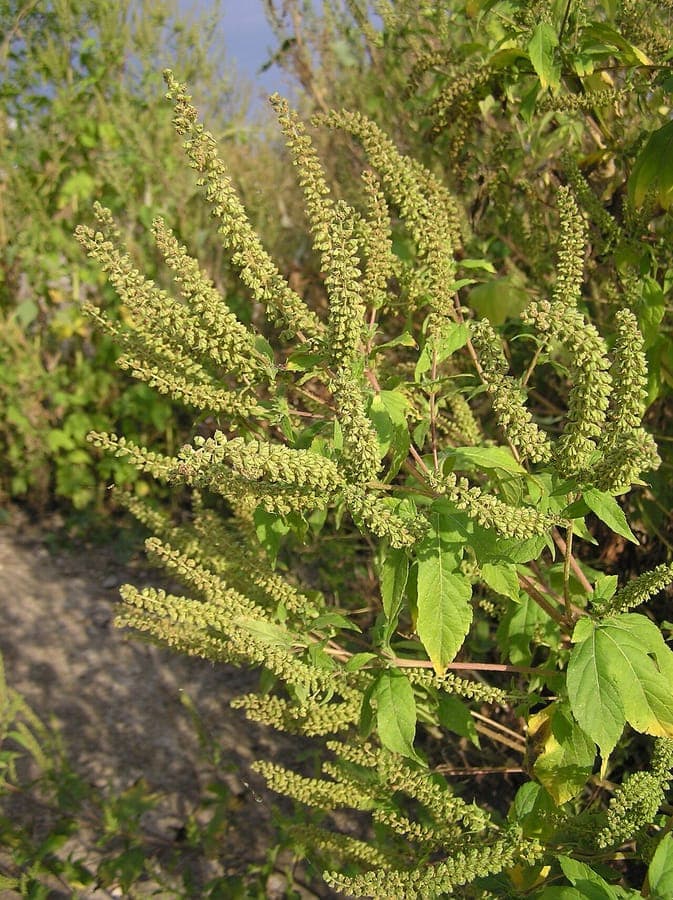
Le.Loup.Gris / CC BY-SA 3.0, via Wikimedia Commons
Horseweed: complete guide
Ambrosia trifida
Want to see Horseweed: complete guide in your garden?
1 minute, no credit card
Overview
Ambrosia trifida, commonly known as horseweed, is a robust annual forb in the Asteraceae family. Native to regions like Alabama, Arizona, and California, it's now widespread across temperate zones, including much of Europe. While often dismissed as a weed, it's a resilient survivor of disturbed soils - think roadsides, vacant lots, and agricultural edges. If you're designing with wilder, low-intervention styles, horseweed might sneak into your plans. On gardenworld.app, you can map out a garden layout that accounts for such opportunistic species without letting them dominate.
This plant grows up to 3 meters tall with an upright, branching habit. It's a forb, meaning it's herbaceous but not a grass. Though not cultivated intentionally, it's ecologically active, offering habitat and food for some insects. However, its pollen is a major allergen, so it's not garden-friendly for hayfever sufferers.
Appearance & bloom cycle
Horseweed's most distinctive feature is its trifoliate leaves - deeply lobed with three main segments, giving it a coarse, jagged look. These leaves are dark green, rough to the touch, and can reach 15–20 cm in length. The stems are erect, hairy, and often reddish or purple-tinged, especially near the base.
Flowering occurs from July through October. The blooms are small, greenish to purplish, and clustered in spike-like panicles at the top of the plant. Male flowers sit atop the stem and release vast amounts of airborne pollen; female flowers are lower and less conspicuous. Each plant can produce up to 100,000 seeds, which are wind-dispersed and can remain viable in the soil for decades.
Because of its high pollen output, horseweed is a significant contributor to late-summer allergies, peaking in August and September.
Ideal location
Horseweed thrives in full sun - a 9 out of 10 on the light scale. It prefers open, unshaded areas with minimal competition. In gardens, it often appears where soil has been disturbed: after digging, tilling, or construction. It's rarely welcome in formal beds but may appear in wildflower meadows or naturalized zones.
For gardeners embracing ecological design, horseweed can signal soil recovery. Use gardenworld.app to simulate seasonal growth and prevent overcrowding by planning competitive plantings around its typical emergence zones.
Soil requirements
This plant is highly adaptable. It grows in clay, loam, and sandy soils, as long as drainage is adequate. It prefers a slightly alkaline pH between 7.5 and 8.0. While it tolerates poor fertility, it grows faster and taller on moderately fertile soils with some organic matter.
Avoid waterlogged conditions - seedlings are vulnerable to rot. In garden settings, horseweed often appears on compacted or neglected soil, indicating the need for amendment.
Free design
Want to see Horseweed: complete guide in your garden? Make a free design now.
Watering
During germination and early growth (April–June), consistent moisture helps seedlings establish. Once past the 30 cm mark, horseweed becomes drought-tolerant thanks to a deep taproot. In dry summers, it persists where other plants wilt.
Irrigation isn't needed and can encourage unwanted spread. If you're managing a natural area, let rainfall suffice. Overhead watering should be avoided - wet foliage increases the risk of fungal diseases like powdery mildew.
Pruning
Pruning isn't typical, but you can cut back young plants before flowering to prevent seeding. The best time is early July, before pollen release. Cut stems to about 40–50 cm to delay flowering and reduce seed production.
Always wear gloves and a mask when handling flowering plants. The pollen is highly allergenic and easily inhaled. Dispose of cut material in sealed bags - don't compost it.
Maintenance calendar
- January–February: No activity. The plant is dead; remove any remaining stalks.
- March: Prepare soil if experimenting (not recommended).
- April–May: Germination begins above 10°C. Watch for seedlings in bare soil.
- June: Identify and remove young plants before they bolt.
- July–September: Peak bloom and pollen release. Avoid disturbance.
- October: Seeds mature. Remove entire plants before shattering.
- November–December: Plant dies back. Check soil for seed reservoir.
Winter hardiness
As an annual, horseweed doesn't survive winter above ground. It dies with the first hard frost, usually in November. However, its seeds remain dormant in the soil seed bank, sometimes for up to 40 years. This makes eradication difficult.
In USDA zones 6–9, including much of the UK and northern Europe, the cycle repeats annually. Mulching or ground cover planting in late autumn can suppress spring emergence.
Companion plants
Horseweed doesn't play well with others. In the wild, it coexists with ragweed, nettles, and dandelions - all indicators of disturbed ground. In gardens, it's best avoided.
Better alternatives for sunny, open areas include yarrow (Achillea millefolium), oxeye daisy (Leucanthemum vulgare), or native goldenrod (Solidago spp.). These offer similar height and structure without the allergenic downsides.
Closing
Horseweed is a tough, fast-growing plant that reveals a lot about soil health and disturbance. While not a garden favorite, it's a reminder of nature's resilience. For gardeners aiming for low-maintenance, natural designs, understanding its lifecycle helps in planning.
If you're mapping a garden with native or self-seeding species, tools like gardenworld.app help balance spontaneity with control. Horseweed isn't sold at garden centres - and for good reason. But if you spot it, use the app to track its spread and plan preventive plantings. Stay ahead of the pollen season with smart, informed design.
Want to see Horseweed: complete guide in your garden? Make a free design now.
Upload a photo, pick a style, and get a photorealistic design with plant list in under a minute.
No credit card required


Similar plants
Calendula stellata: complete guide
Calendula stellata
Complete guide to Calendula stellata, the star-flowered marigold from Sicily: location, soil, watering and companion planting tips.
Korean chrysanthemum: complete guide
Chrysanthemum x rubellum
Chrysanthemum x rubellum is a hardy autumn perennial with single pink to copper flowers from August to November. Care and combinations.
Helianthus divaricatus: complete guide
Helianthus divaricatus
Helianthus divaricatus is a North American woodland sunflower with yellow summer blooms, ideal for naturalistic borders and shady edges.