
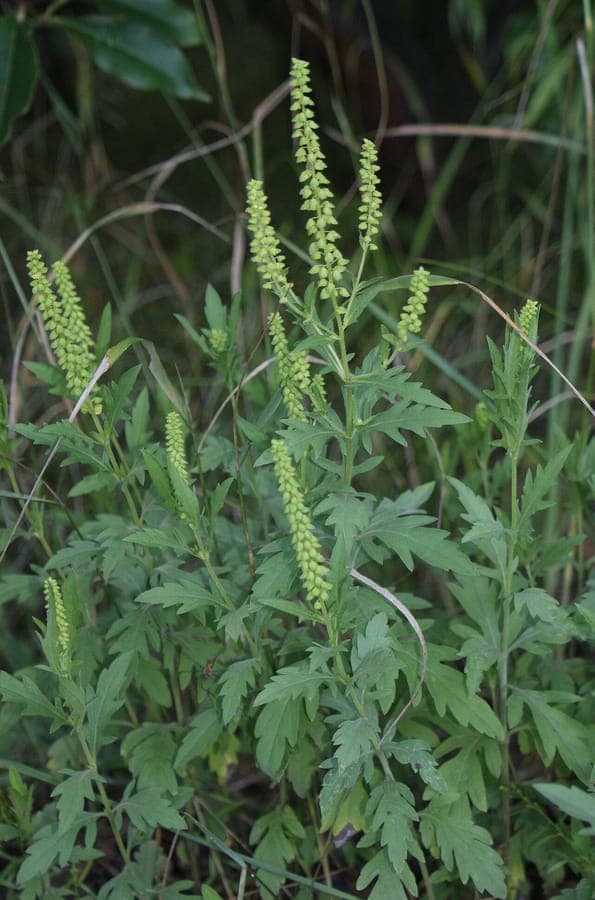
Krzysztof Ziarnek Kenraiz / CC BY-SA 4.0, via Wikimedia Commons
Dunbible-weed: complete guide
Ambrosia psilostachya
Want to see Dunbible-weed: complete guide in your garden?
1 minute, no credit card
Overview
Ambrosia psilostachya, commonly known as dunbible-weed, is a perennial herb in the Asteraceae family native to large parts of North America. Found across states like Alabama, Arizona, and Georgia, and Canadian provinces such as Alberta and British Columbia, this plant thrives in disturbed soils, dry fields, and sandy roadsides. It's a tough, resilient species that spreads aggressively through rhizomes, making it a potential weed in cultivated gardens. While not typically grown for ornamental purposes, its adaptability and drought tolerance attract some native plant gardeners.
One major caveat: dunbible-weed is a prolific producer of windborne pollen, a leading cause of hay fever. If you or your neighbours suffer from seasonal allergies, planting this species close to living areas is ill-advised. On gardenworld.app, you can design a low-allergen garden layout that avoids high-pollen plants like this while still supporting local ecology.
Appearance & bloom cycle
Dunbible-weed grows 30 to 80 cm tall with a spread of up to 40 cm. The stems are erect, often branched, and covered in soft, gray-green, deeply lobed leaves that resemble those of nettles but without stinging hairs. The foliage has a delicate, feathery texture that adds movement to the garden.
Flowering occurs from July to September. The blooms are not showy - they're small, greenish, and arranged in slender, spike-like clusters. Male flowers sit at the top of the spike, releasing pollen into the air, while female flowers develop below and mature into spiny seed heads. These seeds are dispersed by wind, animals, and footwear, contributing to the plant's aggressive spread.
Ideal location
This plant thrives in full sun (light level 8/10), requiring at least 6–8 hours of direct sunlight daily. It performs best in open, dry areas such as gravel gardens, rocky slopes, or wildflower meadows. Avoid planting near patios, bedroom windows, or air intakes due to pollen concerns.
Dunbible-weed is ideal for xeriscaping or naturalistic plantings where minimal intervention is desired. Use gardenworld.app to map out a drought-tolerant garden scheme where this species, if used, is tucked into remote corners away from high-traffic zones.
Soil requirements
It prefers well-drained, sandy, or loamy soils with a pH between 7.0 and 7.5. It tolerates poor, low-fertility soils but struggles in heavy clay or waterlogged conditions. For container growing, mix equal parts garden soil, coarse sand, and compost to mimic its natural habitat.
Because it spreads via underground rhizomes, consider installing a root barrier or growing it in a large pot to prevent unwanted colonization of flower beds.
Free design
Want to see Dunbible-weed: complete guide in your garden? Make a free design now.
Watering
Once established, dunbible-weed is extremely drought-tolerant. Water only during the first few weeks after planting or during prolonged dry spells. Overwatering leads to root rot and weak growth. In average UK or Pacific Northwest climates, no supplemental irrigation is needed beyond the first season.
Pruning
Pruning isn't necessary for growth control, but cutting back flower spikes before seeds form helps limit spread. Remove spent stalks in late summer or early autumn, cutting to about 10 cm above ground level. Wear gloves and a mask if you're pollen-sensitive.
Maintenance calendar
- January: Check for overwintering debris; clear dead foliage if not already done
- February: No action needed
- March: Cut back any remaining old growth before new shoots emerge
- April: Monitor for early rhizome spread; divide or relocate if needed
- May: Observe new growth; no fertiliser required
- June: Plant new specimens or split clumps
- July: Bloom begins; highest pollen release
- August: Peak flowering; consider removing spikes to reduce seed load
- September: Final flowering; cut back to prevent seed dispersal
- October: Leave some stems for winter interest or clear for a tidy look
- November: No watering; keep area weed-free
- December: Dormant period; no maintenance
Winter hardiness
Dunbible-weed is hardy in USDA zones 3 to 9. The above-ground parts die back in winter, but the rhizomes survive temperatures as low as -40°C. In zone 8 and above, new shoots emerge in April or early May.
Companion plants
Pair with late-summer bloomers that offer visual contrast and don't exacerbate allergies. Good companions include:
- Echinacea purpurea (Coneflower)
- Rudbeckia hirta (Black-eyed Susan)
- Salvia nemorosa (Woodland Sage)
- Stipa tenuissima (Mexican Feather Grass)
- Sedum 'Herbstfreude' (Autumn Joy)
Avoid planting near other high-pollen species like ragweed or goldenrod if allergy control is a priority.
Closing
Dunbible-weed is a resilient, low-maintenance plant that excels in tough, sunny, dry conditions. Its ability to colonise poor soils makes it useful for erosion control or habitat restoration. However, its allergenic nature limits its appeal in residential gardens.
If you're determined to grow it, keep it isolated and well-managed. In the UK and US, it's rarely sold in garden centres but may appear as a contaminant in wildflower mixes. Always check plant labels carefully. Retailers like OBI and Hornbach in Germany or Truffaut in France sometimes carry related species, so double-check scientific names.
For allergy-conscious gardeners, gardenworld.app offers smart plant filters to avoid high-pollen species and build beautiful, breathable outdoor spaces.
Want to see Dunbible-weed: complete guide in your garden? Make a free design now.
Upload a photo, pick a style, and get a photorealistic design with plant list in under a minute.
No credit card required


Similar plants
Calendula stellata: complete guide
Calendula stellata
Complete guide to Calendula stellata, the star-flowered marigold from Sicily: location, soil, watering and companion planting tips.
Korean chrysanthemum: complete guide
Chrysanthemum x rubellum
Chrysanthemum x rubellum is a hardy autumn perennial with single pink to copper flowers from August to November. Care and combinations.
Helianthus divaricatus: complete guide
Helianthus divaricatus
Helianthus divaricatus is a North American woodland sunflower with yellow summer blooms, ideal for naturalistic borders and shady edges.