
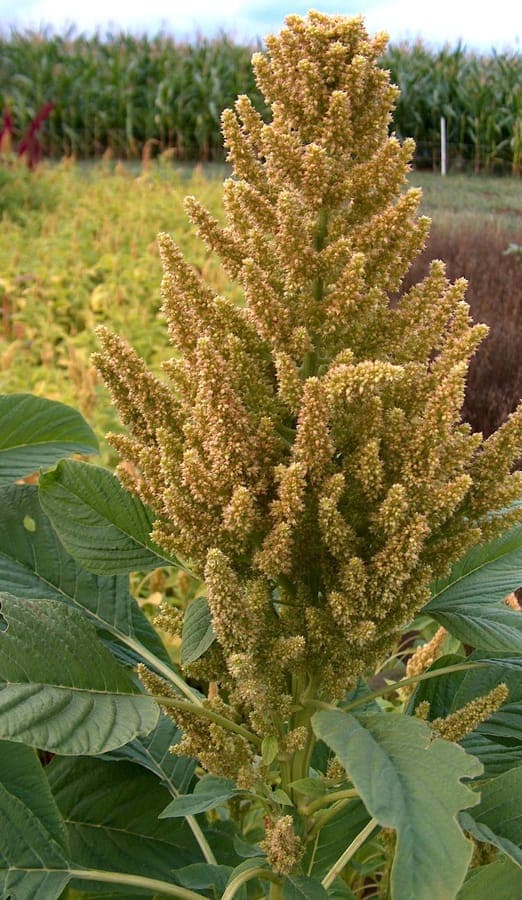
User:MarkusHagenlocher / CC BY-SA 3.0, via Wikimedia Commons
Green amaranth: complete guide
Amaranthus hybridus
Want to see Green amaranth: complete guide in your garden?
1 minute, no credit card
Overview
Green amaranth, or Amaranthus hybridus, is an annual herbaceous plant native to the southern United States and parts of South America, including Arkansas, Belize, and northern Argentina. While often dismissed as a weed in urban areas, this plant has significant value in home gardens for its edible leaves and seeds, rapid growth, and adaptability. In the UK and North America, gardeners are increasingly turning to this resilient species as both a food crop and a textural accent in naturalistic planting schemes. Using gardenworld.app, you can design a garden layout that integrates green amaranth seamlessly with other summer growers for maximum yield and visual impact.
Appearance & bloom cycle
Green amaranth grows upright, reaching heights of 60 to 120 cm depending on soil fertility and moisture. It features lance-shaped, bright green leaves arranged alternately along angular, often reddish-tinged stems. From mid-July to late September, the plant produces dense, feathery flower spikes at the top of the stems. These greenish to pale purple inflorescences may not be showy like ornamental flowers, but they add soft volume and movement to the garden. After pollination, the flowers mature into tiny, golden-brown seeds that are both edible and excellent for reseeding. The plant's bloom cycle aligns with the hottest part of summer, making it a reliable presence in drought-prone gardens.
Ideal location
Plant green amaranth in full sun - at least 6 to 8 hours of direct sunlight daily. It thrives in warm, sheltered spots such as south-facing borders, vegetable patches, or near heat-retaining walls. While it tolerates partial shade, growth will be leggy and seed production reduced. Avoid low-lying, damp areas where cold air settles, as this increases fungal disease risk. In cooler climates, consider using black mulch or dark stones nearby to boost soil warmth. Gardeners in USDA zones 3–11 can grow it as an annual, with best results in zones 6–9.
Soil requirements
Green amaranth is adaptable to a range of soil types but performs best in well-drained loam or sandy loam with a pH between 6.0 and 7.5. While it can survive in poor or compacted soils, richer soils produce lusher foliage and higher yields. Amend planting beds with compost or well-rotted manure before sowing to enhance fertility. Avoid waterlogged conditions - prolonged saturation leads to root rot. The plant's ability to grow in disturbed soils makes it ideal for urban renewal gardens or areas with low soil quality.
Free design
Want to see Green amaranth: complete guide in your garden? Make a free design now.
Watering
Water young plants regularly during the first few weeks after sowing or transplanting, providing about 2.5 cm per week. Once established, green amaranth shows good drought tolerance and only needs supplemental watering during extended dry spells. Always water at the base to prevent wet foliage, which can encourage fungal infections. Early morning watering helps reduce humidity around the plant. Container-grown specimens may require more frequent irrigation due to faster drying.
Pruning
Pruning isn't essential, but pinching back the growing tips encourages bushier growth and delays flowering. This is especially useful if you're harvesting leaves for cooking, as young foliage is more tender. Cut back up to one-third of the plant's height in midsummer to promote lateral branching. Remove any yellowing or diseased leaves promptly to maintain plant health and airflow. Use clean shears to avoid spreading pathogens.
Maintenance calendar
- January: No action – plant is annual
- February: No action
- March: Start seeds indoors at 20–22°C in pots
- April: Harden off seedlings; prepare beds
- May: Transplant outdoors after last frost; thin to 30 cm spacing
- June: Monitor for pests; apply light compost feed
- July: Flowers begin; reduce pruning if collecting seeds
- August: Harvest young leaves; collect mature seeds from dry spikes
- September: Final seed harvest; allow some plants to self-seed
- October: Pull plants after first frost; compost healthy material
- November: Clear garden debris; rotate crops
- December: No action
Winter hardiness
As an annual, green amaranth is not frost-hardy and dies back completely after the first hard freeze (below -1°C). It is best grown as a summer crop in temperate climates. Though it won't survive winter, it often self-seeds reliably if seed heads are left intact. Use gardenworld.app to map frost dates in your region and time your sowing for optimal growth.
Companion plants
Green amaranth grows well alongside tomatoes, onions, beans, and cucumbers. Its rapid vertical growth offers light shading for lower plants without blocking sunlight. Avoid planting near heavy feeders like potatoes to reduce nutrient competition. In ornamental beds, it combines well with sunflowers, zinnias, and goldenrod, adding height and airy texture. Space plants 30–45 cm apart to ensure good airflow and reduce disease pressure.
Closing
Green amaranth is a practical, low-maintenance plant that brings both function and form to the garden. Whether grown for its nutritious greens, protein-rich seeds, or architectural presence, it's a worthwhile addition to any plot. Seeds are widely available at garden centres across the UK and North America, including major retailers like OBI and Truffaut in Europe. By integrating green amaranth into a well-thought-out design on gardenworld.app, you ensure it thrives in the right spot with the right companions.
Want to see Green amaranth: complete guide in your garden? Make a free design now.
Upload a photo, pick a style, and get a photorealistic design with plant list in under a minute.
No credit card required


Similar plants
Bassia laniflora (woolly summer-cypress): complete guide
Bassia laniflora
Full guide to Bassia laniflora: origin, appearance, ideal location, soil, watering and care for this drought-tolerant annual.
Suaeda spicata: complete guide
Suaeda spicata
Everything about Suaeda spicata (spiked seablite): a rare salt-tolerant coastal succulent from the western Mediterranean and Macaronesia.
California amaranth: complete guide
Amaranthus californicus
Full guide to California amaranth (Amaranthus californicus): growing tips, ideal location, soil needs, watering, and garden design ideas.