
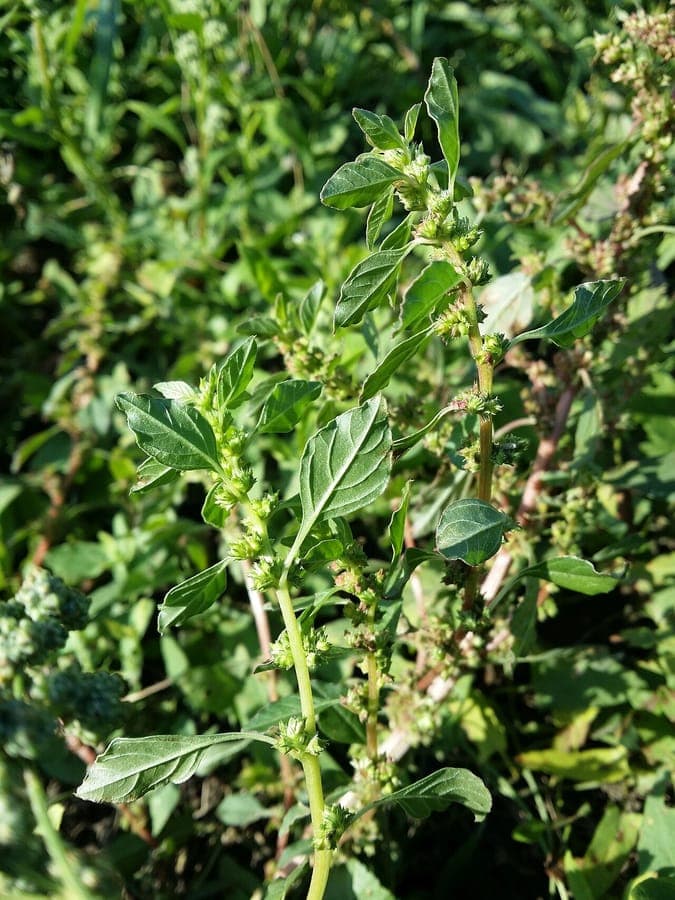
Stefan.lefnaer / CC BY-SA 4.0, via Wikimedia Commons
Spreading pigweed: complete guide
Amaranthus graecizans
Want to see Spreading pigweed: complete guide in your garden?
1 minute, no credit card
Overview
Spreading pigweed (Amaranthus graecizans) is a fast-growing annual herb that thrives in disturbed soils, from vacant lots to roadside cracks. While often dismissed as a weed, it's a resilient and surprisingly attractive plant with edible leaves and excellent drought tolerance. Native to regions including Afghanistan, Algeria, and parts of southern Europe, it's increasingly seen in temperate gardens where conditions suit its hardy nature.
In the UK and northern Europe, it typically appears from late spring through summer, reaching maturity by mid-summer. It's not commonly sold in garden centres, but its seeds can be collected from wild plants or sourced from specialty seed suppliers. For gardeners seeking low-effort, high-reward greenery, this plant offers both visual interest and ecological value.
On gardenworld.app, you can design a garden layout that incorporates Spreading pigweed into wildflower patches or drought-resistant zones. Its natural growth pattern fits well in informal, ecological designs.
Appearance & bloom cycle
Spreading pigweed grows 30 to 70 cm tall with a spread of up to 40 cm. It has slender, branching stems that often display reddish or purplish streaks, especially in younger growth. The leaves are lance-shaped, 2–5 cm long, arranged oppositely along the stem, and bright green in colour.
Flowering occurs from July to October. The blooms are small, greenish to pale pink, and clustered in short, spike-like inflorescences at leaf axils and stem tips. While not showy like ornamental amaranths, these flowers attract pollinators such as hoverflies and small bees. After pollination, the plant produces tiny, black seeds that disperse easily by wind and birds.
Ideal location
This plant thrives in full sun-rate 8 out of 10 for light exposure. It performs best in south- or southwest-facing spots with minimal shade. In gardens, it works well in gravel beds, rock gardens, or along pathways where soil is poor and dry. It's also suitable for containers on sunny patios or balconies, provided the pot is at least 25 cm in diameter to support root development.
Avoid heavily shaded areas, as this leads to leggy, weak growth. It's ideal for urban gardens where space and soil quality are limited but sunlight is abundant.
Soil requirements
Spreading pigweed is undemanding when it comes to soil. It grows well in sandy, loamy, or even compacted soils, as long as drainage is good. The ideal pH range is between 7.5 and 8.0-slightly to moderately alkaline. In acidic or clay-heavy soils, amend with sand and garden lime to improve structure and pH balance.
It naturally colonises waste ground, so it actually prefers soils with low fertility. Avoid rich compost or heavy fertilisation, as this encourages excessive leafy growth at the expense of flowering.
Free design
Want to see Spreading pigweed: complete guide in your garden? Make a free design now.
Watering
Once established, this plant is highly drought-tolerant. During the first 2–3 weeks after germination or transplanting, water weekly with 1–2 litres per plant, depending on size and temperature. After that, rainfall is usually sufficient.
Overwatering is a common mistake-soggy soil leads to root rot, especially in clay-based gardens. Use rainwater when possible, as the plant is sensitive to high levels of chlorine and fluoride in tap water.
Pruning
Pruning isn't usually necessary. The plant has a naturally open, bushy form that suits its life cycle. However, pinching back the tips of young plants in June (when they're 15–20 cm tall) can encourage branching and a fuller shape.
Remove any dead or damaged foliage with clean shears. Watch for fungal issues in humid conditions-good air circulation helps prevent mildew.
Maintenance calendar
- January: No action
- February: No action
- March: Start seeds indoors or in a greenhouse (optional)
- April: Sow directly in the garden or transplant seedlings
- May: Protect seedlings from late frosts
- June: Pinch tips to promote branching
- July: Flowers begin; reduce watering
- August: Peak bloom; seeds start forming
- September: Collect seeds for next season
- October: Plant dies back; manage seed dispersal
- November: Clear dead plant material
- December: No action
Winter hardiness
Spreading pigweed is an annual and does not survive winter. It dies with the first hard frost, typically in November. However, it self-seeds readily, so if you leave the seed heads intact, you may see new plants emerge naturally next spring.
In milder climates (USDA zones 8–9), scattered seedlings might appear early. This self-sowing trait makes it ideal for low-maintenance, naturalistic gardens.
Companion plants
Pair Spreading pigweed with other sun-loving, drought-tolerant plants like thyme, rosemary, sedum, calendula, or yarrow. In a wilder garden section, it blends well with dandelions, plantain, or wild lettuce.
For edible gardens, grow it near garlic, onions, or oregano-these herbs help deter pests and improve soil health. The pigweed provides light shade for tender seedlings without becoming invasive.
Use gardenworld.app to plan companion planting layouts, ensuring proper spacing and seasonal compatibility between species.
Closing
Spreading pigweed deserves more respect than it usually gets. Far from being just a weed, it's a useful, resilient plant that supports biodiversity and adds texture to the garden. Its young leaves are edible and packed with nutrients, making it a functional addition to any summer garden.
You can find seeds at garden centres like B&Q, Wyevale, or online from specialty suppliers. Because it self-seeds aggressively, monitor seed production if you want to control its spread.
Want to see Spreading pigweed: complete guide in your garden? Make a free design now.
Upload a photo, pick a style, and get a photorealistic design with plant list in under a minute.
No credit card required


Similar plants
Bassia laniflora (woolly summer-cypress): complete guide
Bassia laniflora
Full guide to Bassia laniflora: origin, appearance, ideal location, soil, watering and care for this drought-tolerant annual.
Suaeda spicata: complete guide
Suaeda spicata
Everything about Suaeda spicata (spiked seablite): a rare salt-tolerant coastal succulent from the western Mediterranean and Macaronesia.
California amaranth: complete guide
Amaranthus californicus
Full guide to California amaranth (Amaranthus californicus): growing tips, ideal location, soil needs, watering, and garden design ideas.