
Tubifex / CC BY-SA 3.0, via Wikimedia Commons
Inca-wheat: complete guide
Amaranthus caudatus
Want to see Inca-wheat: complete guide in your garden?
1 minute, no credit card
Overview
Inca-wheat, known botanically as Amaranthus caudatus, is a striking annual that brings dramatic flair to gardens with its long, cascading flower spikes. Native to the highlands of Peru, Bolivia, Ecuador, and northwest Argentina, this plant has been cultivated for centuries both as a grain crop and for ornamental use. In modern gardens, it's prized for its bold texture, architectural form, and ability to thrive in hot, dry conditions. Reaching heights of 60 to 120 cm, it makes an excellent focal point in borders or large containers.
On gardenworld.app, you can design a garden layout that highlights Inca-wheat's vertical drama, placing it where its weeping blooms can catch the afternoon light.
Appearance & bloom cycle
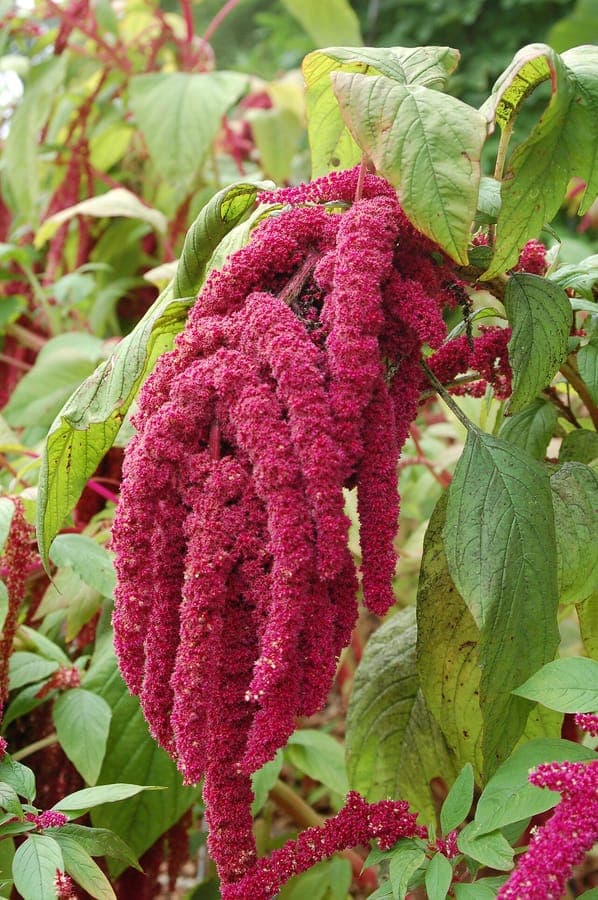
Inca-wheat grows as an upright, branching herb with sturdy stems and lance-shaped green leaves, often tinged with red along the veins. The real show begins in mid-summer when long, pendulous flower spikes emerge-up to 60 cm in length-dripping with tiny greenish flowers surrounded by vivid bracts in deep red, burgundy, or purple. Though the true flower colour is green, the bracts create a rich, fuzzy cascade that resembles a fox's tail or a cat's whisk.
Flowering runs from July through November, depending on local climate and planting time. In warmer areas (USDA zones 9–11), it may start blooming as early as June. The blooms remain attractive fresh for weeks and dry beautifully for winter arrangements. Seed heads mature in late autumn and are often left standing to feed finches and other small birds.
Ideal location
This plant thrives in full sun-rate it an 8 out of 10 for light needs. Aim for at least 6 to 8 hours of direct sunlight daily. A south- or southwest-facing garden bed is ideal. In shade, the plant becomes leggy, flops over, and produces fewer, weaker blooms. In containers, use pots at least 30 cm in diameter to support its root system and prevent tipping in wind.
Space plants 40 to 50 cm apart to allow for proper air circulation and full development of side branches. It's perfect for the middle or back of sunny borders, and pairs especially well with upright ornamental grasses or spiky salvias.
Soil requirements
Inca-wheat isn't fussy about soil fertility but demands good drainage. It prefers neutral to slightly alkaline soils with a pH of 7.5 to 8.0. Avoid heavy clay that retains water-this can lead to root rot. If your soil is dense, amend it with coarse sand or perlite. In pots, use a standard potting mix with added grit for drainage.
While it tolerates poor soils, avoid overly rich compost or high-nitrogen fertilisers-these promote leafy growth at the expense of flowers. A light top dressing of compost in spring is sufficient for healthy growth.
Free design
Want to see Inca-wheat: complete guide in your garden? Make a free design now.
Watering
Once established, Inca-wheat is drought-tolerant. During the first few weeks after planting, water weekly to help roots settle. After that, deep watering every 7 to 10 days is enough, even in prolonged dry spells. Always water at the base to prevent fungal issues on foliage.
In containers, check moisture more frequently-pots dry out faster. Water when the top 2–3 cm of soil feels dry. Never let the plant sit in standing water.
Pruning
Pruning isn't essential, but pinching back the tips in early June can encourage bushier growth and more flower spikes. This may delay flowering by a week or two but results in a fuller plant. Remove spent blooms only if you want to prevent self-seeding, though many gardeners welcome volunteer seedlings the next year.
Cut flower spikes for drying when they feel firm but haven't started to crumble. Hang them upside down in a dark, dry, well-ventilated space for two to three weeks.
Maintenance calendar
- January: No action – annual plant.
- February: Start seeds indoors or in a greenhouse (week 6–8).
- March: Keep seedlings warm (20–25°C) and under bright light.
- April: Harden off seedlings; prepare outdoor beds.
- May: Transplant outdoors after last frost (mid to late May).
- June: Water weekly; pinch tips if desired.
- July–August: Peak bloom; deep water during dry spells.
- September: Blooms taper off; leave seed heads for birds.
- October: Cut down after first hard frost.
- November–December: Clear debris; plan next year's layout.
Use gardenworld.app to track planting dates and care tasks, and get seasonal reminders tailored to your local climate.
Winter hardiness
Inca-wheat is not frost-hardy and dies with the first freeze. It's suitable for USDA zones 9 to 11 as a perennial, but in cooler zones (like most of the UK and northern US), it's grown as an annual. Collect seeds in autumn for next year, or let some drop-this plant often self-seeds readily in warm, sheltered spots.
Companion plants
Combine with other sun-loving, drought-tolerant perennials like lavender, echinacea, rudbeckia, or ornamental grasses. The weeping form contrasts beautifully with upright plants like veronica or salvia. Avoid pairing with aggressive ground covers or moisture-loving plants like hostas, which create competition and humidity.
In mixed containers, pair with silvery foliage plants like artemisia or senecio for a modern, low-water look.
Closing
Inca-wheat delivers big impact with minimal effort. Its bold form, long bloom time, and wildlife value make it a standout choice for summer gardens. Pick up seeds or young plants at garden centres like Thompson & Morgan or Suttons, or start from seed at home. For inspiration on placement and pairing, try a virtual garden planner on gardenworld.app.
Want to see Inca-wheat: complete guide in your garden? Make a free design now.
Upload a photo, pick a style, and get a photorealistic design with plant list in under a minute.
No credit card required


Similar plants
Bassia laniflora (woolly summer-cypress): complete guide
Bassia laniflora
Full guide to Bassia laniflora: origin, appearance, ideal location, soil, watering and care for this drought-tolerant annual.
Suaeda spicata: complete guide
Suaeda spicata
Everything about Suaeda spicata (spiked seablite): a rare salt-tolerant coastal succulent from the western Mediterranean and Macaronesia.
California amaranth: complete guide
Amaranthus californicus
Full guide to California amaranth (Amaranthus californicus): growing tips, ideal location, soil needs, watering, and garden design ideas.