
William & Wilma Follette / Public domain, via Wikimedia Commons
California amaranth: complete guide
Amaranthus californicus
Want to see California amaranth: complete guide in your garden?
1 minute, no credit card
Overview
California amaranth, known botanically as Amaranthus californicus, is a compact, multi-stemmed herbaceous annual belonging to the family Amaranthaceae. Described by the botanist Sereno Watson in 1880, this species is native to the dry western regions of North America, ranging from Canada through California and into northwest Mexico. While less celebrated than ornamental amaranth relatives, it possesses a rugged elegance and ecological value that make it a worthy addition to drought-tolerant gardens and naturalistic planting schemes.
The species epithet 'californicus' points to its core range, but wild populations also thrive in Montana, Wyoming, Colorado, Nevada, Oregon, Washington, Saskatchewan, and Alberta. This broad distribution across very different climates speaks to the plant's impressive adaptability. On gardenworld.app, garden designers regularly incorporate drought-adapted species like California amaranth into front-garden plans that prioritize low maintenance and ecological value.
As a forb (non-grass herbaceous plant), Amaranthus californicus grows with multiple stems simultaneously from a basal rosette, creating a bushy, compact habit. It is not the most dramatic flowering plant in any collection, but its fine foliage texture, ability to thrive in poor dry soils, and ecological role as a food source for insects and birds make it genuinely interesting for sustainable gardening.
Appearance and bloom cycle
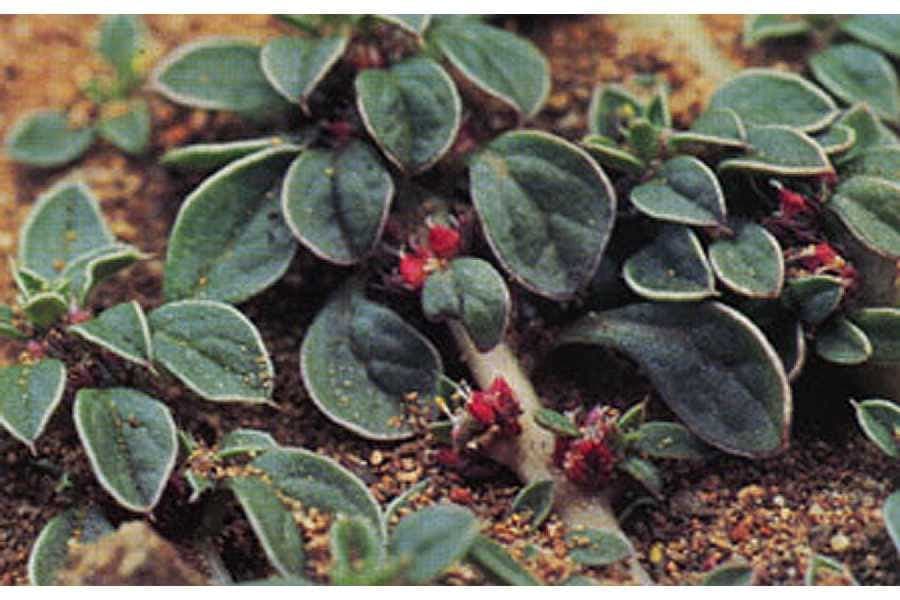
Amaranthus californicus is a compact annual herb that branches freely from the base, producing a dense, rounded mound of stems and fine-textured green foliage. The leaves are relatively small and narrow compared to most other amaranth species. The foliage color is green, and the texture is described botanically as fine.
The flowers are reddish but inconspicuous - small and forming dense clusters along the stems rather than the showy drooping plumes associated with ornamental amaranths. The fruits and seeds, however, are notably red and visually more striking than the flowers themselves. Seeds are small and can persist in the soil, making self-seeding common in favorable conditions.
Flowering typically occurs through the summer months, from July through September, depending on location and local climate. In warmer regions the plant may begin flowering earlier. After flowering, fruits ripen and disperse seeds before the plant dies at the end of the growing season.
Growth rate is moderate. No precise height data is recorded in botanical literature for this species, but under average garden conditions you can expect plants to reach 20-60 cm in height, depending on soil fertility and water availability. Plants grown in richer, moister soils will tend toward the taller end of this range.
Ideal location
California amaranth thrives in full sun. Its natural habitat consists of open, dry environments across the American West - rocky slopes, dry river margins, roadsides, and disturbed ground. In the garden it performs best in a warm, sunny spot that mimics these conditions.
Avoid shaded or damp positions. Too much shade leads to elongated, weak stems and poor flowering. A permanently moist soil is equally unfavorable. The plant is naturally adapted to seasonal drought and does not require consistent moisture to thrive.
Ideal garden situations include gravel gardens, rock gardens, hot dry borders along walls or paths, and containers with excellent drainage. In a kitchen garden or allotment, it can serve as a decorative border plant or as an interesting subject for seed saving experiments.
Hardiness: while precise USDA zone data is not formally listed for this species, it is treated as a warm-season annual and grows best when night temperatures stay above 10 degrees Celsius. It is not frost tolerant. In USDA zones 9-11 it may behave as a short-lived perennial, but in Northwestern Europe it should be treated as a tender summer annual.
Soil
True to its origin in the dry American West, Amaranthus californicus asks little of the soil. It performs best on well-drained, moderately lean substrates. Heavy clay that retains water is unsuitable; sandy or gravelly soils are preferred.
Ideal soil pH falls between 5.5 and 7.5 - a relatively wide tolerance range that illustrates this plant's adaptability. Slightly acidic to neutral soils are optimal, but mildly alkaline conditions are also tolerated.
Practical soil preparation tips:
- Improve heavy clay by working in sharp sand and coarse grit before planting.
- Do not add large quantities of compost or fertilizer; overly rich soil encourages lush leafy growth at the expense of flowering and seed production.
- A top-dressing of gravel or grit mulch around plants helps keep the root zone dry and warm.
- In containers: use a cactus and succulent mix, or blend 50% standard compost with 50% perlite or coarse sand.
The root system is moderately extensive and tends to grow relatively deep for a small annual plant, which contributes to its drought tolerance.
Free design
Want to see California amaranth: complete guide in your garden? Make a free design now.
Watering
California amaranth is a genuinely drought-tolerant plant. In its native habitat it survives extended dry periods using a root system that reaches deeper layers of the soil where moisture lingers longer.
In the garden the rule is: less is more. Once established, a thorough watering once a week during dry summer spells is more than sufficient. Young seedlings need more frequent attention in their first few weeks to ensure successful germination and establishment.
Practical watering guidelines:
- Always wait until the top 3-5 cm of soil has dried out before watering again.
- Water at the base of the plant rather than over the foliage to reduce the risk of fungal disease.
- Ensure surplus water can drain away freely; standing water around the roots is harmful.
- During rainy periods, additional watering is usually unnecessary.
- In containers, the growing medium dries out faster; check regularly and water when the top layer is dry.
Overwatering leads to root rot and weak, floppy plants. Treat this species as you would a Mediterranean annual: excellent drainage plus restrained irrigation.
Pruning
As an annual, Amaranthus californicus requires minimal intervention. The plant completes its entire life cycle - germination, vegetative growth, flowering, seed set, death - within a single growing season. There is no need for regular cutting back as there would be with a perennial.
However, a few targeted actions can improve performance. Pinching out the growing tip of young plants when they reach 15-20 cm tall encourages lateral branching and produces a denser, more bushy plant rather than a single tall stem.
For those who wish to encourage self-seeding, allow flower clusters to fully ripen before removing them. For those who want to limit spreading, clip off spent flower heads before seeds fully mature. The seeds are small but persistent in the soil, and leaving fully ripe heads can result in unwanted seedlings the following season.
At the end of the season, remove dead plants and compost them, or leave the skeletons standing through winter as a food source for seed-eating birds.
Maintenance calendar
Here is a practical month-by-month guide for California amaranth:
- March-April: Start seeds indoors in a warm location (at least 18 degrees Celsius) or wait until outdoor temperatures are consistently warm.
- May: Transplant hardened-off seedlings outdoors after the last frost date. Acclimatize plants gradually over 7-10 days before leaving them outside permanently.
- June-July: Regular inspection for pests and disease. Pinch back growing tips if denser growth is desired.
- July-September: Flowering period. Remove spent flower heads if you want to limit self-seeding.
- September-October: Collect seeds for next season if you wish to grow the plant again.
- October-November: Remove dead plant material or leave in place for wildlife.
Visit gardenworld.app for garden design tools that help you plan the optimal placement for drought-adapted annuals like California amaranth within your front or back garden layout.
Winter hardiness
As an annual, Amaranthus californicus is not frost hardy. The plant dies at the first hard frost and must be resown each year. This is simply a characteristic of annual plants: they invest all their energy into completing a life cycle within a single season.
In milder climates (USDA zones 9-11) the plant may occasionally survive mild winters, but for gardeners in Northwestern Europe it should always be treated as a tender summer annual.
Seed saving and storage:
- Collect ripe seeds in August-September before the plant dies.
- Allow seeds to dry completely on a sheet of paper in a warm, dry, well-ventilated room.
- Store dried seeds in a paper envelope or glass jar in a cool, dark, dry place.
- Properly stored seeds remain viable for 2-4 years.
In mild winters with little frost, spontaneous seedling emergence in spring is possible from seeds shed the previous autumn. Welcome these free plants, but protect them from late frosts with a simple cloche or fleece.
Companion plants
California amaranth is a pioneer plant by nature, thriving where other plants struggle. In the garden it combines naturally with other drought-adapted species from its home region and with Mediterranean plants that share similar requirements.
Good garden companions:
- Salvia species: the dry-habitat character of the amaranth pairs beautifully with the aromatic blue-purple flowers of salvias.
- Echinacea purpurea (purple coneflower): a robust, drought-adapted perennial that works well alongside California amaranth in naturalistic borders.
- Agastache: another drought-tolerant plant with elegant flower spikes that attract pollinators.
- Ornamental grasses: fine-textured decorative grasses such as Festuca glauca (blue fescue) provide textural contrast.
- Succulents and sedums: companions for gravel gardens and rock features.
Avoid planting alongside moisture-loving species such as ferns, hostas, or astilbe, as their water requirements are incompatible.
Closing
California amaranth is a modest but genuinely rewarding plant for gardeners who value ecological function alongside aesthetics. It asks very little - a sunny spot, good drainage, restraint with the watering can - and returns that investment with interesting texture, seasonal seed display, and support for local insects and birds.
Seeds and young plants may be found at specialist native plant nurseries and garden centres across the UK, Netherlands, and Germany. For design inspiration and front garden planning tools featuring drought-tolerant species, gardenworld.app is an excellent starting point for your garden transformation project.
Let this plant remind you that not every garden success requires rich soil, frequent watering, or elaborate care. Sometimes the most rewarding plants are the ones that thrive on very little.
Want to see California amaranth: complete guide in your garden? Make a free design now.
Upload a photo, pick a style, and get a photorealistic design with plant list in under a minute.
10,000+ gardens designed already
No credit card required

