
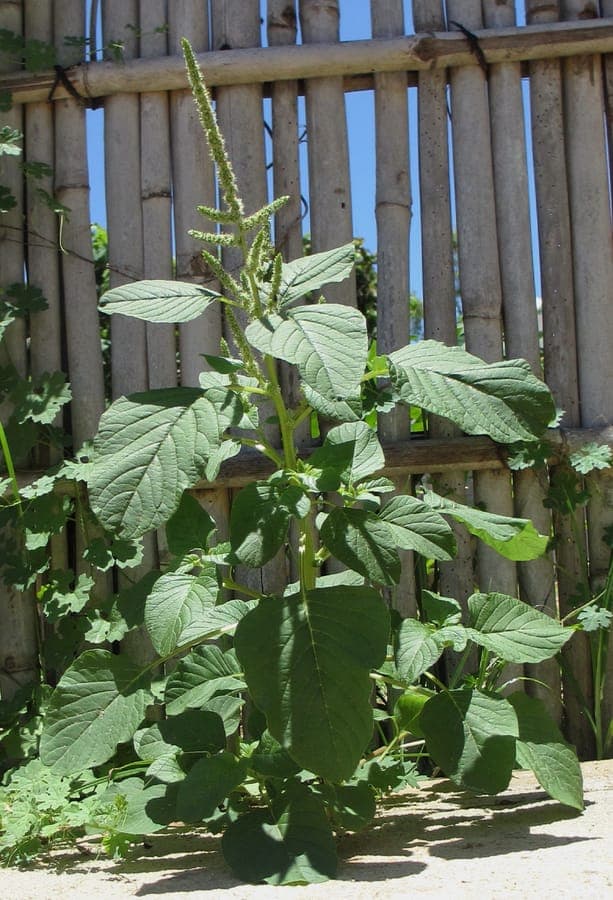
Ton Rulkens from Mozambique / CC BY-SA 2.0, via Wikimedia Commons
Livid amaranth: complete guide
Amaranthus blitum
Want to see Livid amaranth: complete guide in your garden?
1 minute, no credit card
Overview
Livid amaranth, or Amaranthus blitum, is a modest annual herb often dismissed as a weed, but it deserves a second look. Native to warm regions of South America-like northern Argentina, Paraguay, and parts of Brazil and Peru-it thrives in disturbed soils and open sunny spots. In temperate climates, including USDA zones 7–10, it pops up reliably from late spring to early autumn, often self-seeding with ease.
What sets this plant apart is its dual role: it's both edible and ecologically valuable. Young leaves are tender and mild, perfect for raw salads or light cooking, similar to spinach or chard. At the same time, its tiny flowers attract hoverflies, bees, and other beneficial insects. If you're designing a garden that supports biodiversity and yields food, Livid amaranth fits right in. On gardenworld.app, you can create a planting plan that balances edibles with habitat plants, ensuring your space works hard with minimal input.
Appearance & bloom cycle
Livid amaranth grows 8 to 24 inches (20–60 cm) tall, with an upright to slightly spreading habit. Stems are often reddish at the base and branch out toward the top. Leaves are diamond-shaped to ovate, up to 1.5 inches (4 cm) long, with a soft, slightly hairy surface and a fresh green hue that can blush red in full sun.
From July through October, small, inconspicuous flowers appear in dense clusters along the leaf axils. They range from greenish to pale pink or purplish, lacking petals but packed with pollen. While not showy, they're a vital late-summer food source for pollinators. The plant reseeds aggressively in loose, warm soil, so deadhead if you want to limit spread.
Ideal location
Full sun is best-aim for at least 6 hours of direct light daily. This plant loves heat and performs well in hot borders, gravel gardens, or along pathways. It's great for filling gaps in vegetable plots or adding texture to wildflower mixes.
Avoid deep shade; in low light, stems stretch and become weak. If you're unsure about sun exposure in your yard, gardenworld.app offers sun-mapping tools that show daily and seasonal light patterns, helping you place Livid amaranth exactly where it'll thrive.
Soil requirements
This amaranth is unfussy. It tolerates poor, sandy, or rocky soils as long as drainage is good. Ideal pH ranges from 6.0 to 7.5. While it grows in low-fertility ground, adding compost or well-rotted manure boosts leaf production.
Heavy clay with poor drainage is a no-go-root rot can set in quickly. If your soil is compacted, consider raised beds. A light mulch of straw or leaf litter helps retain moisture without smothering roots.
Free design
Want to see Livid amaranth: complete guide in your garden? Make a free design now.
Watering
Once established, Livid amaranth is drought-tolerant. Water young plants weekly if rainfall is below 0.8 inches (20 mm) per week. Mature plants rarely need irrigation unless under extreme drought.
Overwatering leads to leggy growth and fungal issues. Let the soil dry between waterings. Morning watering reduces evaporation and keeps foliage dry, minimizing disease risk.
Pruning
No formal pruning needed, but pinching back the tips encourages bushier growth and delays flowering-ideal if you're harvesting leaves. Cut young shoots regularly for kitchen use; this keeps the plant productive.
Remove seed heads if you don't want volunteers next year. Use clean, sharp shears and sterilize between cuts to avoid spreading pathogens. Dried stems can be used for natural dye-rich in pigments like betacyanin.
Maintenance calendar
- March–April: Start seeds indoors at 65–72°F (18–22°C). Germination takes 7–14 days.
- May–June: Transplant outdoors after last frost (late May in zone 7). Direct sow in warm soil.
- July–August: Harvest leaves weekly. Monitor for self-seeding.
- September: Allow some plants to flower for pollinators. Begin seed collection.
- October: Plants die back after first frost. Clear debris or leave for reseeding.
Winter hardiness
Livid amaranth is a true annual. It cannot survive frost and dies when temperatures drop below 32°F (0°C). In zones 7 and above, it may linger into early winter if conditions stay mild, but no overwintering protection is needed.
Companion plants
Pair with herbs like thyme, oregano, or sage-plants that share dry, sunny conditions. Works well near tomatoes, peppers, and onions, which benefit from increased pollinator activity. Avoid aggressive spreaders like mint or tall shade-casters.
In edible gardens, combine with purslane, Malabar spinach, or corn salad. The mix adds visual interest and extends harvests.
Closing
Don't overlook Livid amaranth just because it grows easily. Its resilience, edibility, and support for wildlife make it a smart choice for low-maintenance, productive gardens. Whether you're revitalizing a patch of bare soil or expanding your edible plot, this plant delivers.
Need help visualizing where to place it? On gardenworld.app, you can design a layout that maximizes sun, space, and synergy with other plants-before lifting a trowel. Find seeds or young plants at garden centres in late spring, or order online for early sowing.
Want to see Livid amaranth: complete guide in your garden? Make a free design now.
Upload a photo, pick a style, and get a photorealistic design with plant list in under a minute.
No credit card required


Similar plants
Bassia laniflora (woolly summer-cypress): complete guide
Bassia laniflora
Full guide to Bassia laniflora: origin, appearance, ideal location, soil, watering and care for this drought-tolerant annual.
Suaeda spicata: complete guide
Suaeda spicata
Everything about Suaeda spicata (spiked seablite): a rare salt-tolerant coastal succulent from the western Mediterranean and Macaronesia.
California amaranth: complete guide
Amaranthus californicus
Full guide to California amaranth (Amaranthus californicus): growing tips, ideal location, soil needs, watering, and garden design ideas.