
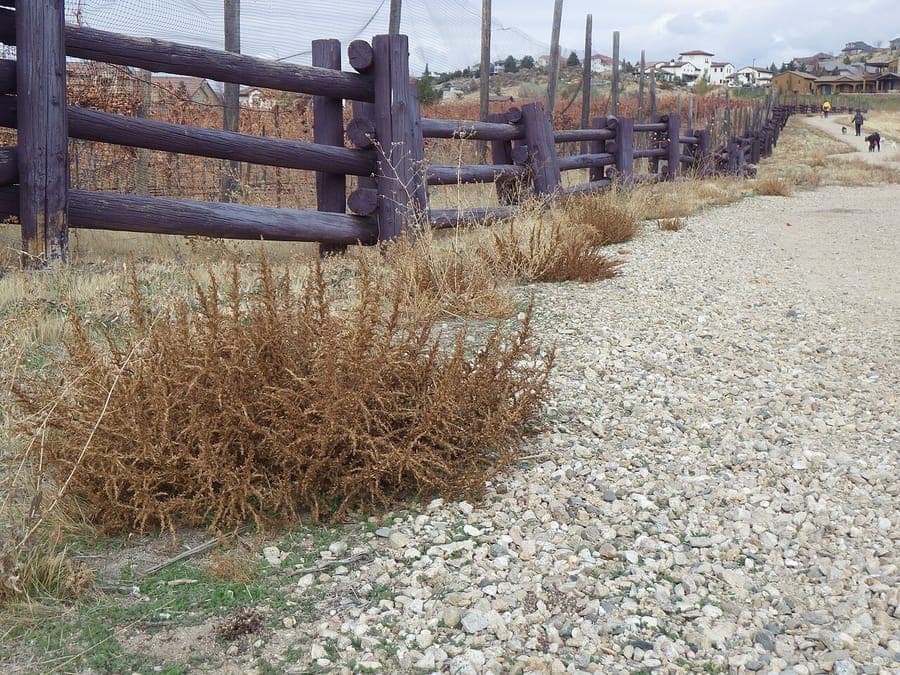
Matt Lavin from Bozeman, Montana, USA / CC BY-SA 2.0, via Wikimedia Commons
Stiff tumbleweed: complete guide
Amaranthus albus
Want to see Stiff tumbleweed: complete guide in your garden?
1 minute, no credit card
Overview
Amaranthus albus, commonly known as stiff tumbleweed, is a rugged annual that brings both structure and subtle beauty to dry gardens. Native to southern U.S. states like Arizona, Louisiana, and Alabama, as well as northeastern Mexico, this plant has evolved to handle extreme heat and minimal rainfall. In temperate climates like the UK and northern Europe, it's gaining popularity as a low-effort, high-impact addition to modern, sustainable gardens.
Unlike flashy ornamentals, stiff tumbleweed doesn't rely on bold colour. Instead, it offers fine texture, airy flower clusters, and a unique lifecycle-eventually detaching and tumbling across the ground like a miniature tumbleweed. It also supports small pollinators and beneficial insects, adding ecological value. On gardenworld.app, you can design a planting scheme that integrates Amaranthus albus with other drought-tolerant species for a resilient, dynamic garden.
Appearance & bloom cycle
Stiff tumbleweed grows to a height of 30–80 cm with upright, branched stems and narrow, grey-green leaves. The foliage has a soft, silvery sheen that contrasts well with darker or brighter neighbours. From July through October, it produces small, fuzzy, cream-coloured flower clusters at the ends of stems. These are not showy like dahlias or sunflowers, but they add volume and texture to mixed borders.
The blooms are fully dryable and hold their shape for months in cut arrangements. As autumn progresses, the plant dries out completely and often breaks free at the base, rolling across the soil-a natural seed dispersal method. This behaviour makes it a conversation piece in any garden.
Ideal location
Full sun is essential. Stiff tumbleweed needs at least 6–8 hours of direct sunlight daily. In shaded areas, it becomes leggy and weak, with sparse flowering. Choose a spot that gets unobstructed light from mid-morning to late afternoon.
It performs best in gravel gardens, rockeries, or xeric beds. It also works well along pathways, in crevices between stones, or as a filler in dry borders. If you're planning a drought-resistant garden, use gardenworld.app to visualise how Amaranthus albus can be combined with other sun-loving, low-water plants for maximum impact.
Soil requirements
This plant thrives in poor, well-drained soils. Sandy or loamy soils are ideal. Avoid heavy clay or water-retentive mixes, which can lead to root rot-especially in wet summers. The optimal pH range is 6.0 to 7.5.
If your soil is dense or compacted, grow it in raised beds or containers with added grit or perlite. Amaranthus albus doesn't need rich compost; in fact, overly fertile soil encourages leafy growth at the expense of flowering.
Free design
Want to see Stiff tumbleweed: complete guide in your garden? Make a free design now.
Watering
Once established, stiff tumbleweed is highly drought tolerant. Young plants need weekly watering for the first 3–4 weeks after planting. Give about 1 litre per plant, applied directly to the base.
After that, only water during prolonged dry spells-more than two weeks without rain. Overwatering causes weak stems, yellowing leaves, and increased susceptibility to fungal diseases. The plant will show stress quickly: wilted foliage is a sign, but don't rush to water-check soil moisture first.
Pruning
Pruning isn't required, but you can pinch back the tips in early summer (around June) to encourage bushier growth. Cut no more than one-third of the stem length using clean, sharp shears. This helps prevent the plant from becoming too tall and top-heavy.
If you're saving seeds or drying flowers, leave the last flower clusters on the plant until fully dry. Harvest them in late autumn and hang upside down in a dark, airy room for 2–3 weeks.
Maintenance calendar
- March–April: Start seeds indoors at 18–22°C. Keep compost lightly moist.
- May: Transplant outdoors after last frost (late May in USDA zones 7–8). Space plants 25–30 cm apart.
- June: Monitor moisture. Remove weeds around young plants.
- July–September: Peak blooming period. Watch for slugs on new shoots.
- October: Flowers fade. Leave some plants standing for winter interest and bird food.
- November–February: Plants die back completely. Clear dead stems or leave for texture.
Winter hardiness
Stiff tumbleweed is an annual and not frost-tolerant. It dies off completely when temperatures drop below 0°C. In temperate zones, it must be replanted each year from seed or purchased as young plants.
It may self-seed if dried flower heads remain in place over winter. If you want to control its spread, remove seed heads before they split open.
Companion plants
Pair Amaranthus albus with other drought-tolerant perennials like Sedum spectabile (60 cm), Echinacea purpurea (90–120 cm), or Stipa tenuissima (40 cm). Its soft grey foliage contrasts beautifully with purple, yellow, or deep red blooms.
Good companions also include Lavandula angustifolia, Yucca filamentosa, and Artemisia schmidtiana. Avoid planting near moisture-loving species like Hosta or Astilbe, as their care needs clash.
Closing
Stiff tumbleweed is a low-fuss annual that brings texture, movement, and ecological value to sunny, dry gardens. Its ability to thrive on neglect makes it perfect for beginners or busy gardeners. Sow it from seed each spring and enjoy its subtle charm through summer and autumn.
You can find Amaranthus albus seeds or young plants at garden centres across the UK. For design ideas and planting combinations, visit gardenworld.app and create a custom garden plan that puts this resilient plant front and centre.
Want to see Stiff tumbleweed: complete guide in your garden? Make a free design now.
Upload a photo, pick a style, and get a photorealistic design with plant list in under a minute.
No credit card required


Similar plants
Bassia laniflora (woolly summer-cypress): complete guide
Bassia laniflora
Full guide to Bassia laniflora: origin, appearance, ideal location, soil, watering and care for this drought-tolerant annual.
Suaeda spicata: complete guide
Suaeda spicata
Everything about Suaeda spicata (spiked seablite): a rare salt-tolerant coastal succulent from the western Mediterranean and Macaronesia.
California amaranth: complete guide
Amaranthus californicus
Full guide to California amaranth (Amaranthus californicus): growing tips, ideal location, soil needs, watering, and garden design ideas.