
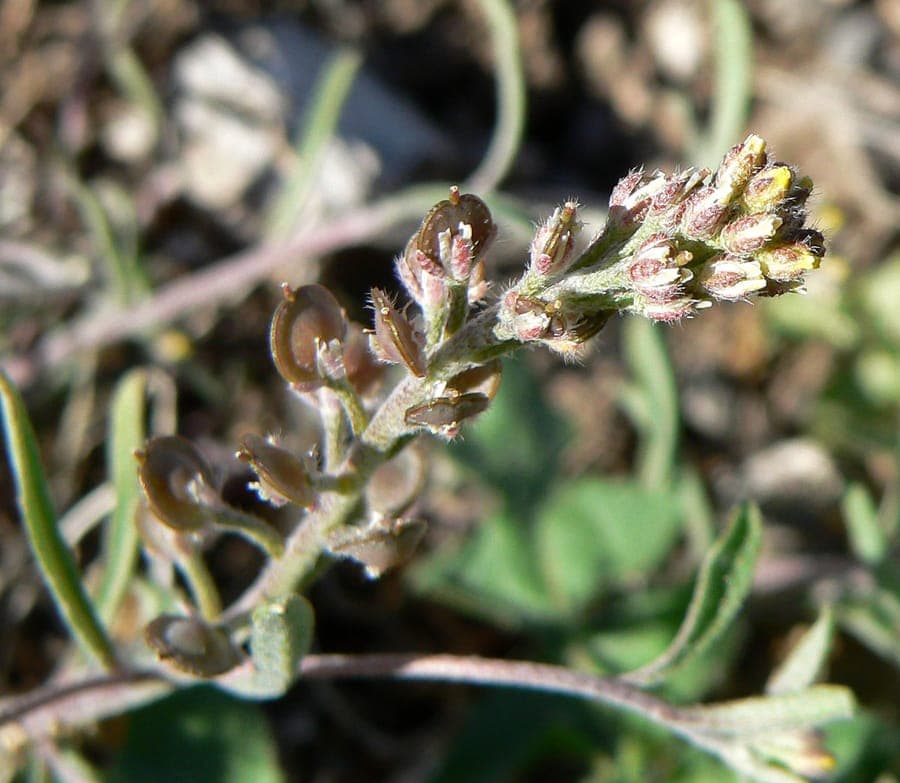
Stan Shebs / CC BY-SA 3.0, via Wikimedia Commons
Desert madwort: complete guide
Alyssum desertorum
Want to see Desert madwort: complete guide in your garden?
1 minute, no credit card
Overview
Alyssum desertorum, commonly known as desert madwort or steppe stonecrop, is a compact groundcover that thrives in dry, sunny locations. Native to southeastern Europe through Mongolia and the western Himalayas, this hardy plant has proven itself indispensable in Mediterranean and steppe gardens worldwide. Its fine foliage and prolific white flowers bring lightness and volume to front gardens with minimal fuss.
Appearance and Bloom
Desert madwort grows as a compact, low-spreading mound reaching just 10-20 cm tall and 30-40 cm wide. The leaves are narrow, grey-green, and finely hairy, giving the plant a soft appearance. From April through June, dense clusters of small white four-petaled flowers emerge, releasing a subtle sweet fragrance. These blooms attract numerous pollinators and create a luminous effect in spring gardens.
Ideal Location
This plant demands full sun exposure with at least six hours of direct sunlight daily. Desert madwort thrives in dry, well-drained spots where other plants struggle. Planting locations against rocky outcrops, in gravel gardens, or along graveled paths work beautifully. It also performs excellently in containers provided the pot has good drainage.
Soil Requirements
The ideal soil for this plant is lean, well-draining earth that is not overly rich in nutrients. Sandy, gravelly, or calcareous soils are preferred. In heavy clay soils, amend with gravel or shell grit to improve drainage. A pH between 6.0 and 7.5 is optimal, though the plant accepts neutral to slightly alkaline conditions well.
Watering
Once established (three to four weeks after planting), additional watering is unnecessary. Desert madwort is a true drought-lover and handles dryness with ease thanks to its efficient root system. During extremely hot summers, weekly watering is acceptable if there is no rainfall, but normally rainwater suffices. Excessive moisture can lead to root rot.
Free design
Want to see Desert madwort: complete guide in your garden? Make a free design now.
Pruning
Pruning is minimal. After blooming in June, lightly trim the plant to maintain a compact, full form and encourage repeat flowering. Dead flowerheads can be removed throughout the year. A light rejuvenation cut in March helps revitalize aging plants and maintains vigor.
Maintenance Calendar
March: Prepare and enrich aging plants with nutrient-poor compost mix. April: Bloom period begins, monitor regularly for pests and diseases. May-June: Peak flowering season. July-August: Hot summer months, water sparingly. September-October: Seed formation and preparation for dormancy. November-February: Winter rest, no maintenance needed except protection from excessive moisture.
Winter Hardiness
Alyssum desertorum is hardy down to -10 to -15 degrees Celsius, making it suitable for many European climates. In harsh winters with heavy snow, protection with fleece is beneficial. In very cold regions, container cultivation allows winter storage indoors. In mild climates, it survives outside without protection.
Companion Plants
Combine desert madwort with other drought-tolerant plants such as Sedum, Sempervivum (houseleeks), Lavandula (lavender), Ruta, or Santolina. Ornamental grasses like Festuca and Carex add textural contrast. In rock gardens, small Pinus species complement it well. Ensure companion plants share similar water and nutrient requirements.
Closing Thoughts
Alyssum desertorum is an undervalued gem for anyone seeking a low-maintenance, beautiful front garden. Its compact growth, delicate flowers, and tireless bloom provide years of enjoyment. Visit gardenworld.app for design inspiration, or purchase from local nurseries. A genuine addition to modern, naturalistic gardens that truly works with nature.
Want to see Desert madwort: complete guide in your garden? Make a free design now.
Upload a photo, pick a style, and get a photorealistic design with plant list in under a minute.
No credit card required


Similar plants
Brassica cretica: complete guide
Brassica cretica
Brassica cretica, the Cretan cabbage, grows wild on Aegean cliffs. Discover how to grow this drought-tolerant, yellow-flowered Mediterranean perennial.
Corsican cabbage: complete guide
Brassica insularis
Corsican cabbage is a rare Mediterranean rock cabbage with white flowers and blue-green leaves. Location, soil and winter protection.
Prostrate cabbage: complete guide
Brassica procumbens
Prostrate cabbage is a creeping North African cliff plant with yellow flowers. Discover location, soil type and winter protection.