
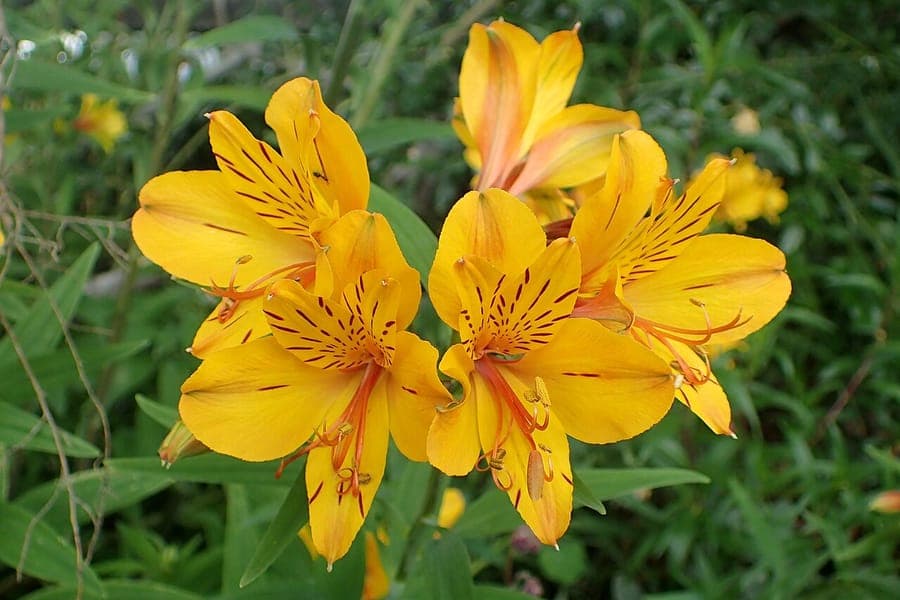
Krzysztof Ziarnek, Kenraiz / CC BY-SA 4.0, via Wikimedia Commons
Alstroemeria aurea: complete guide
Alstroemeria aurea
Want to see Alstroemeria aurea: complete guide in your garden?
1 minute, no credit card
Overview
Alstroemeria aurea, commonly known as the lily-of-the-Incas or golden alstroemeria, is a spectacular garden plant originating from Chile and Argentina. This perennial from the Alstroemeriaceae family is prized for its abundantly produced golden yellow to orange flowers that bloom for months. The flowers are not only beautiful to view but exceptionally valuable as cut flowers, lasting up to three weeks in a vase.
The plant grows from underground tubers that expand yearly. In proper conditions, a single alstroemeria plant can bloom continuously for years, gradually filling a flower bed with thousands of blooms per season. Though of South American origin, it thrives in temperate European climates and can be permanently planted in many gardens.
Appearance and bloom
The flowers of Alstroemeria aurea are the main attraction. They grow in clusters of 3 to 8 flowers per stem, each approximately 5 centimeters in diameter. Flowers range from golden yellow to deep orange with characteristic red streaks or spots on the inside of petals. This distinctive marking is very striking and helps insects locate the flower's center.
The stems are strong and green, typically thornless, making cutting and arranging particularly easy. Leaves are narrow and lance-shaped, dark green, and highly decorative.
The blooming period is long, typically May to October in temperate climates, sometimes interrupted by brief rest periods in hot summers.
Ideal location
Alstroemeria aurea grows best in full to nearly full sun. Plant tubers where they receive at least 6 hours direct sunlight daily. In very warm climates (southern France, Mediterranean), the plant appreciates afternoon shade, especially July to August.
Temperature is less critical than for tropical plants. The plant thrives between 10 and 25 degrees Celsius. Even light frost doesn't harm it if tubers are planted deep enough (minimum 15 centimeters).
Choose a sheltered spot where stems aren't constantly buffeted by wind. Though strong, very strong gusts can damage them.
Soil
Alstroemeria aurea loves well-draining soil. Heavy clay causes root rot, so add sand and gravel to heavier soils. The ideal mix consists of garden soil with 30% sand or gravel mixed into the first 30 centimeters where tubers are planted.
The plant also thrives in standard garden soil provided drainage is excellent. Add some compost when planting for slow nutrient release, but excessive nitrogen promotes leaf growth at the expense of flowers.
Free design
Want to see Alstroemeria aurea: complete guide in your garden? Make a free design now.
Watering
Although Alstroemeria aurea is reasonably drought-tolerant once established (about six months after planting), it performs better with regular water during growth and flowering. Water when the top 5 centimeters of soil feel dry.
In winter, when foliage dies back, reduce watering significantly. The tubers need only minimal moisture.
Avoid watering foliage in the evening, as this promotes fungal infections. Water at the plant's base.
Once stems reach 30 centimeters, cut them for vases. This actually stimulates more blooming and heavier branching.
Pruning
Pruning isn't essential for plant care, but is important for maximizing blooms. Cut stems when the first flowers open. The remaining flowers open in the vase at home. This stimulates the plant to produce more side stems.
Remove dead or damaged stems at ground level.
In autumn, when stems yellow and wilt, cut everything back to about 5 centimeters above ground. This prepares the plant for winter rest.
Maintenance calendar
January to February: Winter dormancy. No feeding needed. Minimal watering.
March to April: New stems appear. Begin light watering. Biweekly feeding.
May to August: Peak blooming. Frequent watering (3 to 4 times weekly in dry weather). Weekly feeding. Regular deadheading and cutting of flowers.
September to October: Blooming ends. Reduce water. Reduce feeding.
November to December: Foliage dies back. Cut back. No feeding.
Winter hardiness
Alstroemeria aurea is quite winter-hardy in temperate climates. In the Netherlands and Belgium (USDA zones 7-8), it can remain permanently outdoors if tubers are planted at least 15 centimeters deep. In very cold winters, light protection (such as mulch) may help, but usually the plant survives without assistance.
In very hot, dry summers in southern locations (Germany, France), mulching helps keep soil cool and moist.
Companion plants
Alstroemeria aurea combines beautifully with other summer bloomers:
- Roses for classic garden combination
- Lavender for color and texture contrast
- Delphinium for height and blue contrast
- Calendula for complementary yellow tones
The plant also grows well alongside other bulbs like lilies, as they prefer similar soil treatment.
Closing
Alstroemeria aurea is an exceptional garden plant for those valuing long blooming periods, cut flowers, and low-maintenance plants. Once established, it rewards for years with abundant blooming. Plant tubers in early spring (March/April) and you'll enjoy the first golden flowers in May. Florists and flower arrangers love this bloom for its long vase life. You can grow your own exotic-looking cut flowers rather than buying them expensively. Garden centers stock tubers in spring. With patience and minimal care, your Alstroemeria aurea will reward you year after year with a golden rain of flowers.
Want to see Alstroemeria aurea: complete guide in your garden? Make a free design now.
Upload a photo, pick a style, and get a photorealistic design with plant list in under a minute.
No credit card required


Similar plants
Acer pycnanthum: complete guide
Acer pycnanthum
Acer pycnanthum, the Japanese swamp maple, is a fast-growing tree with early red flowers and brilliant autumn color, ideal for damp garden settings.
Freeman maple: complete guide
Acer × freemanii
Everything about the Freeman maple (Acer x freemanii): a fast-growing shade tree with spectacular autumn colour for large gardens.
Silver vine: complete guide
Actinidia polygama
Discover silver vine (Actinidia polygama): a hardy climbing plant with silvery foliage, loved by gardeners and cats alike.