
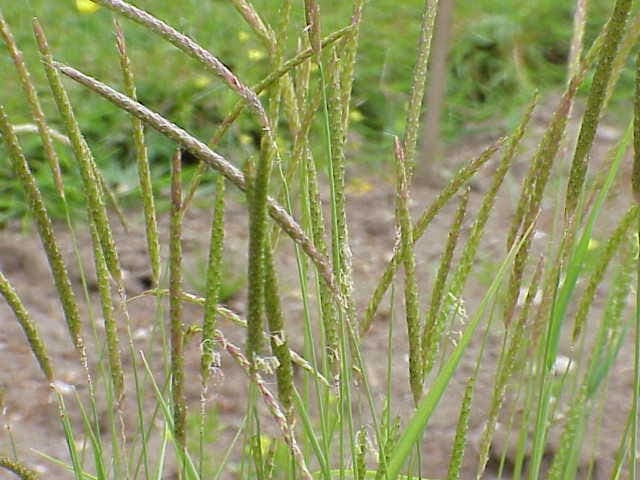
Kurt Stüber [1] / CC BY-SA 3.0, via Wikimedia Commons
Black twitch: complete guide
Alopecurus myosuroides
Want to see Black twitch: complete guide in your garden?
1 minute, no credit card
Overview
Black twitch, or Alopecurus myosuroides, is a common annual grass in the Poaceae family, often seen in arable fields, road verges, and disturbed soils across the UK and Western Europe. While it's mostly known as a weed in cereal crops, this grass has a subtle charm that can work well in naturalistic garden designs. It's not a showy plant, but its movement and texture add depth to informal planting schemes.
On gardenworld.app, you can design a low-maintenance border where Black twitch complements native perennials without overwhelming them. It's a smart way to plan ahead and avoid unintended spread.
Appearance & bloom cycle
Black twitch grows between 30 and 80 cm tall, with slender, upright stems and narrow leaves roughly 2–5 mm wide. The foliage is bright green early in the season, turning slightly greyish as it matures. From April to June, it produces dense, cylindrical flower spikes that start green and mature to a dark purplish-brown - resembling a mouse's tail, hence the species name myosuroides.
The flowers are wind-pollinated and inconspicuous, but the seed heads catch the light beautifully in morning dew. Once seeds set, the plant dies back completely, as it's an annual. The seeds disperse easily by wind or on footwear, which explains its wide distribution.
Ideal location
This grass thrives in full sun, scoring an 8/10 on the light scale. It performs best on open, unshaded sites like south-facing banks, field margins, or gravel gardens. It can tolerate light shade (up to 30%), but flowering and seed production drop significantly.
In UK gardens, consider using it in wild corners, near dry stone walls, or as part of a meadow-style planting. Avoid planting near delicate alpines or slow-growing perennials, as it can outcompete them quickly. Position it where its movement won't be obstructed by taller plants.
Soil requirements
Black twitch is adaptable to many soil types, including sandy loams, clay loams, and even compacted soils. It prefers a pH between 4.0 and 7.5, so it tolerates both mildly acidic and neutral conditions. It does poorly in waterlogged soils, though - good drainage is essential.
If you're gardening on heavy clay, consider raised beds or adding sharp sand to improve drainage. It doesn't need rich soil; in fact, overly fertile conditions can lead to floppy growth and reduced flowering.
Watering
Once established, Black twitch is highly drought-tolerant. Young seedlings need consistent moisture for the first 3–4 weeks, especially during dry springs. Aim for about 1 cm of water per week if rainfall is insufficient.
After establishment, it survives on rainfall alone. Overwatering encourages weak stems and increases the risk of fungal issues. In most UK regions, additional irrigation is unnecessary.
Free design
Want to see Black twitch: complete guide in your garden? Make a free design now.
Pruning
Pruning isn't required, but managing seed spread is crucial. Cut back plants before seeds fully ripen (late May to early June) if you want to limit self-seeding. Use shears or a strimmer for larger patches.
If you're aiming for winter interest, leave some seed heads standing until late winter, then cut back before new growth emerges in spring. This also helps prevent unwanted volunteers the next season.
Maintenance calendar
- Jan: Prepare soil; clear debris from previous year
- Feb: Check soil compaction; avoid walking on wet ground
- Mar: Sow seeds if not self-seeded; keep moist
- Apr: Growth accelerates; monitor for flowering
- May: Peak bloom; cut back to control seeding
- Jun: Plants die off; remove or leave for texture
- Jul: Clear dead material if desired
- Aug: Leave undisturbed; soil rests
- Sep: Allow limited self-seeding or re-sow
- Oct: Seeds germinate in mild autumns
- Nov: Monitor for late seedlings
- Dec: Cut back remaining stems; tidy beds
Winter hardiness
As an annual, Black twitch doesn't survive winter as a mature plant. However, its seeds overwinter in the soil and germinate when soil temperatures reach 8–10°C in spring. It's well adapted to USDA zone 8 and milder parts of zone 7, which covers most of southern and central UK.
Seeds can remain viable for up to two years, so a single season of growth can lead to multiple flushes. Plan your planting location carefully.
Companion plants
Pair with upright perennials like Echium vulgare or Knautia arvensis to create contrast. Low-growing thymes (Thymus spp.) or sedums work well at the base, reducing bare soil without competing aggressively.
Avoid fast-spreading groundcovers like Ajuga reptans, which can smother seedlings. On gardenworld.app, you can simulate planting combinations to see how Black twitch fits into your overall design before you commit.
Closing
Black twitch isn't a typical garden plant, but it has a place in wild, low-intervention gardens. Its airy texture and minimal care needs make it appealing for gardeners who embrace natural processes. Just be mindful of its seeding habit - once it's in your soil, it may return for years.
If you're designing a relaxed, meadow-inspired space, consider giving it a try. With thoughtful placement and seasonal management, Black twitch can add rhythm and movement without taking over. Visit your local garden centres to source seed, or check online suppliers for native varieties.
Want to see Black twitch: complete guide in your garden? Make a free design now.
Upload a photo, pick a style, and get a photorealistic design with plant list in under a minute.
No credit card required


Similar plants
Sporobolus pungens: complete guide
Sporobolus pungens
Sporobolus pungens is a stoloniferous Mediterranean coastal grass with outstanding salt and drought tolerance, perfect for seaside and dry gardens.
Mediterranean aegilops: complete guide
Aegilops biuncialis
Everything about Aegilops biuncialis, a Mediterranean annual grass with ornamental spikes and outstanding drought tolerance for dry gardens.
Silver bluestem: complete guide
Bothriochloa saccharoides
Full guide to Bothriochloa saccharoides (silver bluestem): site, soil, watering, winter hardiness, pruning, and garden companions.